Category: Uncategorized

  • Absent Affirmations of my Father

    Absent Affirmations of my Father

    Father’s day is near and this year I don’t feel prepared to lament the indefinite absence of my father’s presence once again.   As if there ever was a preparation substantial enough to carry the weight that my father is no longer alive. It’s been almost 22 years and I never feel prepared to think about it or actively acknowledge it because it hurts.  But at times, even in this reality of loss, I feel hope.  Well, this year, I REALLY feel my father’s absence; not only in the lack of his physical presence, but more so in the lack of his words.

    “Words have a longevity we don’t. ” – Paul Kalanithi

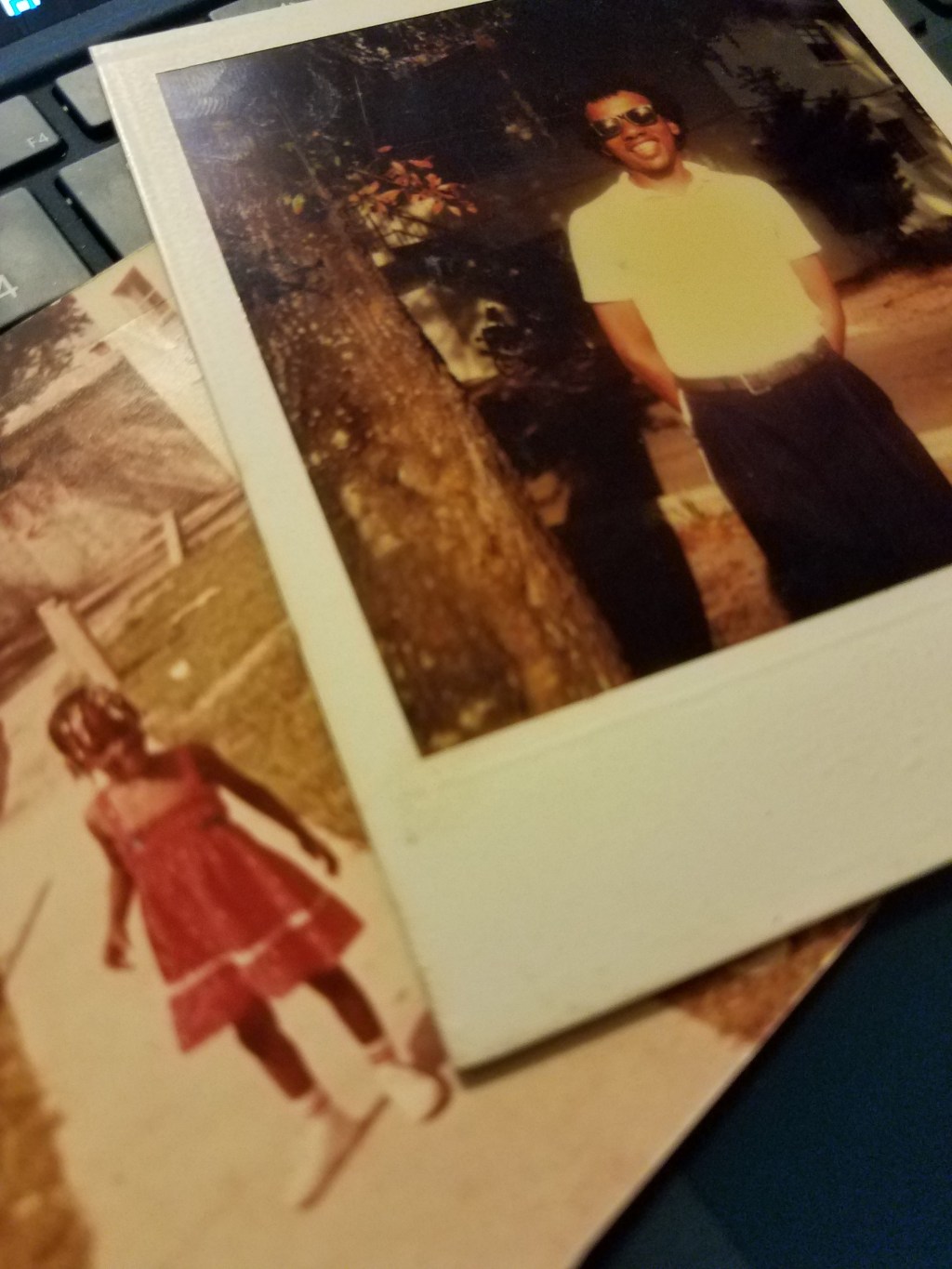
    A friend of mine recently blogged about the fear of losing dear memories of her daddy after he passed away.  As I read that blog and thought more about my own father, I began to wonder what I should do if I have no memory of my father affirming me. Not one.  No “I love you’s” to recount.  No memories of his laugh.  I can see evidence of his smile embedded within mine when I look at old photos of him.  And I have been generously endowed with his nose structure.  Thanks dad! 👌🏾

    20170606_001225

    I have friends that have come to understand how deeply I value words of affirmation.  It is my top love language.  This precious value on words has moved beyond appeasement of personality. It beckons my heart to behold the power of legacy.  Words absolutely have a longevity that our frail bodies do not. Our physical bodies fade, but our words, can lift the soul again and again.  And for the daughter or son who may have lost a parent, this lifting of the soul is treasured.  And needed.

    I previously believed that it was enough to simply know of my father’s love, but somehow my heart demands more than just intellectual ascent.  Because love that is only known intellectually, feels like no love at all.  The heart fails to really connect to such love.  Ask the orphan.  Ask the estranged family member.  Ask me.  There are days, weeks, where I long to hear my father’s voice.  I long to hear him say I love you.  In full candor, I thought that I would mature past this longing as an adult.  Now, I realize that maturation is a long, complex, process.  I recently heard that maturation comes when you are able to make difficult decisions even when you are still afraid.  In that case, my maturity is on the horizon.  I am afraid to love my father deeply and allow myself to long to know/understand a man that rejected me as a 2 year old; yet I persist in doing so, with knees knocking.  It has been easiest to move past Father’s Day in order to avoid experiencing the fear of immobilizing pain again.  In the past four years, I haven’t been able to simply move on. I am thankful for this emotional awakening.   There must be an unseen beauty in the process of loving those who’ve left searing emotional scars.  A beauty only unveiled as we chose to love.

    For some, our journey of love will bear more scars than others.

    Parents, whether via birth or adoption, foster or legal guardian, please make space to affirm your children.  Your words are most formative.  If the painful memory of my father serve’s no other purpose than to espouse the value of affirming children in word and in speech while you are still present, then at least there is some purpose in this pain.

    Shout out to my father with the “BluBlockers” in the featured pic of this blog.  I love you mane.  I miss you.  Happy Father’s Day.  I’ve heard you were a proud father and I will have to believe the account of those that knew you.  – Your daughter

    “I sought the Lord, and he answered me and delivered me from all of my fears.”

    Psalms 34:4
  • Unveiling Hidden Figures

    Unveiling Hidden Figures

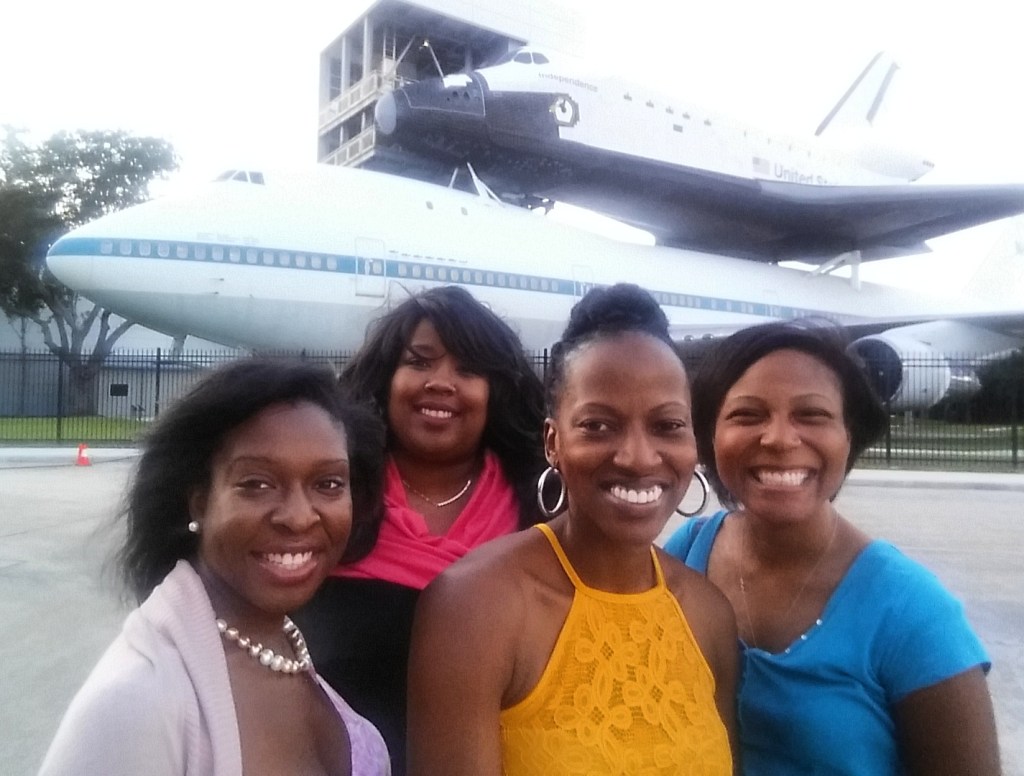
    The movie “Hidden Figures” took me on a roller coaster of emotions that I am not sure I’ve come down from.  Many [many] years ago, I was a budding engineer interning at NASA’s Kennedy Space Center in Cape Canaveral, FL who later turned down an offer to work as a long term engineer there.   At that time I had no idea of the premise of being a “hidden figure” in my career.  I was naive. Hopeful.  Trusting and hanging on to every word of those in authority; predominantly  the older, white men who were my managers.

    This derivation of mixed emotions comes from the simple, yet complex idea that things which are hidden are searched for intentionally, or remain hidden for a long time; only discovered by happenstance.  I honestly celebrate the healthy exposure that this movie has brought African American women in the science fields, yet my heart and life experience wrestle with the reality that any leader who chooses to unveil hidden figures in any industry must pay some cost.  It may cost some a bruised ego.   Others some of their influence.  Still others the very position that they may have aspired to or felt entitled to for years.  Truthfully, this is a cost that some are unwilling to pay.

    ***SPOILER ALERT***

    Choosing to Unveil

    When I re-imagine the bathroom scene where her manager tears down the “Colored Only” bathroom sign with every exertion of strength in his body, I am deeply moved.  Viscerally moved to tears.  I am moved because he had a choice.  He had a choice to leave things the way they were (which was perfectly legal) or to ensure equity for all on his staff at the expense of his social capital and the dissenting opinions of others. I won’t divulge details, but as a women of color who has experienced working on teams and with management who choose to unveil and those who don’t, I will say that I believe this act was far more courageous than depicted.  Now, before we toot too many horns, the most glaring paradox in this movie to me was that these women WERE ONLY unveiled because there was a DIRECT BENEFIT to those who had allowed them to remain hidden for so long.  In fact, the cost became too great for them not to be unveiled.  I mean, we’ve got to get John Glenn to space, right?  By the end of the movie, I joined everyone in celebrating the greater victory for America, but I could only think, the managers cowered because they had to; because they wanted victory so badly.  They DID NOT do the right thing simply because it was the right thing to do.

    I want to honor Martin Luther King, Jr. as we near the end of another #BlackHistoryMonth and highlight the response of Dorothy Vaughan, Octavia Spencer’s character,  who in fact did the right thing because it was the right thing to do. 

    martinlutherkingjrthetimeisalwaysright

    Leaders who Do the Right Thing (as reflected in Octavia’s charachter) are marked by:

    1. Recognition (of others) – She actively worked to recognize the gifts and talents of those on her team even if it warranted a promotion for them and practical obscurity for her.
    2. Innovation – She  developed a new way for those on her team to experience growth so that they were prepared to be unveiled when the time was right.  She risked the very promotion she had longed for so that the entire team rose to another level when she rose to another level.  Great innovation is often accompanied by great risk.
    3. Golden Rule Gratitude – With outward expressions of gratitude, she never delineated from treating others the way that she wanted to be treated.
    4. Hopefulness – She hung on to hope.  Her hopeful vision for the future propelled her and others forward.
    5. Tenacity – She displayed a dogged tenacity to lead and develop others with the influence given.

    There are hidden figures in classrooms, colleges, and places of employment everywhere.  Many systems in society have given visibility to some and not others.

    Today, I am less of a hidden figure.  Still being unveiled and grateful for it.

    One day, I hope it is said of me that I “did the right thing” as a leader; a person of influence.  I understand that I have a beautiful choice.  I will choose to unveil hidden figures when presented with the opportunity. Who will you help unveil today?

    “He must become greater; I must become less.” – John 3: 30, NIV

  • The Blessings and Burdens of being Black

    The Blessings and Burdens of being Black

    These burdens remain. One of the first blogs I published when I began this journey.  Originally shared February 2015.

    Precious's avatarPrecious Predilections

    burdenA burden by definition is a load that is especially heavy for one to carry. A blessing, on the contrary, is a beneficial thing for which one is grateful.  Is it feasible for someone to be grateful for a load that is especially heavy for them to carry?  I submit to you that it depends on the load.  There is not a day that I rise that I am not grateful that God made me a Black woman.  This is true.  I am honored and proud to be Black.  But there is another truth; and it is that I’ve had some negative experiences as a direct result of being Black.

    Today I would like for readers to reflect upon a burden that is carried and rarely spoken of.  It is the burden of being Black.  In the same vein, I ask readers to identify blessings of being Black.  I have…

    View original post 1,378 more words

  • The Suffering Saint

    The Suffering Saint

    Recently, I have spent a lot of time thinking about suffering and my desire to avoid it at all costs.  It sucks to suffer. End of story.  January was laden with suffering and loss for a few of my friends; 3 funerals in 3 weeks to remember the lives of 2 fathers and 1 son.  Grief and sorrow have a way of lingering.    Jesus agreed with this sentiment as reflected in Matthew 26:38, where he stated, “My soul is overwhelmed with sorrow to the point of death…”  Again, suffering sucks.  The unsettling truth is that as a follower of Jesus, I should not only come to expect the blessings of God, but with great certainty I should be mindful that suffering is also on the path of sanctification. Difficult truth.  And it sucks.

    suf·fer
    ˈsəfər/
    verb
         1. experience or be subjected to (something bad or unpleasant).
    This fixation on the avoidance of suffering came about after spending time visiting a friend in South Africa, where there is a chasm of classism left from the wreckage of apartheid.  During this visit more than any other, there was an acute awareness of the role that race has played in providing privilege to some and not to others.  As our conversations grew in depth, we both surmised that without even knowing it, we had developed an unhealthy expectation of “entitlement” to blessings as a believer and follower of Jesus Christ.
     en·ti·tled
    inˈtīdld,enˈtīdld/
    adjective
    1. believing oneself to be inherently deserving of privileges or special treatment
    It was almost as if we had said to God, suffering is for someone else, definitely not me. This unspoken paradigm of entitlement can wreak havoc on our faith when suffering arrives.  I then began to ask this friend how she maintained her faith during her most difficult moment when she suffered the loss of someone she loves.  She stated very simply and profoundly to “loosen my grip.”  Loosen my grip on the possessions I have.  Loosen my grip on the relationships that I hold dear.  Loosen my grip on my definition of what my life should be at this exact moment.  The “loosening of the grip” is an expression to hold those things and relationships dearly loved loosely in your hands, with gratitude and knowledge that all those things belong to God.  All of them.

    “Following Jesus wholeheartedly means facing the “most brutal facts of our current reality, whatever they might be” while holding on to our absolute certainty that we “prevail in the end” through his love and grace.” – Rick Lawrence, Jesus-Centered Life

    Perhaps a small part of what makes suffering bearable is our ability to savor what is good in that moment.  Another nugget of truth is that we can’t always see the things that are good in the moment of suffering.  What I learned during my time with my friend is that it is NOT in the overt acknowledgement of “all that is good” that gratitude arises.  It actually arises as we choose to be present with those who are suffering.  Present during the smiles. Present during the sorrow.  Present during the silence.

    I observed a lot of natural beauty during my time in South Africa, but there was nothing more beautiful than the comfort of a friendship that has lasted 13 years.  There was no pretense.  I liken it to the comfort of a good pair of old jeans.  They have holes, they aren’t perfect, but they fit in all the right places.

    I thought my time in South Africa would leave me only longing to ease the suffering of strangers.  That occurred.  I didn’t know that my time in South Africa would teach me in part, how to lament with the suffering saint and also teach me that suffering/sorrow/grief has no zip code.


    I want Jesus; fully and completely.  However, I still don’t want to suffer, but if I must, may I do so by leaning into Jesus and loosening my grip on all the things I’ve deemed too precious to lose.

  • Brothers Forgive Me

    Brothers Forgive Me

    This unsolicited request for forgiveness is long overdue.

    This cry for forgiveness is birthed out of a new revelation of the deep and damaging impact of mass incarceration on men of color; men of color like my brothers.  The brothers that I grew apart from long before we grew up because in their youth they experienced the dehumanization and desensitizing that happens upon incarceration.  I have been writhing with grief after watching “13TH” on Netflix.  This sense of sadness and shame that has come at the realization, that, I, your sister, have not advocated for you, my brothers.  My blood.  I’m sorry bros.  I love you bros.  I just didn’t know bros.

    This documentary on Netflix speaks of the loop hole in the 13th amendment which essentially provides a clause for criminals to continue to be subject to slavery or involuntary servitude.  The mythology of black criminology is pervasive in media and culture today, but it began long ago.  It is startling and disheartening how the narrative of slavery lives on in present policies and systems, cloaked under the guise of “criminal justice.”

    “We now have more African Americans currently under criminal supervision than all the slaves back in the 1850’s.”  – Senator Cory Booker

    This slideshow requires JavaScript.

    In the past, I shied away from watching TV series such as “Lockup” because these shows brought me incredibly close to some of the realities of those I love.  The brutality.  The identification by number not name.  The memories of visitations as a college student and beyond.  Remembering how unsettling it was to be frisked and undergo stringent visitation requirements.  Remembering the joy on your face and your warm embrace when I arrived for a visit.  Remembering the fear that came over me prior to every visit.  Fearing that I would be denied the opportunity to visit you.  Fearing that you were no longer allowed to see me.  Fearing something would always sabotage our brief connection.  And brief it always was.

    As we fast forward to the present, I am ashamed to state that I’ve had the same expectation of many who have no real context of what it means to be incarcerated and that expectation is to simply “move on after release.”  I remember the joy I had upon your release and I also felt quite lost because I didn’t know what to say or do.  At times that feeling remains.  You are an adult now.  And so am I.  You’ve experienced trauma for which I have no context, and sadly, I’ve expected you to simply bear that weight alone.  I’ve also expected you to easily navigate broken systems in our culture that express that although free, you are still not deemed a citizen.  Systems which prevent you from voting, exacerbate the cost of health care, increase barriers to employment, and multiply the cost of higher education.

    Forgive me for not acknowledging your pain.

    Forgive me for not acknowledging your victories.

    Forgive me for not using my voice and influence to not only advocate for proactive efforts that work to prevent young people from experiencing this trauma, but also advocate for young people who have been left to recover on their own after this trauma.

    Forgive me for not asking you how you were doing after release.

    Forgive me for moving on with life and expecting you to do the same.

    I am DEEPLY sorry.

    The physical chains remain in the transport of men and women into incarceration, but the mental chains are just as significant.

    On the eve of my 37th birthday, I am so grateful for lessons that my thirties continue to teach me.  The current lesson is to “keep learning.”  I am learning that my story, our family story is even more beautiful as I see the impression of your collective strength throughout it.   Your journeys have been incredibly difficult.  You guys have all continued to fight to be better men and good fathers.  Perfection is an illusion made for TV; I’ve yet to meet a perfect person.  You all could have thrown in the towel after each rejection post interview.  You didn’t.  You could have complained repeatedly.  You haven’t.  I know that your sons and daughters see you as heroes and so do I.  Thank you for displaying what it means to persevere.

    I am one who advocates for the marginalized; the outsiders, but I have been unknowingly callous to the implications of mass incarceration on our black men (brothers), our communities, our families.  I am still uncertain of how to advocate well.  I don’t know what I don’t know.  I am hoping that you all will become my new instructors.   I have so much more to learn.   So much more to learn from you.

    I love you guys.  Thank you for being gentle and patient with me in my ignorance.  It has taught me to do the same with others.

    Be completely humble and gentle; be patient, bearing with one another in love. Ephesians 4:2 [NIV]

  • Silence Doesn’t Feel Like Solidarity

    Silence Doesn’t Feel Like Solidarity

    sumo-wrestlers
    http://s.hswstatic.com


    Those that know me well know that I love truth more than I love comfort.  This past week, the ugly truths of police brutality, implicit racial bias, and systemic oppression of black and brown people made many uncomfortable.  In fact, many are still uncomfortable; particularly in the christian community.  This past week has pushed the christian community to take a serious look in the mirror and introspectively determine if diversity is something that is only espoused in word or actually lived.  And when I say actually lived, I ask… Are we brave enough to listen, empathize, and act courageously when it is counter cultural to do so?  When we might be afraid to do so?  When it is uncomfortable to do so.

    I have pondered why the #AltonSterling and #PhilandoCastile killings (by police officers) have caused me to grieve so deeply; more deeply than previous incidents of police abusing power.  More than #FreddieGray.  More than #SandraBland.  More than #MikeBrown.  More than #TamirRice.  More than #SamDubose.  More than…

    And then it hit me – this list does not seem to end.  Data from http://mappingpoliceviolence.org/ shows us that this brutality by police officers upon black lives is a systemic problem.  And…many of my non-minority christian friends have become mute.  I liken it to an ethnically mixed group of high school kids who are friends discovering that one of the black guys has chosen to go to the teacher after class and speak up for another black student who is repeatedly being poorly treated by someone in authority.  Most in this ethnically diverse group vow to show up  to help defend this black friend because they all believe this student is worthy of defense.  You may be able to finish this hypothetical story for me.  The friend arrives at the class room and sees that primarily his black friends kept their word to stand with him.

    Welcome to the #BlackLivesMatter movement. The silence of a segment of the christian community has been deafening because it feels like fear has rewritten the justice narrative and it has been more comfortable to remain silent, just give money or hide behind the cloak of one’s ethnic identity.  None of these positions equate to solidarity.  And none of them will bring reconciliation.

    Don’t be silent – your silence speaks loudly.  All week this “silence” has been ringing in my ears to the tune of “How can we say that we are the church when there doesn’t appear to be a willingness to bear one another’s burden?”  I’ve said it before and I will say it again; lament with us first. No solutions, just solidarity for justice.  A few days ago, a White, Christian friend of mine found courage to speak  even among fear. As I read her account, I could see how she beautifully wrestled with the fear of speaking publicly regarding Black Lives Matter and how the comfort of this fear was no longer greater than the cost of her silence.  Truthfully, her voice on this issue will speak more loudly than mine and this is why silence and/or apathy is not an option for the white christian.  Your silence may be communicating the wrong message. PLEASE READ HER PERSPECTIVE.

    Don’t JUST give your money – because settlements don’t settle it.   Now is the time to leave our paternalism at home.  This god-complex which causes us to want to “fix” the problems in the lives of those they are serving through money is crippling.  When we take a look at 11 recent high profile cases of men and women who had died at the hands of police, several of them received settlements between $5 million and $6.5 million dollars.  Settlement after settlement injustice remains. Giving money is a necessary part of the solution, but it is not the solution.  It takes courage to speak.  To attach YOUR NAME to cause in which you advocate for equitable treatment.  There is such anonymity in “only giving money,” but, when there’s person associated with a cause,  there is a different cost.

    Don’t forsake your eternal identity for your ethnic identity – I am a follower of Christ first and then I am a black woman.  #Realtalk – I am unapologetically black, but our eternal identity as Christians is what unites us. This means that as sisters and brothers in Christ, the higher call for all of us is to act justly, love mercy, and walk humbly (Micah 6:8).  When I rise each day, I have to remember not to lead with my #blackness and that it is not the primary narrative that shapes my life.  The banner over my life is one of redemption from sin.  We have seen what sin can produce individually and on a larger scale systemically.  To my White brothers and sisters, I encourage you as well to lead with your identity as a follower of Jesus.  To seek justice for the marginalized.  To see the #imagodei (image of God) in others.  The practical steps to make this occur may be scary, but this is what I want to do.  I want to talk with you.  To share in and learn of your fears.  To seek God together for our nation.  To serve God together in our nation.

    I have decided to follow Jesus.  No turning back.  No turning back.  Jesus didn’t simply advocate for the marginalized when it was easy and comfortable.  He lived in the difficult places; had difficult, yet honest conversation to reveal and then reconcile hearts.  I too will live in that place if that is the first step towards reconciliation.

    Here is a sermon preached a few days ago on #Justice by Pastor Léonce Crump Jr. of Renovation Church. This sermon will make many uncomfortable before it encourages.  He is speaking the truth in love, so I’m comfortable with that.

    Learn to do good; Seek justice, Reprove the ruthless, Defend the orphan, Plead for the widow. – Isaiah 1:17


  • Am I Black?

    Am I Black?

    20150611_123830“Am I Black?”  This question has echoed in my mind since it was so loudly projected from the mouth of a little boy (approximately 5 years old) to his parents as he sat with them and watched a portion of a video about the middle passage at The Griot Museum of Black Historyin St. Louis, MO.  The innocence and complexity of his question is what wrenches my heart.  In this beautiful world, it would be great if slavery never existed and if African American parents and those of other ethnicities never had to share with their kids the atrocity of their nation’s past.  In particular, their decision to treat certain people inhumanely.  This little boy could not understand why, in his own words, “only black people were treated this way…”  He actually asked his parents, “where are the white people?”  His mind could not process the reasoning behind the variation in treatment.  They spoke honestly and with lots of grace; not with malice or slander, but with love for their son and his tender, impressionable mind.  I am not a parent, but I commend these parents for walking gingerly with their son to help him understand his history and the importance of valuing all human life.  This indeed was one of the most precious moments I’ve experienced recently in our racially charged society that wants to dismiss the impact of years of oppression on people groups.

    For the past few days I have juxtaposed this little boy’s simple question with the recent events in Orlando, from the #PulseShooting to the shooting of #ChristinaGrimmie.  I love the city of #Orlando and I’ve been grieving with those in my hometown.  My community and people that I love and know are hurting deeply. We cannot understand the senseless act of these shootings.

     The beauty I beheld as this little boy asked this question was profound. You see, he didn’t “know” he was black because his experience as a little black boy was just as it should be.  He has not yet known what it is to be treated differently because of his skin color.  I am not sure that I want to wake him up from this dream.

    As a follower of Christ, I believe the church is called to make this child’s “ideal perspective” more of a reality, but we have to first deal with the sin in our own heart.  The reality that we just may be treating people differently because of their skin color.  Sunday is still a very segregated day in our nation.  The reality that we, the church, may be choosing not to get to know people because their lifestyle(s) don’t align with our beliefs.

    People are more than their ethnicity.  They are more than their sexual identity.  Oh that we would learn to live and love one another as people.  Not as pretentious, external, superficial, descriptors such as race, gender, and economic status.  This week in the wake of the Orlando tragedies I believe I was granted a gift from God to spend time in Colorado with a couple who co-founded a non-profit, which is making a difference in the lives of children who are aging out of foster care.  The gift for me was that although I “knew I was Black” in Colorado, I didn’t “feel” Black when spending time with their family.  I held tightly to this feeling because it was refreshing.  Typically, “feeling Black” when I am the minority means that I am treated as inferior and presumed weak.  To be in a community where I am clearly an ethnic minority (Colorado isn’t particularly racially diverse) and to be welcomed and loved as a person first, is a gift I treasure.  There might have been second glances from others as I sat around the table with this couple, their daughters, and a friend, at a local eatery, but at that table we laughed together and enjoyed each other’s company in earnest.  And although I am not their daughter, I felt protected by this couple in an incredibly beautiful way.  This was a dose of authentic love.

    If there was a gift that I could give to those who’ve experienced marginalization, it would be the gift of authentic love. To authentically love allows us to accept people as a part of God’s beautiful creation.  There is no doubt today that I am proud to be black.  But if I am honest, I have had to fight for this freedom of pride in my ethnicity, namely the darkness of my skin and kinkiness of my hair and all that I’ve been told that this represents in our western society.  What I have recognized recently is that fighting for freedom of an insecurity can be costly.  It can mean rejection from those that love you.  It can mean career assassination.   It can mean depression and sleepless nights.  I do not presume to understand the fight of those who are in the LGBTQ community.  What I do know is that I would like for #America and at times, those in the church, to stop making presumptions about their character and worth because of their sexual identity alone.  This is nonsensical.  Seriously.  We are people first.  Let’s treat each other as such.

    I grieve with all of the families whose loved ones lost their life during this tragedy.  I grieve with those in the LGBTQ community who feel the palatable weight of being targeted because of their sexuality.  I grieve with the family members of the shooter who may now be treated differently because of what he did.  I grieve for the christian church who has yet to learn that we all share a mutual brokenness as people; we are all in need of a Savior (Jesus Christ). Those who are black are in need. Those who are white.  Those who are heterosexual.  Those who are homosexual.  Those who are wealthy.  Those who are poor.  Those who are human are in need.  As we have a greater understanding of this need, we will lower our personal pedestals and stand together as people.

    “Be happy with those who are happy, and weep with those who weep.”  Romans 12:15