Blog

  • Divine Heartbreak

    Divine Heartbreak

    Two years ago, my aunt died. Five months after that my younger brother died. Both of these deaths were unexpected and sudden. Shocks of heartache I was unprepared for. And would you believe it, that six months after my brother’s death there was yet another life altering AND miraculous event which left me unemployed and the primary caregiver for my mother? Waking each morning my soul shutters at the weight and wonder of it all. My heart has been aching for a while now. I’ve been most intrigued by the reality that this HEARTACHE was authored by God. This blog is to memorialize thoughts that I have internalized over the past year and a half. Thoughts and feelings as I continue to navigate this roller coaster of grief.

    phase one of heartache

    On the day my mother lost a son, she also lost a daughter whose identity was hijacked by the role of caregiver. I became hyper vigilant on providing excellent care to her as she prepared for a lung transplant. All I knew is that I could not lose her too; as if I had any control over that. I exerted all of my effort to support her as an overcompensation for my inability to support my brother (as I desired) in his last days. In the depth of my soul I believed that if I was in a hospital bed fighting for my life, my brother, Ken, would not have been pulled from my side. Our love for one another was a deep well. However during this time of duress, I failed him. I could not be by his side. I lament this often. Maybe I would have more closure if my last memory was holding his sweet hand as he gasped for his last breath. Circumstances and my shattered heart kept me from being there. It is my greatest regret.

    So yeah, when my mom lost her son, she lost me (as her daughter) in many ways. For the past year or so, I have been trying to find my way back home. I have spent majority of my life as a woman of faith, experiencing God’s protection, provision, and presence. The deep ache in my heart hasn’t prevented me from running to God, but it has caused me to have questions for God, doubt the goodness of God, and long for days when I could easily trust that all would be well. Give me that easy like Sunday morning trust. Gone are those days.

    This heartache is different because it lingers in the morning and at night. It lingers as I work out and as I rest. Long-term heartache equates to heartbreak. I often tell close friends that grief changes us. I can not name all the ways it has changed me, but I know that I am changed. So when you see me, your encounters will now have to encounter my grief, angst, and sadness on some days. Please don’t ignore that – just be present with me. Without questions or advice.

    phase two of heartache

    Even in the midst of my doubts of the Lord’s goodness, He would arrest my heart with gratitude by opening a door for my mom’s transplant six months after my brother’s death. I was elated and even surprised at the timing of the transplant. Nothing could have prepared me for the next round of heartache when I almost watched my mom die. The transplant went well, but a few days afterwards there was trouble in paradise. I watched as nurses and doctors worked to revive my mother – a memory that never leaves you. The myriad of complications post transplant left me no choice but to delay returning to the classroom as an educator.

    During this phase, more of my heartache grew as we returned home and all routines changed. I changed. In phase two, our home became synonymous with caregiving and nothing else. Medications, tube feedings, vital checks, breathing treatments, cooking, and cleaning. Because of the seriousness of my mom’s needs during this time, my body became conditioned to watch for and respond to every single concern. I jokingly referred to myself as her unpaid nurse from time to time.

    It has been one year since my mom’s transplant and she is doing amazing now. Our family is filled with gratitude. What I have realized is that my body is filled with trauma. I hold in my body so many moments of grief and tragedy and unfortunately my body still wants to operate as caregiver and not daughter. My body recalls the beeps from the tube feed machine in the middle of the night and hoping that it hasn’t gotten clogged or pulled out warranting yet another trip to the hospital. Each night I lay down prepared to rise suddenly if needed although my mom is doing well. This is the heartache. When I sleep, I am still sensitive to any cough or noise from my mother. Any day if something is slightly off. I experience less moments of laughter and joy because my energy is consumed with “making sure she is ok.” My eyes and ears have been trained to look for things that are possibly, even subtly, wrong. I had to do this daily for so long because little things that were slightly off became big things. Now I do this instinctively. This is heartache. This can be helpful, but unhealthy if it there’s no “turn off” switch. I presumed leaving the caregiver role behind would be automatic for me and it hasn’t.

    So now I speak to those of you who have been caregivers for your parents (or a loved one) during a season of life. I imagined myself immediately “living again” after my mom’s health improved, yet I find myself stuck. Stuck in a role that was divinely orchestrated and has rewired my interactions with my mother. I have been told by those on the transplant team that the first year of this journey can be really unpredictable and difficult. I look forward to returning to the classroom this year and hope that God will grant me wisdom as to how I can better care for myself. I desire to move out of the caregiver role and return to daughter. I welcome input, insight, and invites for coffee during this transition.

    My heart was broken and is in repair due to God’s sovereignty. My prayers were not answered in a way that I desired, but they were answered.

    Now, I long for God’s presence in the midst of the heartache for it has been the only remedy with staying power. Maybe that was God’s plan all along – more of Him and less of me.

    Today I remain full of hope with a heavy heart as my remnant.
  • When Friendships Fail

    When Friendships Fail

    It has taken me decades to embrace the beauty and benefit of failure. I did not embrace it as a high school student, young engineer, or businesswoman. I didn’t believe then what I believe now; failure is not final. Failure is refining. Failure is formative. For so long it has held such finality in my life, that I have been almost acrobatic in my avoidance of it. I would only come to learn later, that a perfectly prescribed life is devoid of freedom. Perfection is a myth. Today I am free and yet failure abounds.

    I have grown skilled at bouncing back from failure in my career, but last year left me in a quandary when many of my friendships began to fail. When my friendships failed, they most certainly reflected a host of unmet expectations. Again and again. This was unfamiliar territory. Most of 2020 left me with a lingering feeling of disconnected Sundays and disloyal Mondays. I was surrounded by people who were unable to care/support me, but repeatedly expressed care/concern for me. In a move to find peace and interrogate my heart, at the end of 2020, I halted all communication with those friends and questioned whether these failures were final. This was not a moment of cancellation in a time of discomfort, but rather a pursuit of clarity in a time of chaos.

    It is near the end of 2021 and I have still not spoken to many of those friends. The time hasn’t come. This year long interrogation of my heart allowed me to see something which only becomes crystal clear in adversity; there was an idol among us called friendship. In western culture it is common for youthfulness and marriage to be idolized. People go to great lengths to appear young and unavailable. As a single woman who isn’t trying to reverse the clock and isn’t sprinting to the altar, I found myself unknowingly exalting the “strong friendships” I’ve held for years. The idol of friendship came tumbling down in 2020 when adversity hit hard.

    Meriam Webster defines idol as a representation or symbol of an object of worship; a likeness of something; a pretender, imposter. In earnest, I knew idolization was present when I began to subconsciously link their success or failure (as a friend) to my own success. I didn’t picture a reality where these individuals would deeply disappoint me, but they did. I didn’t picture a reality where these individuals would cause me such sadness, but they did. I definitely didn’t picture a world where I would willingly disrupt communication with them, but I did. I didn’t imagine a world where they would fail me. Idols are to be worshipped not humanized. In His sovereignty, God continues to use friendships to make me more like Him.

    God will use what we idolize to sanctify us.

    Preston Perry

    :

    When friendships fail – I can grieve

    The year 2020 nearly broke me and my relationship with the church. Although I don’t love God less, I am less likely to trust “his people.” This is a statement of grief I held over dismantled friendships with some christians. I recognize that trust will take time, but it is not impossible. When I thought failure was final in friendship, I packed away my grief and moved on. Time away from these friendships allowed me to grieve what was lost without the pressure to pretend all is well. Grief helped me see their humanity and tear down the idols.

    When friendships fail – I can begin again

    I am beginning the journey of rebuilding some of those friendships. It is strange to me, but I am beginning again with people I’ve known a long time. I’m learning that failure doesn’t have to be final in friendship. I’m also learning that sincere forgiveness is more powerful that superficial reconciliation. I don’t know that future of many of these friendships, but I do know that seeing them through a human lens changes everything. I don’t know at which point in life I moved away from that concept, but I’m getting back to humanity. Leaving the idea of perfect friendships behind hasn’t been easy, but I am confident it will be worth it.

  • Answerless Hope

    Answerless Hope

    The more complex my life circumstance, the less complex my prayers. More of Him. God with me. Less of me. Words fail. Presence succeeds every time. Keep me near thee, oh God. Those few lines sum up last year. Simple prayers. Deep lament. I’ve found depth in brevity; the closeness of God in times of deep sorrow. Gratitude has been an anchor for my grief preventing me from drowning in the trauma that was the year 2020.

    I have so many unanswered questions for an omniscient God. Why did my father die due to addiction? I was only 15. His addiction caused him to separate from our family when I was 2. Why did I grow up in poverty? Why did you give me THE BEST mom? A mom who lost both parents by the age of 35, yet parented and loved me so well. Why wasn’t she afforded the joy of experiencing the parent/child relationship with her mom? Why have I been a single woman for so many years? These questions may never be answered, but I am not without hope. How can I have hope without answers? I have spent the past 7 months pondering the power of hope when answers are few and why love is an even greater power than that.

    Hope doesn’t demand answers, yet longs for them. Hope requires possibility. If it is to sustain ones soul, it demands truth, something substantive to hold on to. I learned this summer that hope without truth is denial. I repeat. It does not demand answers. Possibility may prove more powerful than the answer itself. Hope’s power resides in the belief of possibility.

    The power of this principle was magnified last August when my mom became suddenly ill and subsequently tested positive for covid-19. This news sent rage, anger, and fear quickly through my body. With her pre-existing condition and age, I prepared for the worst and flew home to be present. Every news article and report I’d seen became much more than a story. Unable to see her – no hospital visits allowed. Unable to hear her – she could barely breathe let alone speak. Unable to comfort her through proximity. Unable to pray pithy prayers, I became deeply acquainted with simplicity. God, I need you. My mom needs you. During the day I busied myself caring for and supporting my mom and family anyway that I could, but at night I cried and cried and cried. It is no exaggeration to say that tears became my food day and night. Each day brought uncertainty; never before had I stared despair in the face and fought like ___ for hope. Go ahead and fill in the blank; yep, that’s how hard I fought for hope.

    In my humanity, I often wanted God to just tell me if my mom would live or die. I wanted finality, but God offered none of that, yet each day, I had enough hope to sustain me. And just like manna, hope fell daily and provided just what I needed. Hope holds us in our suffering and even soothes our souls – providing divine levels of comfort and perspective to fuel our persistence in prayer, justice, or relationships. Without hope the long haul is just long suffering. Hope leaves us longing, but love answers. Love says yes or no and the answer is always for our good. And this may be why love is more powerful. “Hope deferred makes the heart weak,” is a proverb I’ve held on to for years. To be in anguish for days, months, or even years with concern for the well being a loved one has a way of weakening the heart. When love answers, we may celebrate, grieve, or find ourselves somewhere in between. Love’s response allows us to eventually establish new hope.

    In December 2020, a dear friend of mine lost her father due to complications from covid-19. My nightmare became her own. While my mom survived the brutal effects of covid-19, her dad did not. The very thing I feared became her reality. I am still reeling from this loss. Truthfully it’s because I had such great hope in God. I know he is capable of healing. My hope was not misplaced, but my heart wasn’t ready for Love’s answer. This was one of the hardest no’s from God this year. I live with the loss of my father daily; the vacancy in my heart that longs for his physical presence is irreplaceable. I am well acquainted with this pain and I wish no child experienced it.

    2020 was the hardest year of my life and it is not lost on me that the multiple valleys brought exceptional clarity about what’s most important. I didn’t expect corrective vision to come in this fashion. Some things remain blurry and unanswered. I can long for answers and remain hopeful. Such is a paradox of life. “On Christ the Solid Rock” is a hymn reminding me of this longing. A portion of that hymn is below.

    “My hope is built on nothing less
    Than Jesus’ blood and righteousness
    I dare not trust the sweetest frame
    But wholly lean on Jesus’ name

    On Christ the solid rock I stand
    All other ground is sinking sand
    All other ground is sinking sand

    When darkness veils his lovely face
    I rest on His unchanging grace
    In every high and stormy gale
    My anchor holds within the veil

    His oath, his covenant, his blood
    Supports me in the ‘whelming flood
    When all around my soul gives way
    He then is all my hope and stay”

    John Onwuchekwa of Four in the Morning podcast said, ” Life is lived at the intersection not the freeway. Life will stop you at some point. Processing grief is a skill. It is not about time. Grief is not a pest to be exterminated.” Life certainly stopped me in 2020 and forced me to acknowledge loss. I am hopeful to live 2021 at the intersection of grief and gratitude. Both are powerful. Both allow me to reckon with loss and revel in victory. Resilience is born in this place. None of us are without loss and all of us have something for which to be grateful. The inextricable connection between hope and love has helped me to move through last year and will provide foundation for the new year.

    Last year’s personal trauma introduced so many new questions for God, but I am not without hope. I will bring those questions to Him in the quietness of the night. I will inquire of him when doubt is amiss. My soul will ask him to answer me especially when grief overwhelms me and words fail. I will remain vulnerable in angst and joy. I know he will answer. God is love and love always answers.

    “So now faith, hope, and love abide, these three; but the greatest of these is love.” – 1 Corinthians 13:13, ESV

  • Anti-Racist Checklist

    Anti-Racist Checklist

    Full lips, round hips, black skin is where I begin, but not where I end. – Black woman.

    It’s July 2020 and suddenly America has awakened to a realization that Black lives should matter in these United States. Operative word should. Just a few days shy of July 4th and Breonna Taylor’s family along with so many other Black families are aghast with performative measures of alliance and yet no substantive change. No arrests for the police officers who shot her while sleeping. SLEEPING. The message being communicated to Black people hasn’t changed; we say that we are with you, but our systems remain the same. Our systems don’t support your thriving and barely support surviving. Enter the work of anti-racism.

    It is unlikely that anyone can scroll on social media or watch mainstream news in recent weeks without some story or post discussing systemic racism or what it means to be anti-racist. I’m encouraged to see the proliferation of Black voices and the elevation of our story. I am also noticing some fatigue from White allies – we’ve only been having this global conversation on race for 1 month. 30 days. That’s it. When fatigued, it is likely that we will reach for the easiest possible solution and to some that looks like an anti-racism checklist. An insensitive move, in jest, to ask your Black friends to tell you a list of things you should do to be considered anti-racist.

    This ask has come as a direct and indirect proposition. It may sound like “I wish I just knew exactly what to do” or “I just want to show you that I am anti-racist.” A list sure would make things easier. To those beckoning for a list, I agree, that is way easier. However, EVERYONE is more complex than a list of “to dos.” Your most valued relationship can not be deduced to a list. When I think of an anti-racist list, I simply hear another request for comfort. Another request for me to acquiesce to your discomfort. I will not do that anymore. For centuries, the standard for Blacks has been unreasonably high (perfection before dignifying) and the standard for Whites shamefully low (accommodation of comfort).

    Anti-racism does not ask me to shrink my voice, presence, or pride (in my Blackness) for your comfort.

    Precious Jones

    I’m not asking your forgiveness to live in my fullness. For so long I’ve chosen to shrink parts of my ethnic identity to make White people, especially White Christians, comfortable. Always learning more about their culture. Always accommodating comfort. Executing survival tactics such as code switching to climb the corporate ladder and regrettably leaving parts of me buried below as I moved up. For decades there was very little love for this brown skin girl. I’m realizing that choosing between my ethnicity and Christianity is a false choice. I’m certain that Christ wants me to live fully Black AND fully redeemed; not some reduced version of myself. Else, why would God create humanity and allow our eyes to differentiate color variants if there was no intention for us to see the beauty in difference? At what point did beauty become a point of division? Don’t answer that. I repeat. Don’t answer.

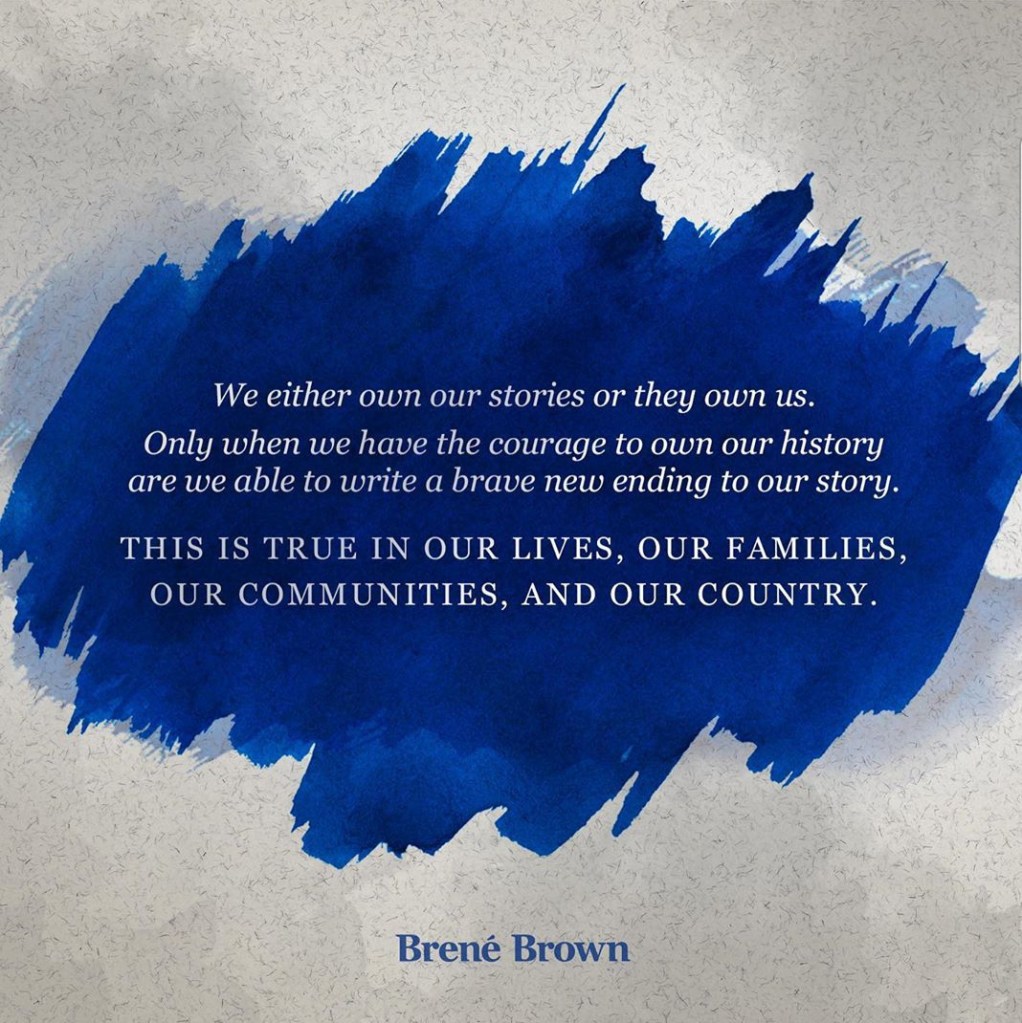
    Image from Facebook

    Brene Brown noted, “We either own our stories or they own us. Only when we have the courage to own our history are we able to write a brave new ending to our story.” I own my history of placating Whites at work, in friendship, and at church to make them comfortable with me. I also own that I previously believed that their comfort was more important than my being. BUT NOW (say it with me church)…I’m writing a very different ending for myself. It looks like loving myself enough to move forward with those who pursue justice in word and deed. Who continue to do the personal work of becoming anti-racist. It looks like loving myself enough to end fruitless conversations that originate with interrogation instead of empathy. It looks like CHOOSING. I now realize that as a Black Christian I don’t have to accept every invitation into a conversation on race. This makes me no less Christian. This makes me healthier. This makes me wise. This allows me to endure.

    If there ever was an anti-racist checklist, it would be loaded with nuance and complexity; joy and pain. Not a lot of conditional statements, but real expectations. It might look something like this.

    Anti-Racism Checklist

    1. Hard work
    2. Failure
    3. Love
    4. Ambiguity
    5. Frustration
    6. Anger
    7. Disappointment
    8. Endurance
    9. Victories (small & large)
    10. Lament

    Anti-racism is spelled M-A-R-A-T-H-O-N. It is not spelled p-o-p-u-l-a-r-i-t-y. Neither is it spelled p-r-a-i-s-e. To the adults in the room, we are not in high school anymore. Therefore, our personal metric should not be “cool by association.” No longer permissible to rest on the laurels of having Black friend(s) or coworkers. Stop searching for a list of things to “check off” to arrive at the status of anti-racist. A list of things to “prove” your work is not primarily performative. Don’t exhaust yourself trying to prove who you are. That’s wasted energy. Marathons are about conservation and bursts of energy at appropriate times.

    You know who you are and where you are. If you do not know who you are, honestly interrogate your soul. If you are not where you would like to be, then put in work. And keep working. But don’t ask me for a list. If you do, I will reference the one above. It is the only list I have that counts in this work. A list that allows us to examine our privilege, power, and prejudice.

    White people, if your relationships feel particularly strained with your Black friends or coworkers right now, remember, “ambiguity and disappointment” are on the list. If you feel exhausted, remember, “hard work and endurance” are on the list. If you feel like, you are just not getting things right, remember, “failure and frustration” are on the list. Black people, if you are tired of empty apologies and excessive validation, remember, “anger and lament” are on the list.

    If you have resolved to keep putting in work, then others will benefit from these acts of love and we’ll share in mutual victories. But, if your goal is simply to check off an act of love or a moment of endurance, you’ve missed it. Ball the list up. Throw it away and ask the question, “Do I really want to become an anti-racist or is this all for show?”

    “Search me, O God and know my heart. Try me and know my thoughts.” – Psalm 139:23

  • Lost that Loving Feeling

    Lost that Loving Feeling

    For the past ten days, each breath I’ve taken has felt triumphant and treacherous. In the same breath I would inhale hope and exhale despair. With as many breaths taken, I somehow still felt as if I was suffocating. A lingering heaviness remains in my chest, yet I persist in taking long, deep breaths of hope to survive. This is the only way I know to describe the unavoidable collision which occurs when the topic of racial injustice becomes a national (dare I say global) conversation and you live, work, or worship in a space where “White Gaze” is dominant or ever present.

    My time in Memphis has been unique, particularly in the new relationships developed; majority of my deeper friendships in this city are with white women. I am thankful for these women, but pandemics and protests have revealed that their love for me had better not be based on a feeling or we’re in trouble. Feelings alone won’t sustain a friendship.

    Unity feels good, when all appears good with the world. However, when people are protesting racial injustice in all 50 states and social media profiles are repeatedly highlighting the stories of #GeorgeFloyd and #BreonnaTaylor, those high and lofty feelings dissipate and we are left with the ugly truth of our bias. Sometimes our biases are stronger than our belief. Our belief in Christ and love of neighbor is superseded by an eye of interrogation of the Black life. “What did he/she do to deserve this?” Superseded by ideals of white savior-ism and notions of rescuing black friends from racism. “I don’t know what to do…just wish I could make all of this go away…” Superseded by complicit silence for fear of not “knowing what to say” or “having the right words.” “I really didn’t want to say the wrong thing to you as a white person, so I didn’t say anything…” Superseded by a strange premise that demonstration of love or support to a Black friend is different than that of a white friend. “You’re black…and I’m white…and…I just don’t know how to love you in this time.”

    The myriad of responses from many of my white friends during the most recent unrest caused me such sadness. I then began to ponder, when I have nothing to give emotionally, intellectually, socially, spiritually, (fill in the blank), will these friends still demonstrate love towards me? When we’ve lost that loving feeling, how then will Christ be glorified? When tears and pain are my constant diet and the warmness of presence you’ve known of me seems to be no more. When my enrage of of the devaluing of black lives is communicated will you see me as just another angry black woman? When I can no longer help you bear your burden, will you rise to help me carry mine? When I present you with the depth of my pain, will you rise and meet me in that space or will you retreat? When my actions don’t “feel” loving, will you still love me?

    I have one prayer during this time for my white friends and it is that you would rise. RISE to meet your black friends in this fight for justice. We are tired of hearing you say you just didn’t know what to say. Say something and be vulnerable in your humanity. We are tired of hearing you say it’s not your personality to say something. Courage is not about personality (ask this introvert). We are tired of hearing you say it’s hard. We know. YOU can do hard things. We are tired of you saying you just don’t know what to do. Educate yourself first. Listen (to Black people) second. Lastly act. We are tired of your excuses. It’s time to make moves. Join the movement.

    Recently, so many of my white friends, whom I love, have retreated if they weren’t praised for their actions (posts on social media, watching a documentary on race, etc.); if the pain was too great; if I didn’t initiate dialogue. After years of these types of conversations and consistent complicity from white christians from city to city, I almost decided to taper my expectations of white people during these times. I’ve decide not to do that. I will continue to push my white friends to live out the shared values of faith espoused.

    When our belief in Christ and love of neighbor is stronger than our bias, we will rise and not retreat. Our deep conviction to see the gospel manifest will drive our action in public and in private. Below, a dear friend of mine articulates what this exhaustion might look like.

    White christian friends, I am hopeful that your courage to stand for justice is a reflection of your deeper conviction (as a follower of Christ), not your desire for my validation as your Black friend. Some days I won’t be able to validate you because I am literally trying to catch my breath in this marathon of justice. Ask yourself – when the pressure increases (and it will), will you stop standing with me when I stop validating you? Only you can answer that.

    I don’t know what love feels like to you, but I do know what it looks like to me.  It looks like rising; a progressive upward movement towards the goal of justice.  Don’t run away from your Black friends when they are in pain.  That doesn’t look like love. Don’t ignore or try to escape from their pain. That doesn’t look like love. Don’t settle for inactivity in their pain. That doesn’t look like love. Be present. Be active. Be purposeful. The average number of breaths per day is 23, 040. Imagine exhaling despair that many times per day. It’s exhausting. I am are tired, but I won’t quit demonstrating my love for the marginalized. I hope you don’t either. Let’s do work.

  • When privilege speaks

    When privilege speaks

    WE ARE HERE AGAIN. Another #unarmed Black man murdered under the guise of a citizen’s arrest. #AhmaudArbery and #SeanReed are the latest trending hashtags attempting to shine light on injustice. This time my anger feels different. I’m enraged. Maybe it’s because we’re here again. It’s more likely because I know that my voice is not enough. My pain will linger; longer than I want. Seventy-four days after Ahmaud’s murder, the two white men were arrested. Seventy-four. However, when [white] privilege spoke, with 36 hours of public outcry, the process of justice was initiated. Thirty six hours vs. seventy four days. Sinking in… A deeper sense of sadness is ever present as I also realize that I am not as free as I once believed. This makes me jealous of the freedom that [white] privilege provides.

    silence is harmful

    When privilege is silent, unjust systems reflect sizeable inequities and marginalized people live with the pain. The Black people of Brunswick, GA were speaking about this injustice immediately and yet no arrests were made. Privilege protected. Privilege remained silent. The passivity of leaders who embolden white supremacy and the oppression of the marginalized has sickened me once again. It’s sickening because America still clearly hears a predominant voice before all others; that of the white American.

    I’m learning that many people of privilege are afraid that their words may fail them in times like these so they fail to speak, call, text, or listen. They fail us. Once again privilege exhalts itself rather than those on the margins. It chooses comfort. Once again white fragility wins. Once again I (and other people of color) are expected to single handedly bear the burden of racial injustice and love an America that repeatedly ignores the implications of its sin. America has not love Black people well. America has not loved people of color well.

    A new lament has surfaced in addition to black bodies being devalued – the power privilege is grossly underestimated. When people of privilege in every sector and class joined their voices with those on the margins chanting “I #RunWithMaud,” things changed. If you love me. If you love God. If you love your neighbor. Pull up. Stop making excuses for standing with the other. Now is the time to use your voice in a public manner. Let your privilege shine in a way that brings glory to God, elevates the voice/stories of people of color, and fights for equitable systems. Bree Newsome and James Tyson project a model of what it looks like for white allies to allow their lament to move them to action. Bree Newsome was not alone the day she scaled a pole and took the Confederate flag down in an act of protest following the massacre of the Charleston 9. James Tyson, a white activist, was literally her foundation of support to help her begin her climb. They were both arrested that day. As my friend’s husband, Nii Ato, processed his grief regarding #ahmaudarbery, he stated that we don’t just need allies at this time…we need accomplices. I couldn’t agree more. Ask yourself, what skin do you have in the game? As a Black woman, my skin color forces me into the game whether fatigued, injured, or down right helpless. I could use your help. Truth is, America has never really listened to the Black voice alone.

    “Black America needs to see that white people are willing to step up and put some skin in the game.”

    James Tyson, Charlotteobserver.com

    longing for freedom

    I’m grateful that so many of my white friends and others of privilege responded so swiftly and publicly to Ahmaud’s murder. If I’m honest, I have been wondering why. Was this bandwagon behavior or “hashtag activism”? Have my friends changed their perspective due to proximity to the poor? Have their friendships changed and become more diverse? Did this experience produce a different level of empathy because #neighborhoodsowhite? I know how much my friends value running and the freedom it provides. I’m jealous of the freedom with which my white friends are able to go for a run or a walk without worry. I’ve never felt that free. I’m always worried when I walk or go for a bike ride alone. Always. I’m jealous that they don’t know what it’s like to experience to have someone view your physical body as a threat. As criminal.

    I imagine white people could envision themselves “running” in the Brunswick neighborhood just as Ahmaud was running. I imagine they could empathize with the initial feeling of joy and ease Ahmaud had they day as he began his run. I imagine that for the first time, they could put themselves in the unarmed victim’s shoes. This Black man was “just running.” He was not in a Black neighborhood. He was not selling cigarretes. He was doing something that people of privilege do. There were less calls for Ahmaud to justify his humanity. For the first time, the hashtag is one of solidarity. I.run.WITH.Ahmaud. It is not just his name. What a powerful lesson empathy teaches here. Empathy makes us incapable of apathy and illuminates our humanity. When we can see ourselves, we can see the other. It’s been said several times on social media that authorities only responded because “we” saw the video. The public has seen many videos of unarmed Black people being shot and they didn’t speak out. I believe differently.

    Privilege didn’t speak out because it saw the video. It spoke out because it could see itself in the video. #RunWithMaud

    Precious Jones

    I hope the Black community gains more accomplices to justice than allies. More people willing to pray AND act. Friends of [white] privilege, I dare you to live truly unafraid because some of us will never be able to do so. America still listens and responds to you.

    May our lament leave us with bruised knees and lift us up from that position into courtrooms, classrooms, and boardrooms where we use our voices to cry out.

  • Invisible Scars

    Invisible Scars

    It is the third quarter of the school year and I am scarred. I look the same on the outside. What has happened to my soul is undetectable to the human eye, but I AM SCARRED. As a proud Black woman from the south, I have traditionally looked for scars on the exterior of my body; perhaps they would show up in physical form. This time they have mostly been internal. My thoughts race with “what if” scenarios that spiral out of control. What if another child is shot? Can my soul bear that news? What if another parent has to bury their child? What if I have additional sleepless nights with recurring sound clips of grief deeply laden within a parents voice. What if…

    A few weeks ago, I learned that a 9 year old student at our school had been shot while playing outside. He did not survive. He was just playing with his siblings and family. It was nearly 6 o’clock in the evening and the sun had just gone down less than thirty minutes prior. Earlier in the school year, a 7 year old student who attends our school was hit by gun fire when someone shot into their home. In both cases, I have older siblings of each student in my 5th grade class.

    As my students and I spent time trying to process our feelings through writing, drawings, and tears, I was unprepared to hear of how many additional stories of gun related trauma they had encountered. For the past three weeks, my soul has been overwhelmed with grief. I enter the school building and tears have flooded my eyes. I have no regret with the choice I have made to teach in this community. It is one of my greatest honors, however, I wasn’t prepared for this type of loss. I wasn’t prepared for the shattering of my soul as I walked through the hallways thinking about what my student would experience when she returns knowing these are the same hallways her brother often walked down. As a person who likes to have answers. I have none. I have been giving hugs. Lots of them. I have been honestly sharing with my students and other teachers how this grief has impacted me. I have also decided to seek professional help. I am looking for a Black therapist in my area who can help me process.

    There are times when our souls are enlarged through suffering. Supernaturally or divinely, we are able to experience or relate to God and others in a new way through suffering. At this time, my soul doesn’t feel enlarged through suffering. I just feel lost. I’m teaching, but I feel deep sadness daily. Sad that a little black boy was shot down in the midst of black joy. Sad that my students expressed that they don’t feel safe in their community. Sad that the siblings of this student have experienced such loss so early in life. Sad that I can only support students in limited ways. Sad that our western society cries out that we must continue to educate our children in the midst of tragedy. Just keep teaching. I am sad that we are sending them a message far too early in life that when your heart aches, when loss grips you, when depression overtakes you; don’t lament, just work. Don’t cry; just work. Don’t slow down; just work.

    This sudden loss triggered the trauma I experienced as a sixteen year old when I received the news that my dad had passed away. I remember how helpless I felt returning to school the next day. Yep, I went right back to school. It was one of the safest places I knew and it brought me great joy. I remember being afraid to share with friends or teachers that my dad was dead. I remember how much relief it brought me to have a teacher point to a name in the obituary and ask…”Was this your father?” I was relieved that someone else knew and cared. Honestly, what teacher reads the daily obituary looking for student names? That teacher understood the experiences of my neighborhood and the trauma my classmates and I encountered. I remember simply answering “yes” and not having the resolve to say much more.

    As a teacher working in a similar neighborhood as that of my childhood, I now realize that the invisible scars from my youth in addition to those incurred this year can do immeasurable damage to my mental and physical health if I am not honest with myself. If I don’t seek help. If I don’t take time to grieve. I’m doing that ya’ll. I’m taking mental health days. I’m slowing down. Taking the deep breaths. Increasing my gratitude. Loving those around me. Loving myself. Asking God for insight/wisdom each day in the classroom. My greatest partnership is with the Holy Spirit as I teach. I know I am not in the classroom alone and lately, God’s presence has been palpable and I’ve needed that. I am so grateful for friends that have stopped by my classroom to give me the best hugs; no words, just a warm embrace reminding me that I am cared for. Grateful for friends and family who have called to hear my voice and ask me if I am okay. Grateful for friends who have encouraged me to take the mental health day(s) necessary to care for my soul. Grateful for friends who have brought me freshly baked cookies and sweet notes that lift my spirit and my energy. You all should know, that although my head is not fully lifted and days are still cloudy, your acts of kindness and care have sustained me.

    I wanted to write this particular blog to encourage my friends who work in industries of service (social work, health, education, etc.) to be just as vigilant about your mental health as some of you are about your physical health. They are inextricably linked. And lastly, because this is Black History Month and we (black people) have a history of falsely believing that we can carry EVERY burden and NEVER ask for help, this post is for you. Friends, take care of yourself. Take care of your souls. Don’t carry burdens that were not yours to carry alone. Don’t let your invisible scars manifest as physical scars. Both are painful. Let’s work to minimize our scars.

    After you read this post, I don’t want your pity or praise, just your prayers and presence. Just your commitment to take care of yourself before you try to take care of others. I have chosen to teach in a community that experiences high trauma and some tragedy. It is still one of my greatest joys.