Category: Black History Month

  • Invisible Scars

    Invisible Scars

    It is the third quarter of the school year and I am scarred. I look the same on the outside. What has happened to my soul is undetectable to the human eye, but I AM SCARRED. As a proud Black woman from the south, I have traditionally looked for scars on the exterior of my body; perhaps they would show up in physical form. This time they have mostly been internal. My thoughts race with “what if” scenarios that spiral out of control. What if another child is shot? Can my soul bear that news? What if another parent has to bury their child? What if I have additional sleepless nights with recurring sound clips of grief deeply laden within a parents voice. What if…

    A few weeks ago, I learned that a 9 year old student at our school had been shot while playing outside. He did not survive. He was just playing with his siblings and family. It was nearly 6 o’clock in the evening and the sun had just gone down less than thirty minutes prior. Earlier in the school year, a 7 year old student who attends our school was hit by gun fire when someone shot into their home. In both cases, I have older siblings of each student in my 5th grade class.

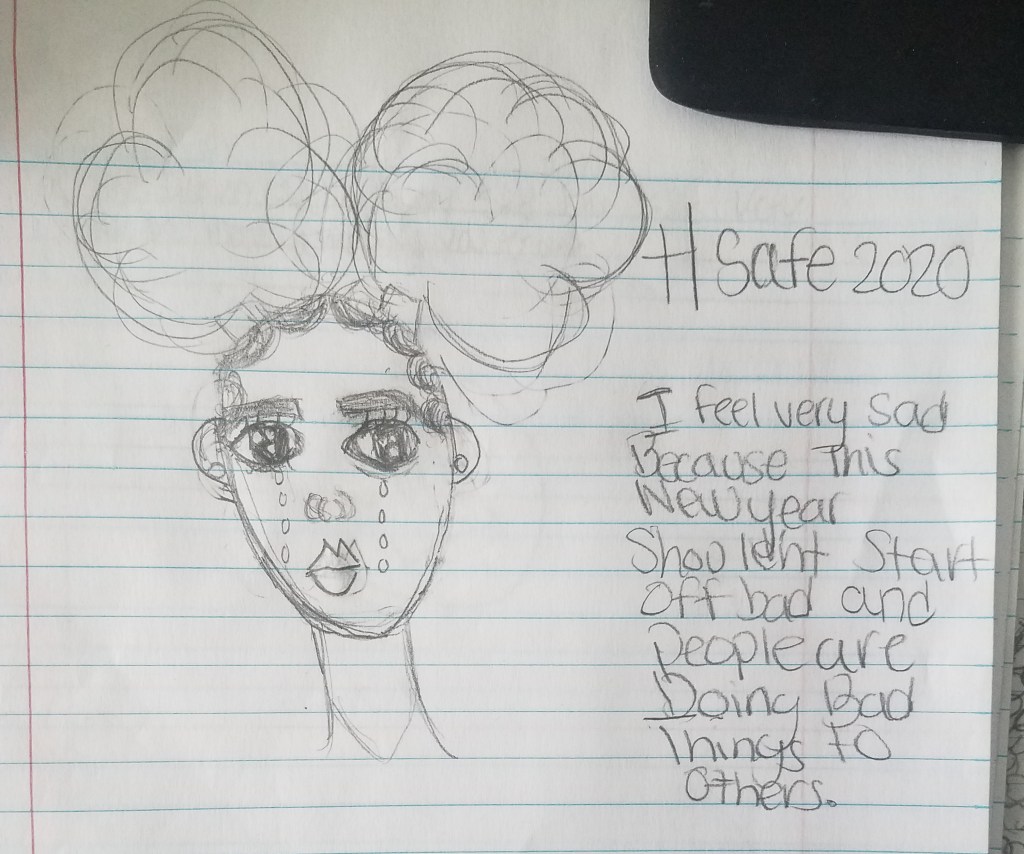
    As my students and I spent time trying to process our feelings through writing, drawings, and tears, I was unprepared to hear of how many additional stories of gun related trauma they had encountered. For the past three weeks, my soul has been overwhelmed with grief. I enter the school building and tears have flooded my eyes. I have no regret with the choice I have made to teach in this community. It is one of my greatest honors, however, I wasn’t prepared for this type of loss. I wasn’t prepared for the shattering of my soul as I walked through the hallways thinking about what my student would experience when she returns knowing these are the same hallways her brother often walked down. As a person who likes to have answers. I have none. I have been giving hugs. Lots of them. I have been honestly sharing with my students and other teachers how this grief has impacted me. I have also decided to seek professional help. I am looking for a Black therapist in my area who can help me process.

    There are times when our souls are enlarged through suffering. Supernaturally or divinely, we are able to experience or relate to God and others in a new way through suffering. At this time, my soul doesn’t feel enlarged through suffering. I just feel lost. I’m teaching, but I feel deep sadness daily. Sad that a little black boy was shot down in the midst of black joy. Sad that my students expressed that they don’t feel safe in their community. Sad that the siblings of this student have experienced such loss so early in life. Sad that I can only support students in limited ways. Sad that our western society cries out that we must continue to educate our children in the midst of tragedy. Just keep teaching. I am sad that we are sending them a message far too early in life that when your heart aches, when loss grips you, when depression overtakes you; don’t lament, just work. Don’t cry; just work. Don’t slow down; just work.

    This sudden loss triggered the trauma I experienced as a sixteen year old when I received the news that my dad had passed away. I remember how helpless I felt returning to school the next day. Yep, I went right back to school. It was one of the safest places I knew and it brought me great joy. I remember being afraid to share with friends or teachers that my dad was dead. I remember how much relief it brought me to have a teacher point to a name in the obituary and ask…”Was this your father?” I was relieved that someone else knew and cared. Honestly, what teacher reads the daily obituary looking for student names? That teacher understood the experiences of my neighborhood and the trauma my classmates and I encountered. I remember simply answering “yes” and not having the resolve to say much more.

    As a teacher working in a similar neighborhood as that of my childhood, I now realize that the invisible scars from my youth in addition to those incurred this year can do immeasurable damage to my mental and physical health if I am not honest with myself. If I don’t seek help. If I don’t take time to grieve. I’m doing that ya’ll. I’m taking mental health days. I’m slowing down. Taking the deep breaths. Increasing my gratitude. Loving those around me. Loving myself. Asking God for insight/wisdom each day in the classroom. My greatest partnership is with the Holy Spirit as I teach. I know I am not in the classroom alone and lately, God’s presence has been palpable and I’ve needed that. I am so grateful for friends that have stopped by my classroom to give me the best hugs; no words, just a warm embrace reminding me that I am cared for. Grateful for friends and family who have called to hear my voice and ask me if I am okay. Grateful for friends who have encouraged me to take the mental health day(s) necessary to care for my soul. Grateful for friends who have brought me freshly baked cookies and sweet notes that lift my spirit and my energy. You all should know, that although my head is not fully lifted and days are still cloudy, your acts of kindness and care have sustained me.

    I wanted to write this particular blog to encourage my friends who work in industries of service (social work, health, education, etc.) to be just as vigilant about your mental health as some of you are about your physical health. They are inextricably linked. And lastly, because this is Black History Month and we (black people) have a history of falsely believing that we can carry EVERY burden and NEVER ask for help, this post is for you. Friends, take care of yourself. Take care of your souls. Don’t carry burdens that were not yours to carry alone. Don’t let your invisible scars manifest as physical scars. Both are painful. Let’s work to minimize our scars.

    After you read this post, I don’t want your pity or praise, just your prayers and presence. Just your commitment to take care of yourself before you try to take care of others. I have chosen to teach in a community that experiences high trauma and some tragedy. It is still one of my greatest joys.
  • Neighboring Fear

    Neighboring Fear

    How has fear become my neighbor? Close enough to be a predictor of behavior, yet distant enough for me to ignore when discomfort arises.

    Have you ever experienced a fear so great that it paralyzed you? A fear so magnificent that you felt powerless to respond and instead, you ran? I have. Two weeks ago I learned through an experience that fear not only keeps you from purpose, it keeps you from humanizing. Fear can make us irrational.

    Embarrassingly, a few weeks ago I had the opportunity to respond to a person’s need and comfort them after something pretty traumatic happened; trauma that I induced. Now, pause the tape. A rational  response by me would have been to provide comfort to a “fellow neighbor” in need, but I didn’t. My feet were so mired in fear, that I irrationally did nothing. Press play. I did nothing. Nothing to comfort. Nothing to support. What I did do repeatedly in the moment was conjure up a myriad of reasons why “not responding to my neighbor” was the best idea. I have since made amends with that neighbor, but this life experience left me keenly aware of the power fear has to dehumanize others. The more salient lesson is that I am not exempt from such dehumanizing behavior. A humbling and indelibly heart gripping moment which is unforgettable.

    Fear is rarely disruptive on the grand stage of life, but it lives in the mundane decisions happening minute by minute. It resides in our decision to ignore the outsider and choose our “known friends” repeatedly. It breathes in our decision to avoid eye contact with the marginalized or homeless. It contaminates our ability to see beyond external, often, superficial differences. Fear comfortably rests in our desire to remain comfortable in this life. No new relationships. No sacrificial giving of time or resources. No need to learn about another’s culture. No need for diversity of perspective or life experience.

    As a Black woman, I look forward to the month of February because I’m most hopeful that it will afford me the unique opportunity to enter into conversations with people who are otherwise guarded on conversations of race. Then fear moves into the neighborhood… hello, neighbor…

    During Black History Month, one of the most palpable things a non-person of color might fear is a meaningful discussion surrounding racialized systems which privilege some and prohibit others. Fear of being labeled a racist. Fear of not knowing what to say. Fear of saying the wrong thing. All valid concerns, yet, without such discussions, my history becomes dumbed down to a single speech, a rescued slave, or a heroic conductor. This history, my history, LIVES in the fabric of our education system, the socioeconomic strata, and undoubtedly in me. Black History, which is also American History, has somehow been re-categorized as a single month within the year where people of color can liberally speak of and celebrate their story. A story laden with triumph, not just tragedy. Fear supports an ethos of separate, but equal because of it’s irrationality.

    Fear and love elicit visceral responses. Fear freezes. Love frees.

    – Precious Jones

    Vocabulary.com says that something visceral is felt in the gut. A visceral feeling is intuitive – there might not be a rational explanation, but you feel that you know what’s best.

    I’m not certain that we can live our lives entirely absent of fear, but, I do believe the more we choose love, the more we’ll find ourselves likely to respond to our neighbors in the way that we desire to be responded to. A personal prayer of mine is to love others well and I am still learning how to do this when fear is pounding on my door, demanding re-entry. How can you evict fear and invite love into your community this February? This year? This lifetime? These are indeed the same questions I am left pondering.

    There is no fear in love, but perfect love casts out fear. For fear has to do with punishment, and whoever fears has not been perfected in love. – 1 John 4:18 (ESV)

  • Wakanda Woman do you really want?

    Wakanda Woman do you really want?

    #Wakandaforever and ever and ever.   🙅🏾  Seriously.

    Short caveat before providing a minor critique of the response to the Black Panther movie. ~ Black Panther was such a substantive movie.  I REALLY enjoyed it and have begun to think about how I can live in such a way that Wakanda can move beyond a figment of my imagination. I’m re-imagining how I can participate in creating a world where black and brown people of the diaspora know their worth, are proud of their ethnicity, freely celebrate their culture, and have the skills necessary to drive innovation in technology.

    Caveat over.  🙅🏿

    Men, I need to talk to y’all.  Especially black men.  I need answers.  Stat! Maybe you’ll shine some light so that I can cast less shade, because I have plenty to throw right now.

    Never have I seen black women who are bald or have short hair and darker skin praised for their beauty AND strength by…black men.  Black men have praised plenty of black women that have long, straight (or minimally kinky) hair, with lighter skin as beautiful. This type of praise is unconventional in the American black culture.  However, since Black Panther so brilliantly displayed women with such phenotypical features, they pretty much have gained goddess status.  Bruhs are like… “Nakia, Okoye, and Shuri, are my new standard for beauty…”  As a woman of dark skin who’s not always experienced this type of affirmation from black men, I appreciate that! My contention is with the “new-found way in which you’ve presumably embraced my strength as well.

    20180130_03_SHOT3_0040_C.JPG
    Letitia Wright, Lupita Nyong’o, Angela Bassett and Dania Gurira photographed exclusively for Entertainment Weekly by Koury Angelo is Los Angeles on January 30th 2018 photographed exclusively for Entertainment Weekly by Koury Angelo is Los Angeles on January 30th 2018

    STRONG BLACK WOMAN – not new, so let’s not treat it as such

    While Wakanda itself is a fictional place in Africa, the Dora Milaje Warriors of Wakanda are not.  Arica L. Coleman, of Time, recently wrote an article, “There’s a True Story Behind Black Panther’s Strong Women.  Here’s Why that Matters” that provides historical context.  Many black women are unofficially given the title of “strong black woman” and it carries with it unbelievable weight, often to the detriment of emotional, physical, and spiritual health.   Peep this book from Dr. Chanequa Walker-Barnes, Too Heavy a Yoke: Black Women and the Burden of Strength, if you desire some freedom here. This is not the strength that beams from my sistahs on the screen of Black Panther.  It is not the strength that simply ignores pain.  Not the strength that forsakes self-care for the care of everyone else in their tribe.  These women are physically and intellectually strong.  They are beautifully portrayed as women whose strengths are not seen as a threat, but as an additional weapon in the protection of a nation they all love.  Think asset not liability.

    Here’s why I’m salty.  I’m salty because my social media news feed has been full of posts and comments from black men that are practically giddy with the portrayal of women in this movie.  Especially commenting on their strength and beauty.  Well, guys, there seems to be a contradiction in what your social media post say and what I’ve experienced in life as a real-life Dora Milaje woman.  Yep, self proclaimed Milaje woman.  Here’s what’s been communicated directly and indirectly to me by men as a strong black woman:

    Your strength is intimidating, so tone it down and don’t have too many thoughts on the issue. 

    Be anything but assertive in the presence of men.  Too much sauce is too much sauce.  Minimize your intelligence at those times. 

    You are so much more beautiful if you have hair extensions that make your hair straight or very long.

    Regardless of your education and experience, your voice is always less valuable than any man in the room.

    Your dark skin is exotic.  You are not beautiful enough to be pursued in relationship, only observed.

    The list could continue, but the point is not to be exhaustive, but to challenge this notion that black men really do find the Dora Milaje warriors, Nakia, Queen Ramonda, and Okoye attractive with all of their strengths.   As a friend and I discussed the movie, she brought out the perspective that because T’Challa’s black panther suit was brilliantly designed to absorb kinetic energy with each bullet fired at him and later reused in his own defense, she often wanted him to take “more hits” so that his defense would be even stronger.  Such an interesting concept with parallels to black men across the diaspora.  Black men have been taking hits for a long time.  They’ve had a shield that absorbed a lot of the blows for them; the black woman.  Black women are still absorbing daily blows for black men.

    As we close out another Black History Month and a month that celebrates love, I ask men again, Wakanda woman do you really want? Many of you already have women with the strength of the Dora Milaje warriors as family members, colleagues, and friends.  Hug these women.  Protect these women.  Walk through healing with these women.  Help facilitate the dreams and gifts within these women.  Love those women. #InWakanda, strength is only a threat to the enemy, not family. We are all family in the African diaspora.

    After Wakanda, it appears I no longer must choose between beauty and strength.  As a dark-skinned woman with thick kinky hair, it’s always been one or the other.  Men, I hope my real-life experience begins to match what’s on your social media feed. I hope to see board room dynamics change.  I hope to see many of my beautiful and educated, black friends change their status from “single” to “in a relationship” this year.  I hope they will no longer be despised for their strength, but fully loved amid it.  Brothers, if there was ever a time to shoot your shot, it’s now.   Maybe elements of Wakanda will become a reality sooner rather than later…

    “Gender roles and strength don’t counter each other at all.” –

    Thought on Black Panther from Michelle Higgins of Truth’s Table

  • Unveiling Hidden Figures

    Unveiling Hidden Figures

    The movie “Hidden Figures” took me on a roller coaster of emotions that I am not sure I’ve come down from.  Many [many] years ago, I was a budding engineer interning at NASA’s Kennedy Space Center in Cape Canaveral, FL who later turned down an offer to work as a long term engineer there.   At that time I had no idea of the premise of being a “hidden figure” in my career.  I was naive. Hopeful.  Trusting and hanging on to every word of those in authority; predominantly  the older, white men who were my managers.

    This derivation of mixed emotions comes from the simple, yet complex idea that things which are hidden are searched for intentionally, or remain hidden for a long time; only discovered by happenstance.  I honestly celebrate the healthy exposure that this movie has brought African American women in the science fields, yet my heart and life experience wrestle with the reality that any leader who chooses to unveil hidden figures in any industry must pay some cost.  It may cost some a bruised ego.   Others some of their influence.  Still others the very position that they may have aspired to or felt entitled to for years.  Truthfully, this is a cost that some are unwilling to pay.

    ***SPOILER ALERT***

    Choosing to Unveil

    When I re-imagine the bathroom scene where her manager tears down the “Colored Only” bathroom sign with every exertion of strength in his body, I am deeply moved.  Viscerally moved to tears.  I am moved because he had a choice.  He had a choice to leave things the way they were (which was perfectly legal) or to ensure equity for all on his staff at the expense of his social capital and the dissenting opinions of others. I won’t divulge details, but as a women of color who has experienced working on teams and with management who choose to unveil and those who don’t, I will say that I believe this act was far more courageous than depicted.  Now, before we toot too many horns, the most glaring paradox in this movie to me was that these women WERE ONLY unveiled because there was a DIRECT BENEFIT to those who had allowed them to remain hidden for so long.  In fact, the cost became too great for them not to be unveiled.  I mean, we’ve got to get John Glenn to space, right?  By the end of the movie, I joined everyone in celebrating the greater victory for America, but I could only think, the managers cowered because they had to; because they wanted victory so badly.  They DID NOT do the right thing simply because it was the right thing to do.

    I want to honor Martin Luther King, Jr. as we near the end of another #BlackHistoryMonth and highlight the response of Dorothy Vaughan, Octavia Spencer’s character,  who in fact did the right thing because it was the right thing to do. 

    martinlutherkingjrthetimeisalwaysright

    Leaders who Do the Right Thing (as reflected in Octavia’s charachter) are marked by:

    1. Recognition (of others) – She actively worked to recognize the gifts and talents of those on her team even if it warranted a promotion for them and practical obscurity for her.
    2. Innovation – She  developed a new way for those on her team to experience growth so that they were prepared to be unveiled when the time was right.  She risked the very promotion she had longed for so that the entire team rose to another level when she rose to another level.  Great innovation is often accompanied by great risk.
    3. Golden Rule Gratitude – With outward expressions of gratitude, she never delineated from treating others the way that she wanted to be treated.
    4. Hopefulness – She hung on to hope.  Her hopeful vision for the future propelled her and others forward.
    5. Tenacity – She displayed a dogged tenacity to lead and develop others with the influence given.

    There are hidden figures in classrooms, colleges, and places of employment everywhere.  Many systems in society have given visibility to some and not others.

    Today, I am less of a hidden figure.  Still being unveiled and grateful for it.

    One day, I hope it is said of me that I “did the right thing” as a leader; a person of influence.  I understand that I have a beautiful choice.  I will choose to unveil hidden figures when presented with the opportunity. Who will you help unveil today?

    “He must become greater; I must become less.” – John 3: 30, NIV

  • The Blessings and Burdens of being Black

    The Blessings and Burdens of being Black

    These burdens remain. One of the first blogs I published when I began this journey.  Originally shared February 2015.

    Precious's avatarPrecious Predilections

    burdenA burden by definition is a load that is especially heavy for one to carry. A blessing, on the contrary, is a beneficial thing for which one is grateful.  Is it feasible for someone to be grateful for a load that is especially heavy for them to carry?  I submit to you that it depends on the load.  There is not a day that I rise that I am not grateful that God made me a Black woman.  This is true.  I am honored and proud to be Black.  But there is another truth; and it is that I’ve had some negative experiences as a direct result of being Black.

    Today I would like for readers to reflect upon a burden that is carried and rarely spoken of.  It is the burden of being Black.  In the same vein, I ask readers to identify blessings of being Black.  I have…

    View original post 1,378 more words

  • Embracing the Selma Movement in a Socially Unconscious Society

    Embracing the Selma Movement in a Socially Unconscious Society

    Made by HistoryWe have come to the end of Black History Month, however, I have one more topic to discuss…

    There are few movies that leave an indelible mark on my mind and heart upon exiting the theater, however “Selma” and “12 Years a Slave” did just that.  The mark they left have driven me to consider whether or not the consciousness that we aim to achieve through social media is actually leaving us in a greater state of unconsciousness and self absorption.

    I draw such conclusion as I recount Martin Luther King Jr.’s moving speech and audacious challenge to those marching with him in Selma, AL to have a willingness to die for equal rights.  Martin stated, “Deep down in our non-violent creed is the conviction that there are some things so precious, some things so eternally true, that they’re worth dying for.  And if a man happens to be 36-years-old, as I happen to be, some great truth stands before the door of his life- some great opportunity to stand up for that which is right.   …A man dies when he refuses to stand up for that which is right.  A man dies when he refuses to stand up for injustice.  A man dies when he refuses to take a stand for that which is true.”

    I juxtapose Martin Luther King’s position with a recent account of a peer who decided to attend a forum to mobilize the justice movement in our city as a response to the Ferguson, MO situation.  As the forum started and the facilitator asked attendees how they should mobilize in our city, an individual stated, “I don’t know what we will do, but I know that I am not laying in the streets…”  You may recall that there were some individuals who laid in the streets as a form of non-violent protest to the loss of Michael Brown’s life and the larger systemic issue of police profiling of African American men.  I assure you that this person did not refuse to lay in the street because it was cold in Cincinnati at the time, but the statement spoke to the culture of our society which has a deep disdain for inconvenience.

    Let me tell you what’s convenient for us…Facebook and Twitter posts.  It is quite convenient to post still images of us at a single point in time doing something noble or honorable (as we see it) and sharing that image with the world to garner “likes.”  It seems to me that the only thing Facebook and Twitter are making us conscious of is how “great we think we are.”  These mediums are making us unconscious to the reality that anything worth living for is also worth dying for.  They are making us unconscious to what is happening in our nation as it relates to the bankruptcy of our educational system.  They are lulling us to sleep and singing a deceptively sweet lullaby that tells us that the world needs to know what we are eating, where we are vacationing, and what we are wearing (especially if we’ve personally deemed it “swagged out” or “on fleek”).

    If social media existed during Solomon Northrup or Martin Luther King, Jr’s. day, I imagine it would be used as a platform for justice not a pedestal for pride-fullness.  To be clear, I am not against Facebook or social media; in fact, I use them all the time.  But, as I watched these movies, I was convicted because I realized that I too was drifting into the abyss of apathy and not using my voice (whether through social media or vocally) to advocate and communicate the causes that God has placed in my heart.  I was becoming socially unconscious.  You, know, just conscious enough to know what’s happening, but NOT conscious enough to DO anything about it.  Not conscious enough to risk anything, but just conscious enough to post everything.

    I understand that the way in which we become socially conscious will be uniquely different for all of us.  Solomon Northrup stated while he was still a slave, “I don’t want to survive. I want to live.”  Even on the journey to freedom he intentionally set his heart upon the end goal as he exclaimed, “I will not fall into despair! I will keep myself hardy until freedom is opportune!”  I believe we have much to learn from these two ordinary men and others who resisted the dangers of apathy and willingly sacrificed their lives for freedom, both literally and figuratively.

    Martin Luther King, Jr. was on to something when he stated that we are not makers of history, but rather made by history.  When the next generation looks back and sees how we have historically used social media, may it garner a desire in them to let their voices be heard and not just their faces seen.  For it is in what we make of social media today that will shape tomorrow.

    This is post is not a call for you to quite your job and march in the streets. This post is a call for you to position your heart to sacrifice your life, career, or comfort for the cause(s) that keep you consciously awake at night.  Significant change is often produced via the path of least resistance.  Selma cost many within our nation something.  There is an individual cost to living socially conscious when it takes place apart from social media.  

    “Awake, O sleeper, and arise from the dead, and Christ will shine on you.”  Ephesians 5:14 (ESV)

  • Diabolical Opposition – Colorblindness and Colorism

    Diabolical Opposition – Colorblindness and Colorism

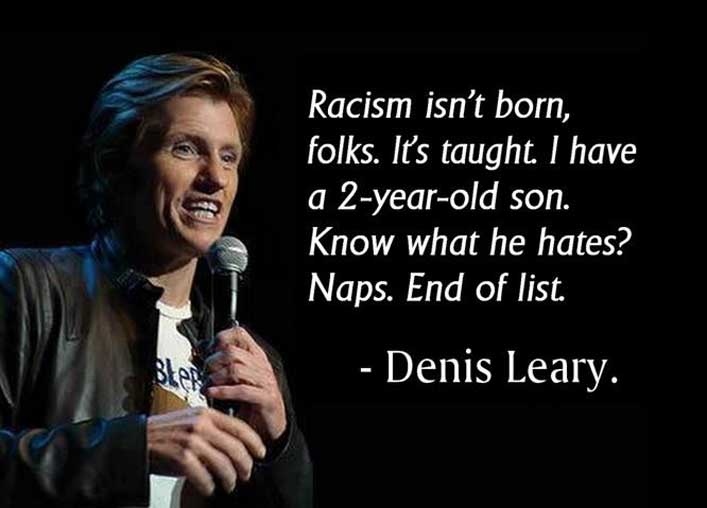
    dennisWe live in a society that superficially superimposes colorblindness over colorism.  I’m sure you’ve heard it, “We should all be colorblind…and so on and so forth…” The reality is that nothing could be further from the truth.  You see, kids aren’t born colorblind (in the literal sense) and neither are we, but somewhere our image of color has become perverted.  In fact, we as adults provide tremendous context for a child’s ideals of who they are, whether or not they see themselves as beautiful, and how they view others who are not like them (in color or in class).  Children only have the historical context of color provided by adults.  So why do some children prefer to “wash away their color” if they had the choice?  Why are some children ashamed simply because they are a darker shade of their peers within their ethnicity?  How did we arrive here?  Are we comfortable with this destination? I AM NOT and I will tell you why.  Colorblindness and colorism have both marred us as a society.  One of these perspectives appears harmless and the other clearly catastrophic.  Long term, they both prove deadly to one’s identity.

    Color blindness, innocently enough suggests that skin color is not seen as a differential characteristic of one’s ethnicity. Color blindness, by definition, is not a form of blindness at all, nearly a deficiency in the way one sees color.  While those who are genetically colorblind have no choice in the matter, society purports color blindness as the goal, when it is an outright choice not to recognize one of the many external facets of our beauty.  I can see evidence of God’s love for color in creation from the beautiful shores of Capetown, South Africa to the smallest pores on the skin of the human being.  If we were all the same color, I believe our world would be bland and not nearly as beautiful.

    If we shift to the other end of the extreme, we run headlong into the concept of colorism.

    col·or·ism  [ˈkələrˌizəm]
    noun
    1. prejudice or discrimination against individuals with a dark skin tone, typically among people of the same ethnic or racial group.
      “colorism within the black community has been a serious emotional and psychological battle”

    How am I to feel when I enter the store and see skin lightening cream with my name on it and a much lighter image of an skin lighteningAfrican American woman advertising her skin color as the color to aspire to?  Colorism affects so many young women and men around the world, that I could not “not talk about it.”  When most think of racism, it is primarily between two distinct ethnic groups, however, colorism has caused additional division among people within their own ethnicity.  Today, many praise and extol the beauty of Yale graduate and Oscar winner, Lupita Nyong’o, but Lupita herself did not initially find beauty in her own skin because of its darkness.  And even when others began to describe her as beautiful in recent years she admittedly was perplexed and desired to reject this view because of the seduction of inadequacy.  You can read her entire speech at the following link http://www.salon.com/2014/02/28/read_lupita_nyongos_amazing_speech_about_blackness_and_beauty/.   To paint a fuller picture of colorism’s deep impact, I would like to use a few clips from a compelling documentary which is now on Netflix, called “Dark Girls.”  Below, I have included the trailer from this documentary which gives a snap shot of some of the challenges and impact to young men and women who are darker.  You can also take a look at the history of colorism and an everyday example of how this plays out.

    Does opposition always have to be diabolical?  It seems that there has been such a negative connotation of opposition, which has in essence produced a myopic view of the need for opposition.  As an engineer, I learned that resistance, or put another way, opposition, was necessary and in fact useful in certain situations.  I think we can all appreciate the healthy resistance of electrical current flowing through the appliances in our home.  Too much resistance and it doesn’t work properly, too little resistance and we have a fire on our hands.  However, just the right amount of resistance and it operates exactly as intended.

    The imperfect perspective of humanity means that there will be natural resistance in our relationships with others.  Healthy and honest dialogue allows us to work through our opposing views.  Don’t resist resistance; welcome it. In honor of of Black History Month and the history of humanity, let us do away with colorblindness and colorism as both ask individuals to devalue themselves in some fashion.  This devaluation happens by ignoring the uniqueness and beauty of various people groups (colorblindness) or by espousing the idea that one gradation of an ethnicity is better than another (colorism).   I want to live a life in opposition of these positions and celebrate the creativity, beauty, and intentionality that God demonstrated when He made us different.  As John Cheng states, “We should strive to be color “full” rather than colorblind.”

    We are all beautiful.  Lupita has learned as we all will, that we can either lead voluntarily or involuntarily.  She now uses her position to help others see their own beauty as she writes to a viewer who decided not to lighten her skin after seeing her success, “I hope that my presence on your screens and in the magazines may lead you, young girl, on a similar journey,” Nyong’o said, in closing. “That you will feel the validation of your external beauty but also get to the deeper business of being beautiful inside. There is no shade to that beauty.”   Help someone to see their own beauty today.

    And God saw everything that he had made, and behold, it was very good…Genesis 1:31 (KJV)