Author: Precious

  • How Do I Handle My White Privilege?

    How Do I Handle My White Privilege?

    In this blog, Amy Seiffert shares her authentic perspective on privilege in a vulnerable way.  Amy and I are participating in a collaborative blog series  with other women where we will share our perspective on privilege and racial reconciliation.  Our collective prayer is that as you journey with us your heart will be open to what God wants to reveal to you.


    “Life’s most persistent and urgent question is: ‘What are you doing for others?  — Martin Luther King Jr.

    My name is Amy and I have white privilege. I was born into a white, middle class, educated family. I got a college degree and married a white male who also has his degree and is now a small business owner. We have three kids and reside in a predominately white neighborhood in a college town.

    I deeply miss the diverse relationships I had in high school; we had various cultures, religions, and race in my friend circle. Korean, Black, Indian, Arabic, Mexican, White, Jewish, Hindu, Christian. I miss recognizing and celebrating diverse friendships, having the weeds of prejudice pulled from my white privilege perspective, and raising my children with a colorful and beautiful view of the world.

    I miss the daily academic environment where the table is set to have hard conversations. We had many respectful and robust discussions about our distinct heritages. We not only talked, we were in each others’ homes. I loved the food, the practices, the clothing, and the family life of my friends who were very different from me.  My family now continues to cultivate relationships with other races that are around us, but we would love to – we need to –  cultivate more. The richness of other races in our lives grows such beauty, humility, understanding, joy, and hope. Our soul-soil is in a great deficit when we close it off to any kind of vital diversity.

    Privilege, according to the oxford dictionary, is: “a special right, advantage, or immunity granted or available only to a particular person or group of people.” Privilege can feel as obvious as our skin color and as subtle as our literacy. Even right now, if you are reading this blog, your literacy gives you advantage. I absolutely amen “education is a right, not a privilege” – but we can agree, for those who can read, there is an absolute upper hand.

    And today, as I come together with four different kinds of women, writing four diverse kinds of blog posts about privilege, race, ethnicity, reconciliation, fears, hopes and dreams – we also have one common denominator:

    Jesus.

    I sit humbled and thankful that King Jesus is King of a colorful Kingdom. His rule and reign is one where every knee will bow and every tongue will confess that He is Lord when it’s all said and done. “Every” being the game-changer. We will not be segmented under His rule, we will come under one allegiance, and we will all bow down on the same, level ground next to the cross.

    “After this I looked, and behold, a great multitude that no one could number, from every nation, from all tribes and peoples and languages, standing before the throne and before the Lamb, clothed in white robes, with palm branches in their hands,  and crying out with a loud voice, “Salvation belongs to our God who sits on the throne, and to the Lamb!” And all the angels were standing around the throne and around the elders and the four living creatures, and they fell on their faces before the throne and worshiped God… — Revelation 7:9-11

    King Jesus had stunning leadership regarding privilege. He was enthroned in glory, fully God, crowned in all comfort. And He laid it all down. He put down His rights, His throne, His everything. Nothing was taken with Him when He took up human skin and moved into the neighborhood. Paul explains this beautifully:

    “Think of yourselves the way Christ Jesus thought of himself. He had equal status with God but didn’t think so much of himself that he had to cling to the advantages of that status no matter what. Not at all. When the time came, he set aside the privileges of deity and took on the status of a slave, became human! Having become human, he stayed human. It was an incredibly humbling process. He didn’t claim special privileges. Instead, he lived a selfless, obedient life and then died a selfless, obedient death—and the worst kind of death at that—a crucifixion. — Philippians 2:5-8 MSG

    It is tempting to forget that this is GOD who lived this way. Setting the pace for the good life, He set aside the privileges of deity and took on the status of a slave. He took up a towel, got down on His knees, and washed grimy feet. He served his heart out, to the point of death.

    And so when it circles back to us, to me, I have a big question to answer: What do I specifically do with my white privilege? I often freeze just thinking about my advantages, I feel guilty about them, or I hide them because I don’t know how to handle them well. I want to weed out the prejudices in the garden of my heart and sow seeds of racial reconciliation; I feel sad and embarrassed when I find incongruities in my soul. Who can help us in handling our white privilege?

    Praise be to God! If we take our cues from the King, we will find the answer. We don’t have to struggle or hide or be perfect with our privilege. Like Jesus, we simply lay them down to serve.

    After some soul-searching, just one of the ways my entire family (kids included) can lay down our white privilege and serve the underprivileged is being a Licensed Foster Care Family. Before you object in your heart and think “that’s for saints” – please reconsider. Those who foster are not saints, they simply have a safe home. The requirement to foster is very basic: a safe environment.

    At different times this past year, we have laid down our routines, our comforts, our possessions, and had children in our home for short periods of time (we have done short-term Respite Care), giving a sweet child (we’ve housed hispanic, black and white children) a safe place to be in the middle of insanity. In the middle of abuse. In the middle of drugs.

    Do we lay aside our white privilege perfectly? Absolutely not. Do we try to by faith? Yes. Even if it’s the size of a peppercorn. This is the way King Jesus lived, always by faith. He came down by faith, He laid aside everything by faith, He died by faith – faith in the resurrection to come.

    I often have the famous phrase “With great privilege comes great responsibility,” running through my mind. And I can freeze. But, friend, if you also freeze – let’s unthaw together and simply serve. Let’s serve in as many ways as we can. Serve in little ways and great ways. Serve with our voices when we see injustice and serve with our actions when we see helplessness. Serve using our strength for the weak and leveraging our power for the vulnerable.

    What privilege do you have, and how can you use it to serve the underprivileged?

    May we be known by what we lay down, rather than by any privilege we hold high. 


    About the Author

    Amy

    Amy is a wife of 17 years and mom of 3, who never thought she would love raising her family in a small college town. She works at Brookside Church as the Director of Outward movement and has the privilege of occasionally preaching. Amy loves tennis, ice cream, and making beautiful things . In between diapers changes, laundry, and soccer practices, she writes, blogs, speaks, and is working on her book on motherhood.  She has been in a monthly book club for 17 years and cannot believe Oprah has not brought them on her show. Amy inspires, teaches and humbly relates to the mystery and messiness of life. She tells all at www.amyseiffert.com.
  • Perspectives on Privilege & Racial Reconciliation: A Collaborative Blog Series

    Perspectives on Privilege & Racial Reconciliation: A Collaborative Blog Series

    Mika's Blog Post Pic

    My friend Shamika KariKari, affectionately known as Mika, has gathered myself and two other women to collaborate on perspectives in privilege and racial reconciliation over the next four weeks. I’m stoked to collaborate with these women!  Mika starts us off  this week with her heart and perspective.  


    Heather and Holly were the first friends I made in school. It was back in 1990 when I was 5 years old and in kindergarten. They were also twins which made our friendship extra special for my twin sister and me. And they were white. I could not have anticipated that our afternoon kindergarten class at Becker Elementary would be the beginning of my ability to build genuine friendships across race.


    From a young age I noticed segregated spaces around me. I vividly remember my twin sister and I often being the only Black faces in a sea of white spaces. We had a way of making white people feel comfortable. Some of this rubbed off from our parents who were always open to white people, even when the gesture was not returned. We dated white boys, had white friends over for dinner and sleepovers and my parents were unfazed. Looking back, I see how my upbringing forced me to navigate white spaces with ease and confidence, but also at a cost. The cost of giving up some of me in order to be more palatable to white people was high. I didn’t have the language to articulate this then, but now I understand more deeply that tension.


    As an adult, I see the racial divide continues. Although I haven’t been called a nigger, I have experienced other racial slurs and microaggressions.  In recent years I have witnessed countless Black women & men killed by police officers for being Black. People like Sandra Bland, Rekia Boyd, Sam DuBose, Mike Brown, and the list goes on and on. Our Black skin continues to be reason enough to be feared.


    I’ve organized spaces to grieve these unjust deaths.
    I’ve participated in discussions to process these unjust deaths.
    I’ve protested these unjust deaths.
    And yet, I still have a desire to do more. I’ve felt God lay on my heart the role I should play in regards to racial reconciliation in the Christian community.


    I go to a church whose values are devotion, discipleship, and diversity.
    I have Christian friends of many races.
    And yet, the divide still feels great.
    Sometimes the weight of racial division in the U.S. feels so great I’m left paralyzed to do anything.
    And I think a lot of us can agree with that feeling.
    We think the problem is too big, so we do nothing.
    And although this is an easy place to land, I know God has called me to do more.
    To trust him to bring racial reconciliation to our community and for me to do my part in that.


    So I asked myself, what could I do in my sphere of influence? What could my contribution be? I love writing and love people; why not start there? And this is how this blog collaboration was born. Since I write in my blog, albeit infrequently, I know I have a diverse readership, which isn’t something I see often. Typically I see blogs that either speak to white women or women of color. I rarely find writing that intentionally has both in mind. I wanted to change that, so I decided to bring 3 of my friends along for the journey. Precious, Amy, & Joy are all insightful and engaging writers who love Jesus. They are women I admire, women I trust, and women whose lights shine brightly. These are the type of women everyone deserves to hear from. We each committed to write an essay focused around themes of racial reconciliation and privilege from our unique lived experiences. We also committed to share the other 3 posts on our respective blogs so our readers are exposed to multiple perspectives.


    A four week blog series isn’t going to end systemic racism or racial division; however, I know God has called me to do something, and I will obey. As well, I know God can and does use us to advance his kingdom even if I have no clue what the outcome of this collaboration will be.  God has only asked me to have a willing heart and trust him to do the rest. And that’s what I’m going to do – follow God’s prompting and trust that he will use 4 women to begin conversations around racial reconciliation because God’s heart is to see his people unified and reconciled.


    So as you journey with us, I pray your heart will be open to what God wants to reveal to you.
    I pray you would open your heart to each of our perspectives that were uniquely designed by God.
    I pray you are empowered to do something based on your role in racial reconciliation.
    I pray you would be quick to listen and slow to speak.


    How gracious of God to use someone as broken as me for his glory. How will he use you?


    About the Author

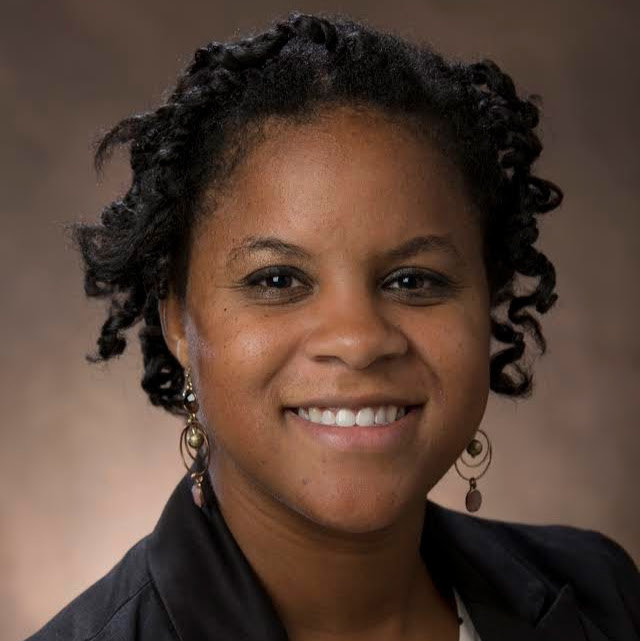
    O34816 Shamika KarikariMika Karikari is a proud Black woman who loves Jesus, baking, sports, and writing. She currently spends most of her time reading and writing for her PhD program in higher education administration. She lives in her beloved hometown, Cincinnati, Ohio, with her handsome husband. Mika’s writing can be found on her blog, I am Enough. It currently focuses on grief, social justice, poetry, and faith.


    Precious Jones is the proud daughter of parents who’ve known struggle.  The familial impact of poverty and struggle shape her writing.  She works in youth & education advocacy for those marginalized.  She’s a former Electrical Engineer who delights in creating through writing.  She is a proud southerner turned foodie who loves people more than she loves good food and a good read. She resides in Cincinnati, OH and candidly shares her predilections [bias, leaning, weakness & predisposition] on her blog, Precious Predilections.


    Joy Becker is a wife and mama living in Cincinnati, Ohio. She recently resigned from a twelve-year career as a literacy coach and first grade teacher to become a full time stay-at-home-mom with her two young darlings. She is a lover of new notebooks, October, and goat cheese, and a hater of traffic, scary movies, and overcooked asparagus. You can peek even further into her love for Jesus, food, motherhood, and friendship over at 44 & Oxford.


    Amy Seiffert is a wife of 17 years and mom of 3, who never thought she would love raising her family in a small college town. She works at Brookside Church as the Director of Outward movement and has the privilege of occasionally preaching. Amy loves tennis, ice cream, and making beautiful things . In between diapers changes, laundry, and soccer practices, she writes, blogs, speaks, and is working on her book on motherhood.  She has been in a monthly book club for 17 years and cannot believe Oprah has not brought them on her show. Amy inspires, teaches and humbly relates to the mystery and messiness of life. She tells all at www.amyseiffert.com

  • Fresh out of Explanations

    Fresh out of Explanations

    “Not everything that is faced can be changed, but nothing can be changed until it is faced.”  – James Baldwin

    What an emotionally exhausting few weeks.  A time to lament the grave injustice of our “just-us” system in America.  It seems that justice is illusive for some and not others.

    Since hearing that officer Jeronimo Yanez was found not guilty and officer Ray Tensing’s trial resulted in another hung jury, my mind has not stopped racing with the myriad of thoughts about what’s continually communicated to people of color, in particular, Black men in America.

    Before I lament, I want to outline a few interesting facts about Philando Castile should give us pause as to whether or not he was being racially profiled.  #JustFacts. #Receipts.

    • Philando had been stopped by the police more time than the number of years he was alive.  He was pulled over 46 times prior to the last stop of his life at the age of 32.
    • Of the 47 times Philando was pulled over by police, only 6 of those stops were things that were observable from a police car – broken muffler or speeding.

    Here’s a little history of how much Philando had experienced being pulled over by the police prior to July 6, 2016: The Driving Life and Death of Philando Castile on NPR.

    The following excerpt from the NPR article gives an account of officer Yanez’s exchange with dispatch…

    Castile’s girlfriend, who was in the car, said it was because of a broken taillight. But in scanner traffic audio obtained this week by Minnesota Public Radio, a nonchalant officer, yet to be confirmed as Jeronimo Yanez, told dispatchers a different story.

    “Two occupants just look like people who were involved in a robbery,” he said. “The driver looks more like one of our suspects, just because of the wide-set nose.”

    Gloria Hatchett, an attorney for the Castile family, said that’s racial profiling.

    “How do you say, ‘There’s a robbery suspect with a broad nose, African-American?’ ” she said. “That’s equivalent to saying there’s a white woman with blond hair.”

    What happened next is unclear. Was Castile just reaching for his ID, or was he reaching for his gun?

    What we know is that Yanez fired his weapon.

    What we know is that throughout his life, Castile was stopped by police at least 46 times before that moment.

    If there was anyone familiar with the routine and perils of a traffic stop, it was Philando Castile.

    The July 6 stop was his last.

    Most know how this story ends; it’s practically predictable.  Police Officer shoots un-armed black male.  Police Officer is acquitted.  I needed space to lament and articulate the emotional distress I am feeling.  To name the ache in my heart.

    I lament that the life of a black male in America still hinges upon a white male’s determination of value.

    I lament that the humanity of black men is repeatedly stripped away when the “cause for shooting them” is because they are seen as violent, aggressive threats by default.

    I lament that I have friends who don’t see the err of today’s criminal justice system.

    I lament that black men can comply with police officers and still die.

    I lament that the trauma both Diamond and her daughter faced is deeply etched into their memories.  No 4 year old should have to console her mother for fear that she too will be shot by police.

    I lament that I am often asked to explain why an officer’s perceived fear does not make a black male worthy of death.

    explanation

    We use a subjective law (Stand Your Ground) to determine substantive matters (life and death).

    If you desire more explanations to ascribe value to the life of black men who are as much an image bearer of God as the men who shot them; miss me with that conversation.  I’m not having that convo today.  Probably not tomorrow. Probably not for a minute.  We have to change the starting line of this conversation.  Here me clearly.  I am fresh out of explanations if imago dei is not your starting point.

    In fact, it may be time for someone to explain to me why police officers are using body cameras if they seem to be of little benefit for the citizens?  Maybe, someone should explain to me why no one’s discussing the correlation of implicit bias and police shootings.   It’s a thing.  A very real thing.

    Isn’t it time to stop demanding an explanation and start acknowledging that the undercurrent of implicit bias has turned into a tidal wave?  This slow and silent killer is destroying families, disrupting communities, and traumatizing people of color daily.

    Isaiah 58

  • Absent Affirmations of my Father

    Absent Affirmations of my Father

    Father’s day is near and this year I don’t feel prepared to lament the indefinite absence of my father’s presence once again.   As if there ever was a preparation substantial enough to carry the weight that my father is no longer alive. It’s been almost 22 years and I never feel prepared to think about it or actively acknowledge it because it hurts.  But at times, even in this reality of loss, I feel hope.  Well, this year, I REALLY feel my father’s absence; not only in the lack of his physical presence, but more so in the lack of his words.

    “Words have a longevity we don’t. ” – Paul Kalanithi

    A friend of mine recently blogged about the fear of losing dear memories of her daddy after he passed away.  As I read that blog and thought more about my own father, I began to wonder what I should do if I have no memory of my father affirming me. Not one.  No “I love you’s” to recount.  No memories of his laugh.  I can see evidence of his smile embedded within mine when I look at old photos of him.  And I have been generously endowed with his nose structure.  Thanks dad! 👌🏾

    20170606_001225

    I have friends that have come to understand how deeply I value words of affirmation.  It is my top love language.  This precious value on words has moved beyond appeasement of personality. It beckons my heart to behold the power of legacy.  Words absolutely have a longevity that our frail bodies do not. Our physical bodies fade, but our words, can lift the soul again and again.  And for the daughter or son who may have lost a parent, this lifting of the soul is treasured.  And needed.

    I previously believed that it was enough to simply know of my father’s love, but somehow my heart demands more than just intellectual ascent.  Because love that is only known intellectually, feels like no love at all.  The heart fails to really connect to such love.  Ask the orphan.  Ask the estranged family member.  Ask me.  There are days, weeks, where I long to hear my father’s voice.  I long to hear him say I love you.  In full candor, I thought that I would mature past this longing as an adult.  Now, I realize that maturation is a long, complex, process.  I recently heard that maturation comes when you are able to make difficult decisions even when you are still afraid.  In that case, my maturity is on the horizon.  I am afraid to love my father deeply and allow myself to long to know/understand a man that rejected me as a 2 year old; yet I persist in doing so, with knees knocking.  It has been easiest to move past Father’s Day in order to avoid experiencing the fear of immobilizing pain again.  In the past four years, I haven’t been able to simply move on. I am thankful for this emotional awakening.   There must be an unseen beauty in the process of loving those who’ve left searing emotional scars.  A beauty only unveiled as we chose to love.

    For some, our journey of love will bear more scars than others.

    Parents, whether via birth or adoption, foster or legal guardian, please make space to affirm your children.  Your words are most formative.  If the painful memory of my father serve’s no other purpose than to espouse the value of affirming children in word and in speech while you are still present, then at least there is some purpose in this pain.

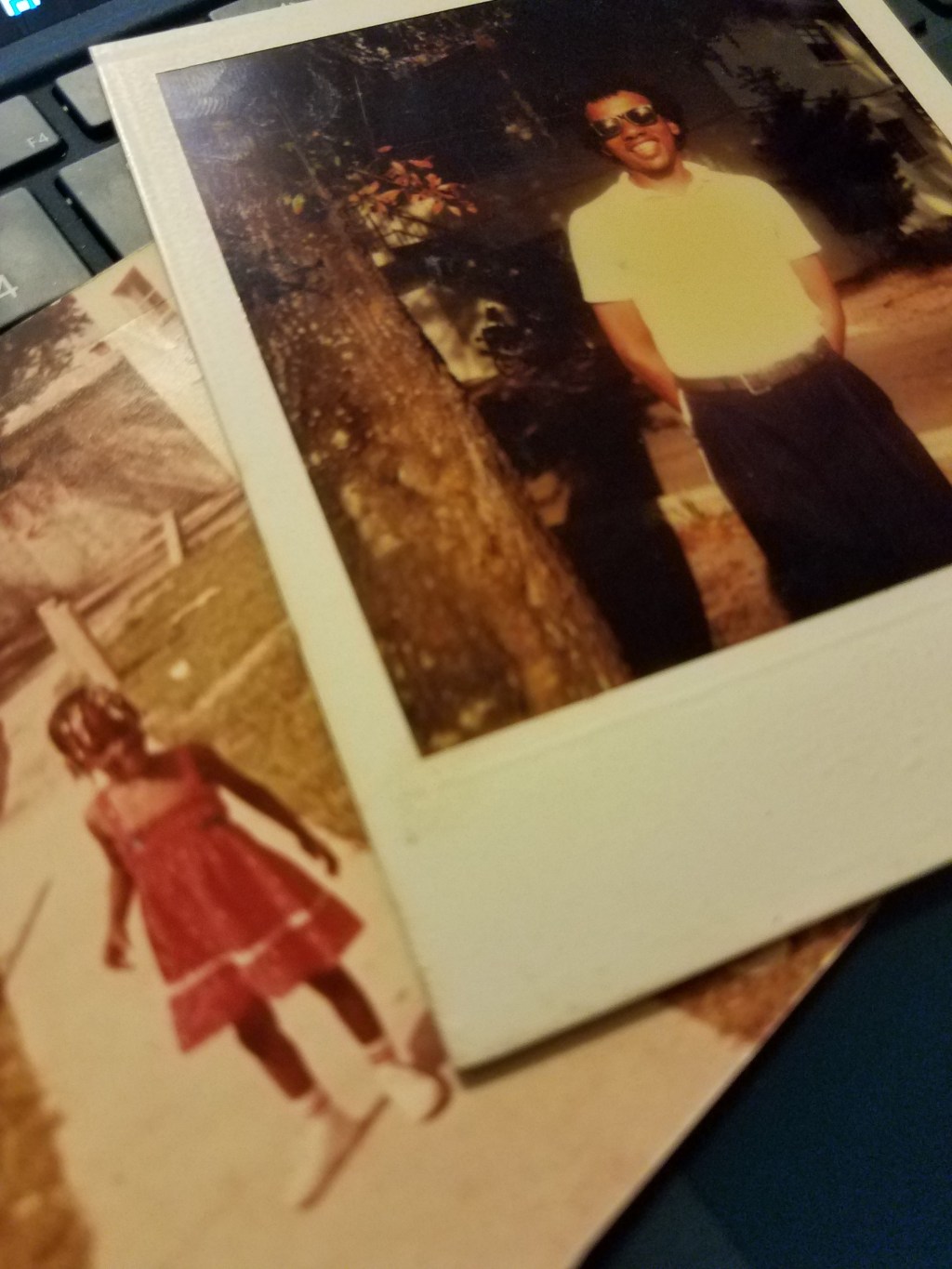
    Shout out to my father with the “BluBlockers” in the featured pic of this blog.  I love you mane.  I miss you.  Happy Father’s Day.  I’ve heard you were a proud father and I will have to believe the account of those that knew you.  – Your daughter

    “I sought the Lord, and he answered me and delivered me from all of my fears.”

    Psalms 34:4

  • Unveiling Hidden Figures

    Unveiling Hidden Figures

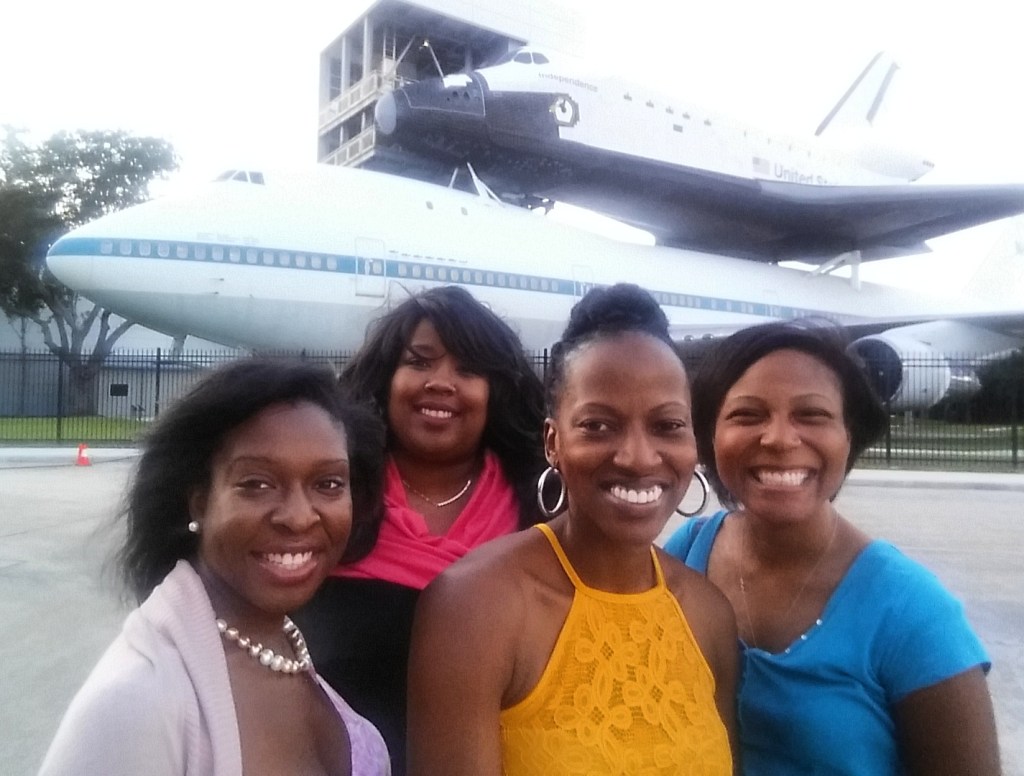
    The movie “Hidden Figures” took me on a roller coaster of emotions that I am not sure I’ve come down from.  Many [many] years ago, I was a budding engineer interning at NASA’s Kennedy Space Center in Cape Canaveral, FL who later turned down an offer to work as a long term engineer there.   At that time I had no idea of the premise of being a “hidden figure” in my career.  I was naive. Hopeful.  Trusting and hanging on to every word of those in authority; predominantly  the older, white men who were my managers.

    This derivation of mixed emotions comes from the simple, yet complex idea that things which are hidden are searched for intentionally, or remain hidden for a long time; only discovered by happenstance.  I honestly celebrate the healthy exposure that this movie has brought African American women in the science fields, yet my heart and life experience wrestle with the reality that any leader who chooses to unveil hidden figures in any industry must pay some cost.  It may cost some a bruised ego.   Others some of their influence.  Still others the very position that they may have aspired to or felt entitled to for years.  Truthfully, this is a cost that some are unwilling to pay.

    ***SPOILER ALERT***

    Choosing to Unveil

    When I re-imagine the bathroom scene where her manager tears down the “Colored Only” bathroom sign with every exertion of strength in his body, I am deeply moved.  Viscerally moved to tears.  I am moved because he had a choice.  He had a choice to leave things the way they were (which was perfectly legal) or to ensure equity for all on his staff at the expense of his social capital and the dissenting opinions of others. I won’t divulge details, but as a women of color who has experienced working on teams and with management who choose to unveil and those who don’t, I will say that I believe this act was far more courageous than depicted.  Now, before we toot too many horns, the most glaring paradox in this movie to me was that these women WERE ONLY unveiled because there was a DIRECT BENEFIT to those who had allowed them to remain hidden for so long.  In fact, the cost became too great for them not to be unveiled.  I mean, we’ve got to get John Glenn to space, right?  By the end of the movie, I joined everyone in celebrating the greater victory for America, but I could only think, the managers cowered because they had to; because they wanted victory so badly.  They DID NOT do the right thing simply because it was the right thing to do.

    I want to honor Martin Luther King, Jr. as we near the end of another #BlackHistoryMonth and highlight the response of Dorothy Vaughan, Octavia Spencer’s character,  who in fact did the right thing because it was the right thing to do. 

    martinlutherkingjrthetimeisalwaysright

    Leaders who Do the Right Thing (as reflected in Octavia’s charachter) are marked by:

    1. Recognition (of others) – She actively worked to recognize the gifts and talents of those on her team even if it warranted a promotion for them and practical obscurity for her.
    2. Innovation – She  developed a new way for those on her team to experience growth so that they were prepared to be unveiled when the time was right.  She risked the very promotion she had longed for so that the entire team rose to another level when she rose to another level.  Great innovation is often accompanied by great risk.
    3. Golden Rule Gratitude – With outward expressions of gratitude, she never delineated from treating others the way that she wanted to be treated.
    4. Hopefulness – She hung on to hope.  Her hopeful vision for the future propelled her and others forward.
    5. Tenacity – She displayed a dogged tenacity to lead and develop others with the influence given.

    There are hidden figures in classrooms, colleges, and places of employment everywhere.  Many systems in society have given visibility to some and not others.

    Today, I am less of a hidden figure.  Still being unveiled and grateful for it.

    One day, I hope it is said of me that I “did the right thing” as a leader; a person of influence.  I understand that I have a beautiful choice.  I will choose to unveil hidden figures when presented with the opportunity. Who will you help unveil today?

    “He must become greater; I must become less.” – John 3: 30, NIV

  • The Blessings and Burdens of being Black

    The Blessings and Burdens of being Black

    These burdens remain. One of the first blogs I published when I began this journey.  Originally shared February 2015.

    Precious's avatarPrecious Predilections

    burdenA burden by definition is a load that is especially heavy for one to carry. A blessing, on the contrary, is a beneficial thing for which one is grateful.  Is it feasible for someone to be grateful for a load that is especially heavy for them to carry?  I submit to you that it depends on the load.  There is not a day that I rise that I am not grateful that God made me a Black woman.  This is true.  I am honored and proud to be Black.  But there is another truth; and it is that I’ve had some negative experiences as a direct result of being Black.

    Today I would like for readers to reflect upon a burden that is carried and rarely spoken of.  It is the burden of being Black.  In the same vein, I ask readers to identify blessings of being Black.  I have…

    View original post 1,378 more words

  • The Suffering Saint

    The Suffering Saint

    Recently, I have spent a lot of time thinking about suffering and my desire to avoid it at all costs.  It sucks to suffer. End of story.  January was laden with suffering and loss for a few of my friends; 3 funerals in 3 weeks to remember the lives of 2 fathers and 1 son.  Grief and sorrow have a way of lingering.    Jesus agreed with this sentiment as reflected in Matthew 26:38, where he stated, “My soul is overwhelmed with sorrow to the point of death…”  Again, suffering sucks.  The unsettling truth is that as a follower of Jesus, I should not only come to expect the blessings of God, but with great certainty I should be mindful that suffering is also on the path of sanctification. Difficult truth.  And it sucks.

    suf·fer
    ˈsəfər/
    verb
         1. experience or be subjected to (something bad or unpleasant).
    This fixation on the avoidance of suffering came about after spending time visiting a friend in South Africa, where there is a chasm of classism left from the wreckage of apartheid.  During this visit more than any other, there was an acute awareness of the role that race has played in providing privilege to some and not to others.  As our conversations grew in depth, we both surmised that without even knowing it, we had developed an unhealthy expectation of “entitlement” to blessings as a believer and follower of Jesus Christ.
     en·ti·tled
    inˈtīdld,enˈtīdld/
    adjective
    1. believing oneself to be inherently deserving of privileges or special treatment
    It was almost as if we had said to God, suffering is for someone else, definitely not me. This unspoken paradigm of entitlement can wreak havoc on our faith when suffering arrives.  I then began to ask this friend how she maintained her faith during her most difficult moment when she suffered the loss of someone she loves.  She stated very simply and profoundly to “loosen my grip.”  Loosen my grip on the possessions I have.  Loosen my grip on the relationships that I hold dear.  Loosen my grip on my definition of what my life should be at this exact moment.  The “loosening of the grip” is an expression to hold those things and relationships dearly loved loosely in your hands, with gratitude and knowledge that all those things belong to God.  All of them.

    “Following Jesus wholeheartedly means facing the “most brutal facts of our current reality, whatever they might be” while holding on to our absolute certainty that we “prevail in the end” through his love and grace.” – Rick Lawrence, Jesus-Centered Life

    Perhaps a small part of what makes suffering bearable is our ability to savor what is good in that moment.  Another nugget of truth is that we can’t always see the things that are good in the moment of suffering.  What I learned during my time with my friend is that it is NOT in the overt acknowledgement of “all that is good” that gratitude arises.  It actually arises as we choose to be present with those who are suffering.  Present during the smiles. Present during the sorrow.  Present during the silence.

    I observed a lot of natural beauty during my time in South Africa, but there was nothing more beautiful than the comfort of a friendship that has lasted 13 years.  There was no pretense.  I liken it to the comfort of a good pair of old jeans.  They have holes, they aren’t perfect, but they fit in all the right places.

    I thought my time in South Africa would leave me only longing to ease the suffering of strangers.  That occurred.  I didn’t know that my time in South Africa would teach me in part, how to lament with the suffering saint and also teach me that suffering/sorrow/grief has no zip code.


    I want Jesus; fully and completely.  However, I still don’t want to suffer, but if I must, may I do so by leaning into Jesus and loosening my grip on all the things I’ve deemed too precious to lose.