Tag: poverty

  • Invisible Scars

    Invisible Scars

    It is the third quarter of the school year and I am scarred. I look the same on the outside. What has happened to my soul is undetectable to the human eye, but I AM SCARRED. As a proud Black woman from the south, I have traditionally looked for scars on the exterior of my body; perhaps they would show up in physical form. This time they have mostly been internal. My thoughts race with “what if” scenarios that spiral out of control. What if another child is shot? Can my soul bear that news? What if another parent has to bury their child? What if I have additional sleepless nights with recurring sound clips of grief deeply laden within a parents voice. What if…

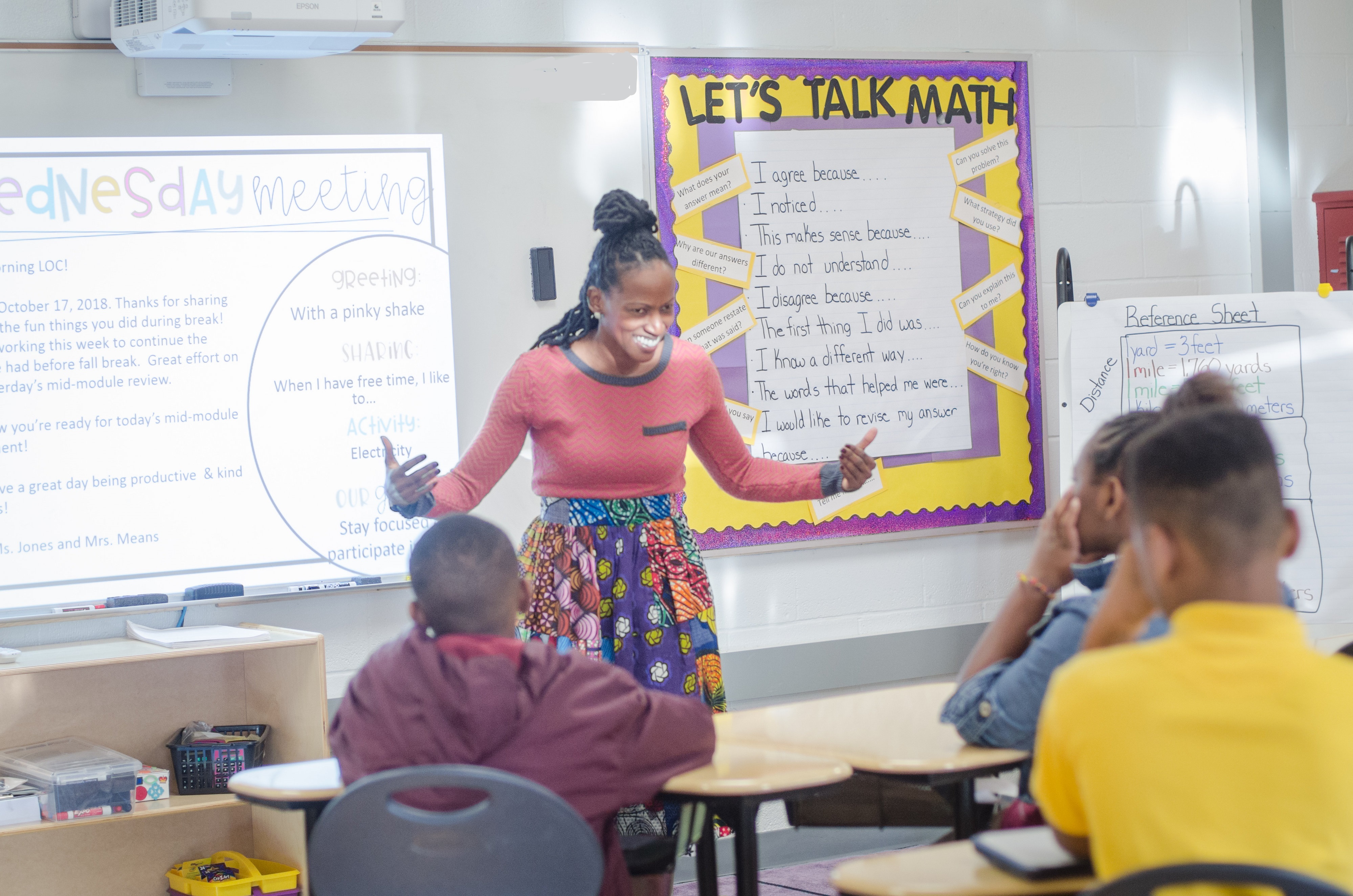
    A few weeks ago, I learned that a 9 year old student at our school had been shot while playing outside. He did not survive. He was just playing with his siblings and family. It was nearly 6 o’clock in the evening and the sun had just gone down less than thirty minutes prior. Earlier in the school year, a 7 year old student who attends our school was hit by gun fire when someone shot into their home. In both cases, I have older siblings of each student in my 5th grade class.

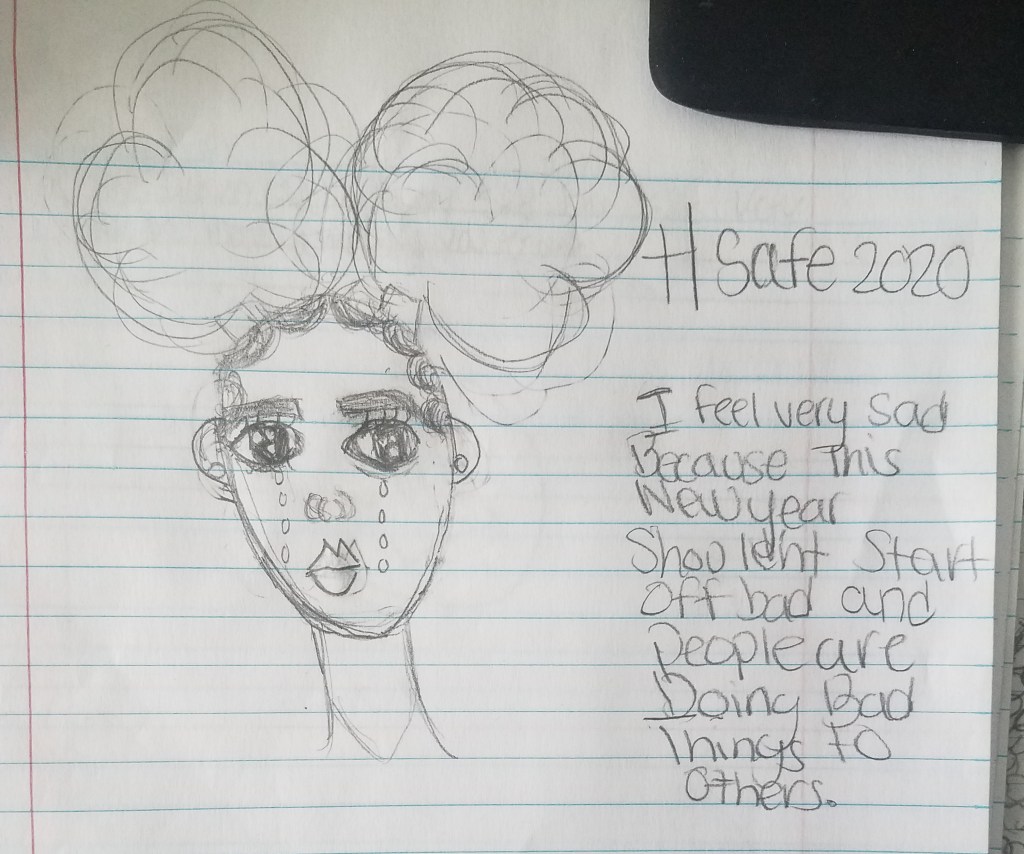
    As my students and I spent time trying to process our feelings through writing, drawings, and tears, I was unprepared to hear of how many additional stories of gun related trauma they had encountered. For the past three weeks, my soul has been overwhelmed with grief. I enter the school building and tears have flooded my eyes. I have no regret with the choice I have made to teach in this community. It is one of my greatest honors, however, I wasn’t prepared for this type of loss. I wasn’t prepared for the shattering of my soul as I walked through the hallways thinking about what my student would experience when she returns knowing these are the same hallways her brother often walked down. As a person who likes to have answers. I have none. I have been giving hugs. Lots of them. I have been honestly sharing with my students and other teachers how this grief has impacted me. I have also decided to seek professional help. I am looking for a Black therapist in my area who can help me process.

    There are times when our souls are enlarged through suffering. Supernaturally or divinely, we are able to experience or relate to God and others in a new way through suffering. At this time, my soul doesn’t feel enlarged through suffering. I just feel lost. I’m teaching, but I feel deep sadness daily. Sad that a little black boy was shot down in the midst of black joy. Sad that my students expressed that they don’t feel safe in their community. Sad that the siblings of this student have experienced such loss so early in life. Sad that I can only support students in limited ways. Sad that our western society cries out that we must continue to educate our children in the midst of tragedy. Just keep teaching. I am sad that we are sending them a message far too early in life that when your heart aches, when loss grips you, when depression overtakes you; don’t lament, just work. Don’t cry; just work. Don’t slow down; just work.

    This sudden loss triggered the trauma I experienced as a sixteen year old when I received the news that my dad had passed away. I remember how helpless I felt returning to school the next day. Yep, I went right back to school. It was one of the safest places I knew and it brought me great joy. I remember being afraid to share with friends or teachers that my dad was dead. I remember how much relief it brought me to have a teacher point to a name in the obituary and ask…”Was this your father?” I was relieved that someone else knew and cared. Honestly, what teacher reads the daily obituary looking for student names? That teacher understood the experiences of my neighborhood and the trauma my classmates and I encountered. I remember simply answering “yes” and not having the resolve to say much more.

    As a teacher working in a similar neighborhood as that of my childhood, I now realize that the invisible scars from my youth in addition to those incurred this year can do immeasurable damage to my mental and physical health if I am not honest with myself. If I don’t seek help. If I don’t take time to grieve. I’m doing that ya’ll. I’m taking mental health days. I’m slowing down. Taking the deep breaths. Increasing my gratitude. Loving those around me. Loving myself. Asking God for insight/wisdom each day in the classroom. My greatest partnership is with the Holy Spirit as I teach. I know I am not in the classroom alone and lately, God’s presence has been palpable and I’ve needed that. I am so grateful for friends that have stopped by my classroom to give me the best hugs; no words, just a warm embrace reminding me that I am cared for. Grateful for friends and family who have called to hear my voice and ask me if I am okay. Grateful for friends who have encouraged me to take the mental health day(s) necessary to care for my soul. Grateful for friends who have brought me freshly baked cookies and sweet notes that lift my spirit and my energy. You all should know, that although my head is not fully lifted and days are still cloudy, your acts of kindness and care have sustained me.

    I wanted to write this particular blog to encourage my friends who work in industries of service (social work, health, education, etc.) to be just as vigilant about your mental health as some of you are about your physical health. They are inextricably linked. And lastly, because this is Black History Month and we (black people) have a history of falsely believing that we can carry EVERY burden and NEVER ask for help, this post is for you. Friends, take care of yourself. Take care of your souls. Don’t carry burdens that were not yours to carry alone. Don’t let your invisible scars manifest as physical scars. Both are painful. Let’s work to minimize our scars.

    After you read this post, I don’t want your pity or praise, just your prayers and presence. Just your commitment to take care of yourself before you try to take care of others. I have chosen to teach in a community that experiences high trauma and some tragedy. It is still one of my greatest joys.

  • on the other side

    on the other side

    Imagine what it’s like to be stuck in a reality that dismantles your family, presumes your guilt based on your God-given gear ( I’m talkin’ skin color), and leaves you with a thousand sleepless nights and I will tell you what it’s like to have a Black son, brother, husband, father or friend to undergo the unwieldy American unjust justice system. Key word here is REALITY. For some the account of When They See Us by Ava DuVernay is philosophical and conversations loom around poetic pros and pithy arguments, yet I am unable to escape the striking resemblance to my family’s reality of justice gone wrong.

    So many images from this series are seared into my psyche but none more piercing than that of a pride so deep that produces prejudicial action. This is the stuff of oppressive systems. My stomach turned in knots as I realized that when they (Whites) see us, they remember her (White investment banker brutally raped). How could they not? A judge, who like most, keeps a doting picture of his (White) wife on the bench; a young, White female prosecutor; fill in the _____________. A quick substitution of the rape victim with the face of the one they love and the five black boys on trial are no longer seen as such, but as a wolf pack to protect their loved ones from. This instinctive ability to re-imagine ourselves or a person we love/care about that has been victimized is all natural. Development of my empathetic muscles has come from a place of love through proximity. So, I’ll say it – love differently ya’ll. Love different people from different places of different races with different experiences and I am certain you will no longer see a wolf pack. You’ll see a student, a friend, someone’s brother, a child, a person.

    http://www.glamour.com Atsushi Nishijima/Netflix

    On the other side of incarceration there are parents, siblings, children, friends who experience loss from a system designed to keep so many bound.

    When They See Us not only exposes what happens when justice moves away from righting wrongs to jockeying for power, but also depicts the complex choices of those “on the other side.” It highlights how the pressures of our penal system forces parents to choose between provision and purported protection. Complicated.

    Antron’s dad lost his son trying to protect him. Raymond’s dad would forever regret sending him to the same park where he would be targeted by police. Kevin’s sister is crushed by her 14 year old brother’s tear-filled plea to simply return home and signs a coerced confession. Complicated. Somehow through deep loss and grief, those on the other side are able to beautifully uphold the dignity of those they love. While it is painfully obvious during each episode that whiteness affords many the privilege of a better trial than their Black counterparts, I found a few other lessons embedded within.

    Clinging to normalcy: the return home. The return home is anti-climactic. Fathers unprepared to receive the sons they’ve betrayed by choosing absence on court dates. Sons bravely clinging to normalcy found in the days of old. Holding tightly to the culmination of belongings in a brown paper bag. Dreaming nightly of the return home only to realize that the heart’s deep love must now sync with the awkward moments of freely being present with loved ones as the muscle memory of trauma reminds everyone to restrain affection and the expression of feelings. Trauma makes normal abnormal. We must be gentle with one another.

    We are not okay: lying to survive The penal system can produce a family of pretenders. We all pretend that everything is okay post incarceration. Because how do you even begin to process that all involved have less hope in a justice system that doesn’t value our Black lives or legacy? Korey’s mom would ask him, “What is it like for you in here? Are they treating you okay?” His response was always, “I’m surviving…” or “I’m holding it down…” Responses which are echoed all across America. We may never know the entire story of someone’s trauma. For those that choose vulnerability, let them do so in their own time and in their own way. We must be gentle with one another.

    “I’m just a shadow,” says Korey Wise, one of the exonerated five and victim of horrific beatings. “I’m very empty — 46 years old and empty. At the same time, I’m talking to the kid in me: ‘I got you, baby boy. Nobody can take your story from you.’”

    Real love…I’m searching for a real love…someone to really see me. (cue Mary J. Blige song) It is real love that slowly shifts our gaze beyond bias and towards humanity. Love is less about whimsy, more about choice. It is an outright intention to choose another over yourself. It is sacrificial at it’s core. Consider those on the other side of incarceration (or providing trauma support) and ask yourself, how have I loved them? These parents, children, siblings, loved ones are often left in the shadows. Those who’ve directly experienced trauma and those supporting them need that real love.

    “All I do all day long is LOVE YOU.” — Mother of Antron McCray, one of the exonerated five boys.

  • Keep the Change

    Keep the Change

    I see the depth of my humanity at the intersection of my darkest secrets and greatest hopes.  At times I am secretly afraid and yet deeply hopeful. Teaching has unearthed a myriad of emotions.  It has been a place where great joy and great need have collided.  I believe I’ve needed the presence of students much more than they have needed any lesson I have taught them.

    Living this dream has been nothing I expected and everything I’ve hoped for.  I didn’t expect exhaustion or gaps in communicating with those I love.  I didn’t expect to see the beauty in becoming a reflective practitioner. I didn’t expect to treasure sound feedback as much as I do.  I hoped for joy filled days.  I hoped that I would not be the only teacher in the room; that I might learn profound truths from the mouth of babes.  I hoped that my discomfort would point me to Christ.  I hoped that I would grow personally and professionally; both have occurred.  A memorable student-led lesson that impacted my personal growth occurred on the first day in the classroom.

    InkedMTR Class of 2019 Residents-Vision Prep-0020_LI

    “Are you nice?” – 5th Grader somewhere in Memphis

    On the first day of school I was full of nerves; all kinds of nerves and this student “had the nerve” to question my kindness?  I should be nervous, right?  It was my first day as a teacher.  However, the candor with which this student spoke during my initial encounter with him was refreshing and taught me a lesson in token vs. true relationship.  My first day attire was thoughtfully chosen. I “carefully” selected a colorful blazer and shirt which I thought wouldn’t cause me to appear too uptight that kids wouldn’t approach me or  too casual that I wouldn’t be taken seriously.  Clearly the student could not easily decipher the type of teacher I was and therefore decided to ask.  Truthfully, his sweet candor never left me.

    As adults, quick, unfounded, judgments are made upon initial encounters, and rather than finding out more about that person (as this student attempted to do), token relationships are established.  True friendships are established as we seek to know and be known by others.  Tokenism selfishly prompts us to hold on to a relationship based on what it can provide us and only access it when it has some direct value to us.  It says, “I’ll use this token when I need it.”  It has little care for the token itself, only what it can provide.  Tokens are cheap and so are token relationships.  The first day of school encounter has guided my interactions with students and adults in a new way.  This student has encouraged me to seek to know others and allow others to get to know me.  This knowledge doesn’t imply depth, but rather an earnest attempt to connect with others in an authentic way. This posture of connection with others has caused me seek to humanize others.  It is the start of every conversation and every prayer. Game changer.  This student taught me a lesson in empathy.   For 2019, ya’ll can keep the change.  I’m not in search of tokens.

    1539920398091

    As a self-proclaimed late dreamer, my professional growth as a teacher has revealed itself through expressions of love.  I thought my first day in the classroom would be love at “first day,” but it wasn’t. In short, it didn’t feel like love, but it felt like I was exactly where I was supposed to be.  And maybe this is love; not explicitly a feeling, but a knowing.  A deep knowing that you are safe and that the reciprocation of the love that you’ve given will be returned without judgement.  I have been loved well by a few in this season. These beautiful expressions of love have undoubtedly reminded this caterpillar that it was made to fly.

    There is a love that liberates and a love that feels like it’s always been free.  I choose freedom.  – Queen Sugar

    Teaching has been the realization of an unspoken dream.  Dreaming doesn’t actually feel “dreamy” and comfortable, but I do feel ALIVE!  Is it possible that in the dreaming I feel more human?  Does this awakening of my humanity define what it means to really live?    Living in the tension of hopes and heartache.

    Dreaming is defined on www.dictionary.com as an aspiration; goal; aim.

    To dream is to hope.  To hope is to live.

    I now dream of teaching students more than math.  I dream of teaching them of their inner and outer beauty.  I dream of teaching them how to navigate a world which doesn’t always affirm them.  I dream of teaching them to fly.  Fly, babies, fly.  When loved well, I believe flying is the only option.

    Hope deferred makes the heart sick, but a desire fulfilled is a tree of life. – Proverbs 13:12

  • Village People

    Village People

    “You’ve been here a LOOOOONNNNGGG time, Auntie…”  – my 7 year old niece

    And by “long time” she means that I’ve been in Orlando longer than 5 weeks.  Of course, children her age have a skewed concept of time generally leading to hyperbolic expressions of events.  Her tone was sweet and endearing as she described my return home from South Africa after a 3 month stay; this account was quickly met with bewilderment as to why I wasn’t allowed to stay as I had intended.  She didn’t understand why my plans had changed.  There was joy and sadness in her voice.  Joy as we laughed and played together, but sadness because she knew that something “felt broken” in her auntie and there was seemingly no remedy in sight.  I realized in that moment the depth of my village.  It’s deep y’all.  So, this blog is one of gratitude.  Gratitude to my village.

    “It takes a village to raise a child.” – African Proverb

    I’ve been a “village person” all of my adult life.  I’ve had the opportunity to be a part of the communal support system of nieces, nephews, cousins, and children in the various cities I’ve lived.  I adore being a part of the village.  The village isn’t just something we can benefit from as children.  I’m learning, “As an adult, it takes a village to really live.”  There are things that my friends provided that my family could not.  There are thoughtful ways that my family supported me to remind me that I am more than what I do.  I am family.  The warmth of my niece’s presence and her hand-written notes with God at the center that say, “We love you God,” remind me not to take for granted her place in my village.Niece Art

    Without this village, I would have floundered upon my return from South Africa.  Instead, I’ve been able to share my disappointment with my niece from the vantage point of a diamond, not defeat.  I want my nieces and nephews to know that they can do hard things.  They can try new things and succeed.  They will also try new things and fail.  But, they must try.  Their village is strong.

    In the last 6 months I’ve experienced very high highs and low lows.  I’ve cried.  I’ve lamented.  I’ve laughed.  I’ve dreamed.  I finally dreamed.  My village came through as I took deep breaths and acted with new courage imbued by faith.  I was no longer a reservoir in the village, I had become a recipient.  This transition has brought me face to face with my need for village people.  I am thankful for the expanse of people in so many different places that I know are a part of my village and I theirs.  Thank you all for your prayers, texts, meals, couch-surfing opportunities, and encouragement.  Thank you for allowing me to do hard things; to live freely.  This freedom has allowed me to throw off yet one more chain.  The chain that links my identity to what I do has been thrown off!  What does that look like for me?  Well, I’m glad you’re interested!

    20180414_230319

    When I envision myself really living in freedom, it takes me to a place where I am most myself; when I am teaching and in the presence of children.  Therefore, I will no longer hesitate to make moves to make this a reality.  I’m moving deeper into the village!  I’ve accepted an offer to be a resident in a teacher residency program in Memphis while completing a Master’s in Urban Education.  I’m excited to become a teacher after this year of residency.  Teaching is hard work, but I can think of no other space where I will be more alive.  I am certain there are beautiful exchanges I will have with the community of Memphis as we learn from one another.  Memphis, here I come!

    Some might describe my journey from engineering to education as steps backwards, but I would describe them as the most courageous and invigorating steps forward.  When I stand in the classroom, I know I will not stand alone.  I echo the words of Maya Angelou in saying, “I come as one, but I stand as 10,000.”   As my heart enlarges for the vulnerable and marginalized, I am compelled to do things I’ve never done before to see justice lived out in a way I’ve never seen.

    Have I not commanded you? Be strong and courageous. Do not be frightened, and do not be dismayed, for the LORD your God is with you wherever you go. – Joshua 1:9 (ESV)


  • Bubble Trouble

    Bubble Trouble

    20171228_110728_040_01

    The beginning of the new year is generally bubbly; literally and figuratively.  Bubbles can be deceptively dangerous, distorting our perspective, limiting our impact, and diminishing our hope.  Yes, cute, friendly bubbles.  Bubbles look stunning from the outside.  Their iridescent color captures the eye.  Their ability to beautifully reflect exactly what is in front of them is impressive.  This is the allure of the bubbly perspective; it mirrors back to others your view in its best light.   The view from the inside of a bubble creates a fishbowl effect, most closely resembling that of tunnel vision.  And this is where the trouble lies, most of us live our adult lives inside of a bubble.  And what we see is not the full picture.

    Bubbles are troublesome because we don’t often realize that we’re encased by them.  Facebook recently projected that I would marry a White man.  Facebook projections are often outlandish, but whatevs. No prob with me because I’m open to marrying a man who’s outside of my ethnicity.  When I shared this “projection” with a friend, she stated, “Why would you want to go through all of that trouble?”  Her statement was a reference to some of the natural conflict and misunderstandings that she and I have in our friendship because we differ in ethnicity.  I jovially replied, well, if that’s the case, I probably shouldn’t have any friends outside of my ethnicity at all, right?  We both laughed and realized how much our friendship has enriched each others lives and knew the “trouble” had been worth it.  I’m glad that we can speak honestly to one another, but that perspective was down right bubbly.

    As one who grew up in poverty, I used to presume that safety was only found in the burbs, but a faulty presumption it was.  The first and only time my home was broken into was when I was a resident in the suburbs.  As a former resident of the suburbs, I found that it became increasingly easy to live in my bubble of lattes and chic eateries.  That’s what the neighbors were doing.  No one really left the bubble unless they had to.  For me, living like this certainly narrowed my view on social justice issues and lessened my conviction to respond politically or otherwise.   I don’t have an aversion to the burbs, but I had to find new ways to remain proximate to issues I care about.  To those things that keep me up at night else I knew the bubble of passivity (cloaked in apathy) would lure me to sleep.

    I realized a truth that Bryan Stevenson learned from his grandmother and so eloquently expounds on in his book, “Just Mercy,” when he recounts her telling him often, “You can’t understand anything from a distance, Bryan.  You have to get close.”  How could I say that I care so deeply about the marginalized and have such little interaction with them?  I had been living in a bubble.

    There is nothing like the disruption of life in your thirties to aid in the bursting of bubbles.  Life quickly moves out of the space of black and white when family and friends die of cancer.  An 8 year old child commits suicide.  Job loss occurs.  Home foreclosures for some and short sale for others.  From abundance to poverty.  In earnest, I lived in a bubble for most of my twenties.  While there was some struggle in college and thereafter, my life during this time was mostly euphoric.  I had a rude awakening, but an awakening nonetheless in my early thirties.

    The perspective from inside of a bubble is incapable of presenting the full picture.

    Bubbles are superficial and protect no one.

    They provide a false sense of security.

    Bubbles are going to burst.

    ant-pushing-a-water-droplet
    Photography by: Rakesh Rocky  http://onebigphoto.com/ant-pushing-a-water-droplet/#

    My hope as 2017 draws to a close and a new year begins is that I don’t let fear drive me to create bubbles that keep others out, magnify my own worldview, and blur the experiences of others that are right in front of me.  It takes more effort to recognize a bubble than to burst it.

    In 2018, I want to broaden my perspective, increase my impact, and not lose hope as I think outside of the box and live outside of bubbles.

    Join me.  Let’s go.

  • My Messy Beginning

    My Messy Beginning

    Friend, Joy Becker, finishes this blog series sheer bravery.  Her willingness to express where she is on this messy journey of privilege and racial reconciliation is authentic.  I’ve been honored to collaborate and share the perspectives of Mika, Amy and Joy during the past four weeks.  Perspectives unlike my own.  I’ve grown.  I pray that you read this last post with great expectation. Expecting God to speak to you.  I believe He will. With courage, obey whatever He speaks.


    I prefer when my writing culminates into a complete thought, when stories and anecdotes sit with me long enough to reach a finish line. I tend not to hit that Publish button until I’ve drawn a conclusion, tidied things up, and feel a sense of a closure.

    Today is different.

    There is no sense of closure because I’m just beginning this journey. I have so many conclusions spinning in my head I hardly know what to do next. I’m in the midst of so much learning and thinking and questioning; it is terrifying and thrilling. There are days I’d like to rewind the clock to before I wrestled with privilege and injustice. I’d like to unread and unlearn information that has left me wondering how me – this affluent, white, stay-at-home mom in the suburbs of Cincinnati – can possibly be part of reconciliation. Other days I want to shake myself because I spent so many years missing it, looking right past it.

    In the spring of 2016, I began reading the book Seven. Oh, to this day, there are times I wish I could unread it. God knocked the wind out of me within the pages of that book, awakening me to the intensity and responsibility of the privilege I was born into.

    Up until that day, I had thought very little of privilege and what it looked like in my life. I suppose when privilege is your norm, it is easy to miss.  

    But soon I saw it everywhere.

    I saw privilege when I opened my fridge, stared at shelves full of food, and ordered pizza because I didn’t feel like eating anything we had.

    I saw privilege when I put my contacts in each morning because I’ve had resources to correct my failing eyes for nearly 30 years.

    I saw privilege when I handed in my letter of resignation, voluntarily leaving my job to stay home with my children.

    I saw privilege when I was pulled over for a missing headlight and never considered a police officer might treat me unfairly.

    I saw privilege when I freely disagreed with colleagues and never thought twice that my race would be the backdrop for how others interpreted my words.

    I saw privilege when our president was elected because as much as I hate how he speaks of the oppressed, I knew my day to day life would not be much different.

    God put a fire in my gut the week I read that book, a restless stirring I haven’t been able to shake. I can’t stop reading and talking and asking questions. I can’t unlearn that I am in the top 1% of wealthiest people in the world, practically drowning in resources. I can’t pretend educational opportunities are the same for all children. I can’t ignore the hundreds of thousands of refugees who are desperately trying to come to America, and yet live such isolated lives once they are here. I can’t unsee the hate-filled eyes in those videos of Charlottesville.

    This is my messy beginning, my shuffling along, fighting my way through the weeds, with my hands outstretched, asking God, “What now? What can you do with the hesitant offering of a woman prone to wander, resist, and cling to privilege? Can you dig it out by its ugly roots? Can you keep forgiving me? Can you make reconciliation my heart’s cry rather than an item on my to-do list?”

    *****

    During the past year, I have looped through a cycle of emotions regarding the abundant advantages in my life.

    I am ignorant.

    I am overwhelmed.

    I am disgusted.

    I am paralyzed.

    I am afraid.

    I am humbled, forgiven, and obedient.

    Repeat.

    Those first five stages are fruitless at best; sinful if I’m honest, and I need to deal with them as such. I need to call out the sin in my life.

    I am ignorant. That is sin. Ignorance is choosing foolishness. It is looking away from truth and ignoring the mind God gave me for learning and questioning and engaging. Ignorance is choosing oblivion to global and national crises, excusing myself because it’s too sad, it’s too hard.

    I am overwhelmed. That is sin. I am looking to my own ability to solve injustice rather than following the lead of Him who came to change the world through servanthood. I am sinking into defeat, rather than clinging to a God of victory. Nothing is impossible for Him, and to be overwhelmed is to disregard the power of the Holy Spirit who is alive and active in me.

    I am disgusted. That is sin. The Lord needed to bring me to a place of disgust, a harsh realization of my abundant privilege. But to stay in that place of guilt, apologizing for all I have, is to forget the One who gave it to me. He did not accidentally place me in this life at this time in history, and He is not interested in my apologies for living in America, for being white, for being educated, or for succeeding in a career.

    I am paralyzed. That is sin. The reality of injustice is so thick and so heavy, I get lost in it. And then I do nothing. I stay in my neighborhood and in my home, with my conveniences and luxuries. I hang out with people who look like me and think like me. We talk about how thankful we are Jesus came to do all that messy work, but disengage ourselves from real action. Pretty soon, doing nothing in my norm.

    I am afraid. This is sin. Fear will lie to me every time, coaxing me to believe injustice is too much for my God. Fear tells me I will fail if I seek reconciliation. Fear tells me I will say the wrong thing and do the wrong thing. Fear tells me I will put myself in danger and be in over my head. Fear tells me I will upset people and annoy my friends. But God did not give me a spirit of fear, and to believe otherwise is sin.

    I am humbled, forgiven, and obedient. Confronting my own selfishness is miserable, but once each of those daggers have been humbly laid down, I can claim Christ’s forgiveness and move on to obedience.  

    The Bible tells me to feel the pain of others. Be wrecked by injustice. Be burdened. The Bible tells me to pray, and not just on the days after horrific events like Charlottesville, but to get on my knees every day, crying out for the broken and forgotten, repenting from my sins and the sins of this nation. The Bible says to be faithful in prayer, be persistent, keep bugging God to shake my soul and not look away from oppressive systems that have handed me a life of advantage.

    This doesn’t have to be an either/or approach. I can carry on with my daily life and remember the marginalized around me. I can write on my blog about eating dessert in the bathroom, and I can write about racial reconciliation. I can take my children to our community pool where they see dozens of children who look just like them, and I can take them to a church where they are the racial minority. My husband and I can celebrate special occasions at overpriced restaurants, and we can volunteer with the Cincinnati Refugee Resettle Program. I can go to the gym to teach Zumba classes, and I can learn to correctly pronounce the names of the colored women in my class, not just the white students. I can talk with my girlfriends about curtains and crockpot dinners and playdates, and we can talk about teaching our children to stand up for others. I can read Real Simple magazine and I can read about how to love my friends of color well. I can pray with my children for God to heal their owies, and I can pray with my children for God to awaken their eyes and hearts to those who need love.

    This isn’t a checklist. It isn’t more to add to my plate. It isn’t one or the other. It is awareness. It is courage. It is a transformation of my heart to move past the years I spent desiring peace and wishing well to those on the sidelines.

    Jesus spent His life on the bottom rung of the ladder. He surrounded himself with the powerless, the outcasts, the bottom dwellers, the marginalized. By his own choosing, He never made it up past that bottom rung. But I was born on the top rung; I was born into a life so far from Jesus. White. American. Middle class. Educated. Excess everything. It is a life so many long for, but it is a life that has proven to be my greatest hindrance in knowing the true Jesus. It is so far from the Savior who said He was “close to the brokenhearted” (Psalm 34:18) and that “the highborn are but a lie” (Psalm 62:9). There is such a distance from me and the man who constantly cared for the widows, the orphans, the poor, and the needy. It is so much harder to “seek justice and encouraged the oppressed” (Isaiah 1:17) from up on this top rung.

    It’s ironic how you can read something a dozen times and always hope someone else is taking it to heart. How did I miss it?

    In every corner of the Bible, God is screaming, begging, pleading, urging me to love mercy and justice, to care for the last and least. If I’m going to believe the Bible is the Word of God, then it seems God is obsessed with social justice, and He asking me to stay engaged and join Him.

    This is my messy beginning.

    *****

    A note from Mika, Amy, Precious, and Joy:

    It has been a joy to share our hearts with you over the past month. The four of us have each been challenged, convicted, and inspired. We have each prayed earnestly for our readers, and for ourselves asking God to shake some souls and spur on conversations that would bring Him glory. We would love to end this series by praying for our nation, together pleading with God to heal and restore.

    Oh Jesus,

    We come before You with our mess. We acknowledge our sin and repent from it. We need You to do your thing. We need your power to bring change because we know we are powerless without You.

    I pray, God, that You would heal our nation and bring us to racial reconciliation. I pray that our hearts and minds would be changed and that change would lead to action. May our hearts break for the damage white supremacy has caused in our nation – that we would see it for the sin it is, and commit to not being complicit in it. I pray we would move outside our comfort zones, invite people into our homes that don’t look like us, and build relationships in an effort to reconcile.

    I pray America would become comfortable with being uncomfortable and no longer shy away from our horrid past. I pray we would know that racial reconciliation is not simply a good option; it’s important to You. May our hearts remain pliable for You to mold and change; performing open heart surgery if necessary to make us into a people that not only embodies the ethos of reconciliation, but the life style. May our days be less comfortable and more courageous.  May our love for You, Jesus, cause us to actively love our neighbors well.

    I pray we would lay down our privilege to serve and to see. I pray we would open our hands and our eyes. We are in need of Your grace and Your grit to do and hear hard things. Lead us, Jesus. Please do exceedingly above what we ask.

    Amen.

    Chains fall

    Fear bow

    Here, now

    Jesus, you change everything

    Lives healed

    Hope found

    Here, now

    Jesus, you change everything

    Lyrics from Holy Ground


    About the Author

    Joy

    Joy Becker is a wife and mama living in Cincinnati, Ohio. She recently resigned from a twelve-year career as a literacy coach and first grade teacher to become a full time stay-at-home-mom with her two young darlings. She is a lover of new notebooks, October, and goat cheese, and a hater of traffic, scary movies, and overcooked asparagus. You can peek even further into her love for Jesus, food, motherhood, and friendship over at 44 & Oxford.

  • Unveiling Hidden Figures

    Unveiling Hidden Figures

    The movie “Hidden Figures” took me on a roller coaster of emotions that I am not sure I’ve come down from.  Many [many] years ago, I was a budding engineer interning at NASA’s Kennedy Space Center in Cape Canaveral, FL who later turned down an offer to work as a long term engineer there.   At that time I had no idea of the premise of being a “hidden figure” in my career.  I was naive. Hopeful.  Trusting and hanging on to every word of those in authority; predominantly  the older, white men who were my managers.

    This derivation of mixed emotions comes from the simple, yet complex idea that things which are hidden are searched for intentionally, or remain hidden for a long time; only discovered by happenstance.  I honestly celebrate the healthy exposure that this movie has brought African American women in the science fields, yet my heart and life experience wrestle with the reality that any leader who chooses to unveil hidden figures in any industry must pay some cost.  It may cost some a bruised ego.   Others some of their influence.  Still others the very position that they may have aspired to or felt entitled to for years.  Truthfully, this is a cost that some are unwilling to pay.

    ***SPOILER ALERT***

    Choosing to Unveil

    When I re-imagine the bathroom scene where her manager tears down the “Colored Only” bathroom sign with every exertion of strength in his body, I am deeply moved.  Viscerally moved to tears.  I am moved because he had a choice.  He had a choice to leave things the way they were (which was perfectly legal) or to ensure equity for all on his staff at the expense of his social capital and the dissenting opinions of others. I won’t divulge details, but as a women of color who has experienced working on teams and with management who choose to unveil and those who don’t, I will say that I believe this act was far more courageous than depicted.  Now, before we toot too many horns, the most glaring paradox in this movie to me was that these women WERE ONLY unveiled because there was a DIRECT BENEFIT to those who had allowed them to remain hidden for so long.  In fact, the cost became too great for them not to be unveiled.  I mean, we’ve got to get John Glenn to space, right?  By the end of the movie, I joined everyone in celebrating the greater victory for America, but I could only think, the managers cowered because they had to; because they wanted victory so badly.  They DID NOT do the right thing simply because it was the right thing to do.

    I want to honor Martin Luther King, Jr. as we near the end of another #BlackHistoryMonth and highlight the response of Dorothy Vaughan, Octavia Spencer’s character,  who in fact did the right thing because it was the right thing to do. 

    martinlutherkingjrthetimeisalwaysright

    Leaders who Do the Right Thing (as reflected in Octavia’s charachter) are marked by:

    1. Recognition (of others) – She actively worked to recognize the gifts and talents of those on her team even if it warranted a promotion for them and practical obscurity for her.
    2. Innovation – She  developed a new way for those on her team to experience growth so that they were prepared to be unveiled when the time was right.  She risked the very promotion she had longed for so that the entire team rose to another level when she rose to another level.  Great innovation is often accompanied by great risk.
    3. Golden Rule Gratitude – With outward expressions of gratitude, she never delineated from treating others the way that she wanted to be treated.
    4. Hopefulness – She hung on to hope.  Her hopeful vision for the future propelled her and others forward.
    5. Tenacity – She displayed a dogged tenacity to lead and develop others with the influence given.

    There are hidden figures in classrooms, colleges, and places of employment everywhere.  Many systems in society have given visibility to some and not others.

    Today, I am less of a hidden figure.  Still being unveiled and grateful for it.

    One day, I hope it is said of me that I “did the right thing” as a leader; a person of influence.  I understand that I have a beautiful choice.  I will choose to unveil hidden figures when presented with the opportunity. Who will you help unveil today?

    “He must become greater; I must become less.” – John 3: 30, NIV