Tag: Injustice

  • Anti-Racist Checklist

    Anti-Racist Checklist

    Full lips, round hips, black skin is where I begin, but not where I end. – Black woman.

    It’s July 2020 and suddenly America has awakened to a realization that Black lives should matter in these United States. Operative word should. Just a few days shy of July 4th and Breonna Taylor’s family along with so many other Black families are aghast with performative measures of alliance and yet no substantive change. No arrests for the police officers who shot her while sleeping. SLEEPING. The message being communicated to Black people hasn’t changed; we say that we are with you, but our systems remain the same. Our systems don’t support your thriving and barely support surviving. Enter the work of anti-racism.

    It is unlikely that anyone can scroll on social media or watch mainstream news in recent weeks without some story or post discussing systemic racism or what it means to be anti-racist. I’m encouraged to see the proliferation of Black voices and the elevation of our story. I am also noticing some fatigue from White allies – we’ve only been having this global conversation on race for 1 month. 30 days. That’s it. When fatigued, it is likely that we will reach for the easiest possible solution and to some that looks like an anti-racism checklist. An insensitive move, in jest, to ask your Black friends to tell you a list of things you should do to be considered anti-racist.

    This ask has come as a direct and indirect proposition. It may sound like “I wish I just knew exactly what to do” or “I just want to show you that I am anti-racist.” A list sure would make things easier. To those beckoning for a list, I agree, that is way easier. However, EVERYONE is more complex than a list of “to dos.” Your most valued relationship can not be deduced to a list. When I think of an anti-racist list, I simply hear another request for comfort. Another request for me to acquiesce to your discomfort. I will not do that anymore. For centuries, the standard for Blacks has been unreasonably high (perfection before dignifying) and the standard for Whites shamefully low (accommodation of comfort).

    Anti-racism does not ask me to shrink my voice, presence, or pride (in my Blackness) for your comfort.

    Precious Jones

    I’m not asking your forgiveness to live in my fullness. For so long I’ve chosen to shrink parts of my ethnic identity to make White people, especially White Christians, comfortable. Always learning more about their culture. Always accommodating comfort. Executing survival tactics such as code switching to climb the corporate ladder and regrettably leaving parts of me buried below as I moved up. For decades there was very little love for this brown skin girl. I’m realizing that choosing between my ethnicity and Christianity is a false choice. I’m certain that Christ wants me to live fully Black AND fully redeemed; not some reduced version of myself. Else, why would God create humanity and allow our eyes to differentiate color variants if there was no intention for us to see the beauty in difference? At what point did beauty become a point of division? Don’t answer that. I repeat. Don’t answer.
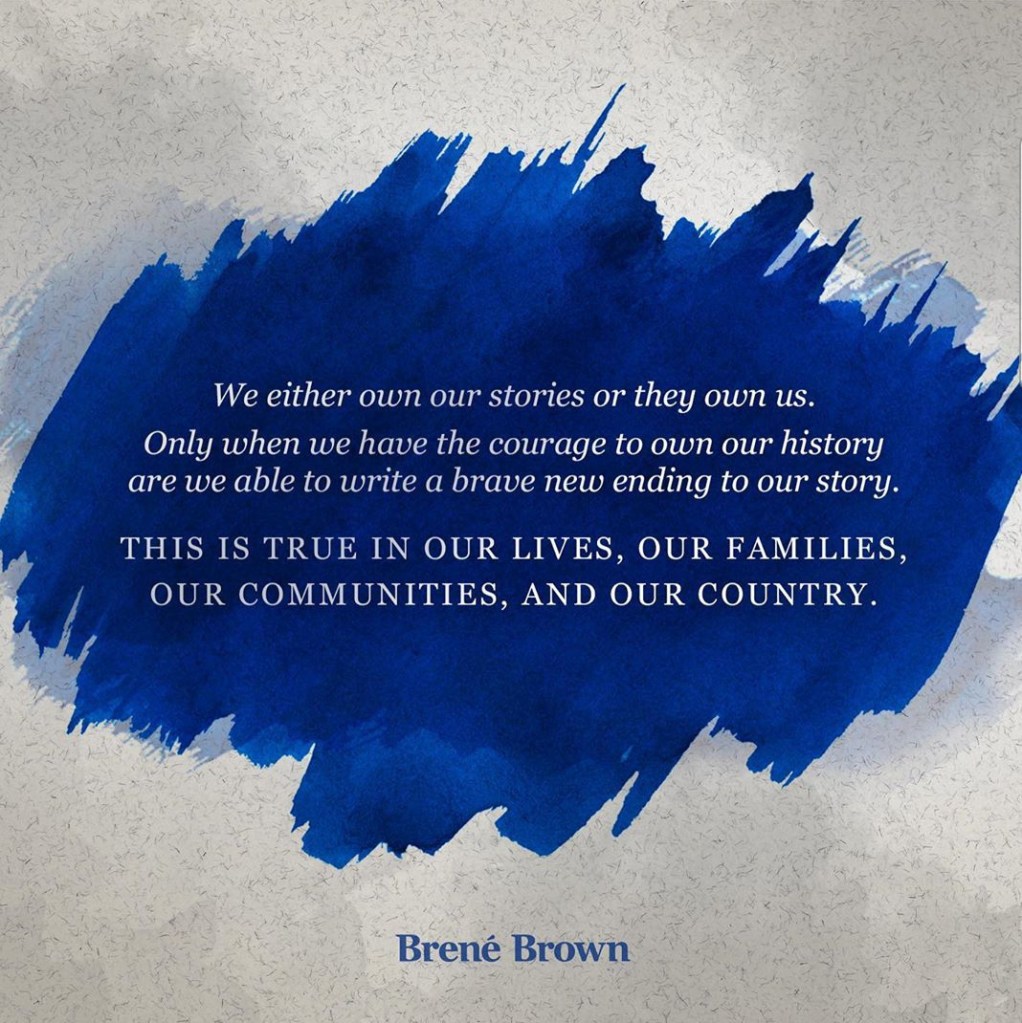
    Image from Facebook

    Brene Brown noted, “We either own our stories or they own us. Only when we have the courage to own our history are we able to write a brave new ending to our story.” I own my history of placating Whites at work, in friendship, and at church to make them comfortable with me. I also own that I previously believed that their comfort was more important than my being. BUT NOW (say it with me church)…I’m writing a very different ending for myself. It looks like loving myself enough to move forward with those who pursue justice in word and deed. Who continue to do the personal work of becoming anti-racist. It looks like loving myself enough to end fruitless conversations that originate with interrogation instead of empathy. It looks like CHOOSING. I now realize that as a Black Christian I don’t have to accept every invitation into a conversation on race. This makes me no less Christian. This makes me healthier. This makes me wise. This allows me to endure.

    If there ever was an anti-racist checklist, it would be loaded with nuance and complexity; joy and pain. Not a lot of conditional statements, but real expectations. It might look something like this.

    Anti-Racism Checklist

    1. Hard work
    2. Failure
    3. Love
    4. Ambiguity
    5. Frustration
    6. Anger
    7. Disappointment
    8. Endurance
    9. Victories (small & large)
    10. Lament

    Anti-racism is spelled M-A-R-A-T-H-O-N. It is not spelled p-o-p-u-l-a-r-i-t-y. Neither is it spelled p-r-a-i-s-e. To the adults in the room, we are not in high school anymore. Therefore, our personal metric should not be “cool by association.” No longer permissible to rest on the laurels of having Black friend(s) or coworkers. Stop searching for a list of things to “check off” to arrive at the status of anti-racist. A list of things to “prove” your work is not primarily performative. Don’t exhaust yourself trying to prove who you are. That’s wasted energy. Marathons are about conservation and bursts of energy at appropriate times.

    You know who you are and where you are. If you do not know who you are, honestly interrogate your soul. If you are not where you would like to be, then put in work. And keep working. But don’t ask me for a list. If you do, I will reference the one above. It is the only list I have that counts in this work. A list that allows us to examine our privilege, power, and prejudice.

    White people, if your relationships feel particularly strained with your Black friends or coworkers right now, remember, “ambiguity and disappointment” are on the list. If you feel exhausted, remember, “hard work and endurance” are on the list. If you feel like, you are just not getting things right, remember, “failure and frustration” are on the list. Black people, if you are tired of empty apologies and excessive validation, remember, “anger and lament” are on the list.

    If you have resolved to keep putting in work, then others will benefit from these acts of love and we’ll share in mutual victories. But, if your goal is simply to check off an act of love or a moment of endurance, you’ve missed it. Ball the list up. Throw it away and ask the question, “Do I really want to become an anti-racist or is this all for show?”

    “Search me, O God and know my heart. Try me and know my thoughts.” – Psalm 139:23

  • My Messy Beginning

    My Messy Beginning

    Friend, Joy Becker, finishes this blog series sheer bravery.  Her willingness to express where she is on this messy journey of privilege and racial reconciliation is authentic.  I’ve been honored to collaborate and share the perspectives of Mika, Amy and Joy during the past four weeks.  Perspectives unlike my own.  I’ve grown.  I pray that you read this last post with great expectation. Expecting God to speak to you.  I believe He will. With courage, obey whatever He speaks.


    I prefer when my writing culminates into a complete thought, when stories and anecdotes sit with me long enough to reach a finish line. I tend not to hit that Publish button until I’ve drawn a conclusion, tidied things up, and feel a sense of a closure.

    Today is different.

    There is no sense of closure because I’m just beginning this journey. I have so many conclusions spinning in my head I hardly know what to do next. I’m in the midst of so much learning and thinking and questioning; it is terrifying and thrilling. There are days I’d like to rewind the clock to before I wrestled with privilege and injustice. I’d like to unread and unlearn information that has left me wondering how me – this affluent, white, stay-at-home mom in the suburbs of Cincinnati – can possibly be part of reconciliation. Other days I want to shake myself because I spent so many years missing it, looking right past it.

    In the spring of 2016, I began reading the book Seven. Oh, to this day, there are times I wish I could unread it. God knocked the wind out of me within the pages of that book, awakening me to the intensity and responsibility of the privilege I was born into.

    Up until that day, I had thought very little of privilege and what it looked like in my life. I suppose when privilege is your norm, it is easy to miss.  

    But soon I saw it everywhere.

    I saw privilege when I opened my fridge, stared at shelves full of food, and ordered pizza because I didn’t feel like eating anything we had.

    I saw privilege when I put my contacts in each morning because I’ve had resources to correct my failing eyes for nearly 30 years.

    I saw privilege when I handed in my letter of resignation, voluntarily leaving my job to stay home with my children.

    I saw privilege when I was pulled over for a missing headlight and never considered a police officer might treat me unfairly.

    I saw privilege when I freely disagreed with colleagues and never thought twice that my race would be the backdrop for how others interpreted my words.

    I saw privilege when our president was elected because as much as I hate how he speaks of the oppressed, I knew my day to day life would not be much different.

    God put a fire in my gut the week I read that book, a restless stirring I haven’t been able to shake. I can’t stop reading and talking and asking questions. I can’t unlearn that I am in the top 1% of wealthiest people in the world, practically drowning in resources. I can’t pretend educational opportunities are the same for all children. I can’t ignore the hundreds of thousands of refugees who are desperately trying to come to America, and yet live such isolated lives once they are here. I can’t unsee the hate-filled eyes in those videos of Charlottesville.

    This is my messy beginning, my shuffling along, fighting my way through the weeds, with my hands outstretched, asking God, “What now? What can you do with the hesitant offering of a woman prone to wander, resist, and cling to privilege? Can you dig it out by its ugly roots? Can you keep forgiving me? Can you make reconciliation my heart’s cry rather than an item on my to-do list?”

    *****

    During the past year, I have looped through a cycle of emotions regarding the abundant advantages in my life.

    I am ignorant.

    I am overwhelmed.

    I am disgusted.

    I am paralyzed.

    I am afraid.

    I am humbled, forgiven, and obedient.

    Repeat.

    Those first five stages are fruitless at best; sinful if I’m honest, and I need to deal with them as such. I need to call out the sin in my life.

    I am ignorant. That is sin. Ignorance is choosing foolishness. It is looking away from truth and ignoring the mind God gave me for learning and questioning and engaging. Ignorance is choosing oblivion to global and national crises, excusing myself because it’s too sad, it’s too hard.

    I am overwhelmed. That is sin. I am looking to my own ability to solve injustice rather than following the lead of Him who came to change the world through servanthood. I am sinking into defeat, rather than clinging to a God of victory. Nothing is impossible for Him, and to be overwhelmed is to disregard the power of the Holy Spirit who is alive and active in me.

    I am disgusted. That is sin. The Lord needed to bring me to a place of disgust, a harsh realization of my abundant privilege. But to stay in that place of guilt, apologizing for all I have, is to forget the One who gave it to me. He did not accidentally place me in this life at this time in history, and He is not interested in my apologies for living in America, for being white, for being educated, or for succeeding in a career.

    I am paralyzed. That is sin. The reality of injustice is so thick and so heavy, I get lost in it. And then I do nothing. I stay in my neighborhood and in my home, with my conveniences and luxuries. I hang out with people who look like me and think like me. We talk about how thankful we are Jesus came to do all that messy work, but disengage ourselves from real action. Pretty soon, doing nothing in my norm.

    I am afraid. This is sin. Fear will lie to me every time, coaxing me to believe injustice is too much for my God. Fear tells me I will fail if I seek reconciliation. Fear tells me I will say the wrong thing and do the wrong thing. Fear tells me I will put myself in danger and be in over my head. Fear tells me I will upset people and annoy my friends. But God did not give me a spirit of fear, and to believe otherwise is sin.

    I am humbled, forgiven, and obedient. Confronting my own selfishness is miserable, but once each of those daggers have been humbly laid down, I can claim Christ’s forgiveness and move on to obedience.  

    The Bible tells me to feel the pain of others. Be wrecked by injustice. Be burdened. The Bible tells me to pray, and not just on the days after horrific events like Charlottesville, but to get on my knees every day, crying out for the broken and forgotten, repenting from my sins and the sins of this nation. The Bible says to be faithful in prayer, be persistent, keep bugging God to shake my soul and not look away from oppressive systems that have handed me a life of advantage.

    This doesn’t have to be an either/or approach. I can carry on with my daily life and remember the marginalized around me. I can write on my blog about eating dessert in the bathroom, and I can write about racial reconciliation. I can take my children to our community pool where they see dozens of children who look just like them, and I can take them to a church where they are the racial minority. My husband and I can celebrate special occasions at overpriced restaurants, and we can volunteer with the Cincinnati Refugee Resettle Program. I can go to the gym to teach Zumba classes, and I can learn to correctly pronounce the names of the colored women in my class, not just the white students. I can talk with my girlfriends about curtains and crockpot dinners and playdates, and we can talk about teaching our children to stand up for others. I can read Real Simple magazine and I can read about how to love my friends of color well. I can pray with my children for God to heal their owies, and I can pray with my children for God to awaken their eyes and hearts to those who need love.

    This isn’t a checklist. It isn’t more to add to my plate. It isn’t one or the other. It is awareness. It is courage. It is a transformation of my heart to move past the years I spent desiring peace and wishing well to those on the sidelines.

    Jesus spent His life on the bottom rung of the ladder. He surrounded himself with the powerless, the outcasts, the bottom dwellers, the marginalized. By his own choosing, He never made it up past that bottom rung. But I was born on the top rung; I was born into a life so far from Jesus. White. American. Middle class. Educated. Excess everything. It is a life so many long for, but it is a life that has proven to be my greatest hindrance in knowing the true Jesus. It is so far from the Savior who said He was “close to the brokenhearted” (Psalm 34:18) and that “the highborn are but a lie” (Psalm 62:9). There is such a distance from me and the man who constantly cared for the widows, the orphans, the poor, and the needy. It is so much harder to “seek justice and encouraged the oppressed” (Isaiah 1:17) from up on this top rung.

    It’s ironic how you can read something a dozen times and always hope someone else is taking it to heart. How did I miss it?

    In every corner of the Bible, God is screaming, begging, pleading, urging me to love mercy and justice, to care for the last and least. If I’m going to believe the Bible is the Word of God, then it seems God is obsessed with social justice, and He asking me to stay engaged and join Him.

    This is my messy beginning.

    *****

    A note from Mika, Amy, Precious, and Joy:

    It has been a joy to share our hearts with you over the past month. The four of us have each been challenged, convicted, and inspired. We have each prayed earnestly for our readers, and for ourselves asking God to shake some souls and spur on conversations that would bring Him glory. We would love to end this series by praying for our nation, together pleading with God to heal and restore.

    Oh Jesus,

    We come before You with our mess. We acknowledge our sin and repent from it. We need You to do your thing. We need your power to bring change because we know we are powerless without You.

    I pray, God, that You would heal our nation and bring us to racial reconciliation. I pray that our hearts and minds would be changed and that change would lead to action. May our hearts break for the damage white supremacy has caused in our nation – that we would see it for the sin it is, and commit to not being complicit in it. I pray we would move outside our comfort zones, invite people into our homes that don’t look like us, and build relationships in an effort to reconcile.

    I pray America would become comfortable with being uncomfortable and no longer shy away from our horrid past. I pray we would know that racial reconciliation is not simply a good option; it’s important to You. May our hearts remain pliable for You to mold and change; performing open heart surgery if necessary to make us into a people that not only embodies the ethos of reconciliation, but the life style. May our days be less comfortable and more courageous.  May our love for You, Jesus, cause us to actively love our neighbors well.

    I pray we would lay down our privilege to serve and to see. I pray we would open our hands and our eyes. We are in need of Your grace and Your grit to do and hear hard things. Lead us, Jesus. Please do exceedingly above what we ask.

    Amen.

    Chains fall

    Fear bow

    Here, now

    Jesus, you change everything

    Lives healed

    Hope found

    Here, now

    Jesus, you change everything

    Lyrics from Holy Ground


    About the Author

    Joy

    Joy Becker is a wife and mama living in Cincinnati, Ohio. She recently resigned from a twelve-year career as a literacy coach and first grade teacher to become a full time stay-at-home-mom with her two young darlings. She is a lover of new notebooks, October, and goat cheese, and a hater of traffic, scary movies, and overcooked asparagus. You can peek even further into her love for Jesus, food, motherhood, and friendship over at 44 & Oxford.

  • Miseducation of Privilege

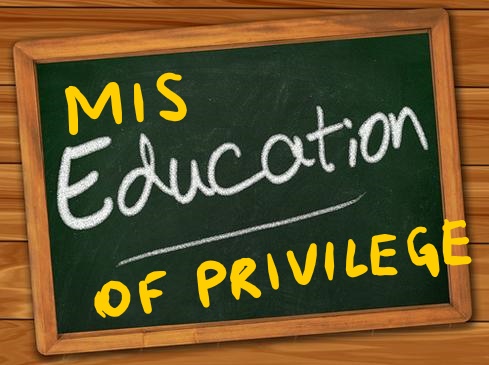
    Miseducation of Privilege

    As a Black Christian woman I have more anxiety on the Sunday or Monday following tragic events such as the #Charlottesville attack because the work of racial reconciliation is exhausting.  The Sunday following Charlottesville (which happened to be less than 24 hours later), I remember being hopeful as I entered church that I would regain some of my sanity.  At least a little bit.  Thinking to myself,  this Sunday at least one non-person of color would come up to me and legitimize the concern I privately expressed to many.  I recounted the personal conversations held following the election of our President regarding his rhetoric and lack of empathy for non-whites.  At the time, I shared that I thought his views would give credence to those who held extremist and racist views to become hyper-visible and less concerned with “hiding” their views or their faces.  We witnessed that in #Charlottesville.


    This was not a moment of wanting to be right.  This was a moment of wanting to be validated.  I wanted to feel sane, if only for a moment.  The context here is that I have spent countless hours listening, sharing, and praying with congregants and colleagues as we earnestly look to live reconciled.   Yet, I exited my phenotypically diverse church that day without a single conversation or acknowledgement from a white person.  I exited with increased ache in my heart.  I exited wondering how many more Sundays will I sit in this pew and wrestle with the passivity of privilege and the tone policing of my voice. I then hoped for a face to face conversation, text, phone call on Tuesday, Wednesday, or any day.  It did not occur.  Exhaustion enters stage right.

    After reflecting on Amy’s blog, How Do I Handle My Privilege, and her compelling question at the end which asked ‘What privilege do you have, and how can you use it to serve the underprivileged?’  I stumbled upon a revelation.  


    In the United States of America, privilege has been a silent teacher for hundreds of years.  Privilege, white privilege, for those who possess it, has taught that good things will come to them simply because of who they are – even if that good thing is racial reconciliation.   

    Many would argue that hatred is a learned behavior.  I’d contend that just as hatred is taught, so is the passivity of privilege.  It is mostly taught without using words.  Privilege by its very nature is passive.  It demands absolutely nothing of its possessor. It teaches its possessor to protect it at all cost.  Privilege indirectly teaches that if one desires racial reconciliation, then it will be achieved by simply waiting for the “perfect, comfortable, opportunity” to have a difficult conversation, ask an awkward question, or get to know a person outside of your ethnicity.  Privilege has written thousands of history books and passed hundreds of laws. And with events like #Charlottesville, it waits patiently to reconcile.  We’ve been miseducated, and the western church has been an active pupil.  

    Miseducation definition: a wrong or deficient education

    Racial reconciliation is costly.  It takes work.  

    Many desire racial reconciliation through a five-step process or a “quick read.”  I’ve had countless people ask me to give them a resource to navigate this difficult and messy space. For instance, there’s a local church in our city that offers a fantastic six week workshop on race which creates a safe space for people in the community to listen to one another, grow in empathy, and dialogue.  However, I’ve encountered many who’ve been content with attending this six week session and reference this as their “work” in racial reconciliation.  I commend people for attending; however, when this session ends, the work of racial reconciliation doesn’t.  If the only desire is a resource, racial reconciliation may not be realized.  It happens over time through empathy, honesty, contrition, and proximity.  Get close. Get uncomfortable. Get honest.  

    If the American church desires to really model racial reconciliation, the Church must re-educate itself.   Learn from Black folks.  Listen to Black folks.  Lament with Black folks.  Let Black folks lead.

    I don’t want a racial reconciliation that demands more of one follower of Christ than the other.  I pray that my encounter on the Sundays following tragic events are less anxious and more intentional.  As Amy stated in the previous blog, may we be known by what we lay down, rather than by any privilege we hold high.  

    As a follower of Christ, I remain hopeful that racial reconciliation will occur in earnest as I continue to engage in uncomfortable conversations, love others where they are, and speak truth to power.   I’m encouraged that others are doing the same.  I have not thrown in the towel on racial reconciliation.  Each day I hold tightly to the hope I have in Christ, anchored by the reality of my desperate need for Jesus as I do justice, love mercy, and walk humbly with my God.  

    Greater love has no one than this, that someone lay down his life for his friends. – John 15:13

    Maybe the first act of laying down one’s life is to lay down the passivity of privilege.

    As we lay down our respective privilege, I pray that we build authentic relationships across multiple ethnic groups, help restore broken communities, and recognize systems that perpetuate marginalization for disadvantaged groups. May we use our power, resources, and influence to tear these oppressive systems down; decision by decision. Racial Reconciliation, like sanctification (process of becoming more like Christ), is worked out daily.  It is not a one time act.  It is a lifestyle.  

    The church has been “waiting” for racial reconciliation for too long.  Let’s intentionally give differently, life differently, and love differently.  Not just in words, but in lifestyle.

    May privilege be ousted as primary instructor in the work of racial reconciliation and be replaced by empathy that leads to action.

    “He has told you, O man, what is good; and what does the Lord require of you but to do justice, and love kindness, and to walk humbly with your God?”  – Micah 6:8 ESV

  • Fresh out of Explanations

    Fresh out of Explanations

    “Not everything that is faced can be changed, but nothing can be changed until it is faced.”  – James Baldwin

    What an emotionally exhausting few weeks.  A time to lament the grave injustice of our “just-us” system in America.  It seems that justice is illusive for some and not others.

    Since hearing that officer Jeronimo Yanez was found not guilty and officer Ray Tensing’s trial resulted in another hung jury, my mind has not stopped racing with the myriad of thoughts about what’s continually communicated to people of color, in particular, Black men in America.

    Before I lament, I want to outline a few interesting facts about Philando Castile should give us pause as to whether or not he was being racially profiled.  #JustFacts. #Receipts.

    • Philando had been stopped by the police more time than the number of years he was alive.  He was pulled over 46 times prior to the last stop of his life at the age of 32.
    • Of the 47 times Philando was pulled over by police, only 6 of those stops were things that were observable from a police car – broken muffler or speeding.

    Here’s a little history of how much Philando had experienced being pulled over by the police prior to July 6, 2016: The Driving Life and Death of Philando Castile on NPR.

    The following excerpt from the NPR article gives an account of officer Yanez’s exchange with dispatch…

    Castile’s girlfriend, who was in the car, said it was because of a broken taillight. But in scanner traffic audio obtained this week by Minnesota Public Radio, a nonchalant officer, yet to be confirmed as Jeronimo Yanez, told dispatchers a different story.

    “Two occupants just look like people who were involved in a robbery,” he said. “The driver looks more like one of our suspects, just because of the wide-set nose.”

    Gloria Hatchett, an attorney for the Castile family, said that’s racial profiling.

    “How do you say, ‘There’s a robbery suspect with a broad nose, African-American?’ ” she said. “That’s equivalent to saying there’s a white woman with blond hair.”

    What happened next is unclear. Was Castile just reaching for his ID, or was he reaching for his gun?

    What we know is that Yanez fired his weapon.

    What we know is that throughout his life, Castile was stopped by police at least 46 times before that moment.

    If there was anyone familiar with the routine and perils of a traffic stop, it was Philando Castile.

    The July 6 stop was his last.

    Most know how this story ends; it’s practically predictable.  Police Officer shoots un-armed black male.  Police Officer is acquitted.  I needed space to lament and articulate the emotional distress I am feeling.  To name the ache in my heart.

    I lament that the life of a black male in America still hinges upon a white male’s determination of value.

    I lament that the humanity of black men is repeatedly stripped away when the “cause for shooting them” is because they are seen as violent, aggressive threats by default.

    I lament that I have friends who don’t see the err of today’s criminal justice system.

    I lament that black men can comply with police officers and still die.

    I lament that the trauma both Diamond and her daughter faced is deeply etched into their memories.  No 4 year old should have to console her mother for fear that she too will be shot by police.

    I lament that I am often asked to explain why an officer’s perceived fear does not make a black male worthy of death.

    explanation

    We use a subjective law (Stand Your Ground) to determine substantive matters (life and death).

    If you desire more explanations to ascribe value to the life of black men who are as much an image bearer of God as the men who shot them; miss me with that conversation.  I’m not having that convo today.  Probably not tomorrow. Probably not for a minute.  We have to change the starting line of this conversation.  Here me clearly.  I am fresh out of explanations if imago dei is not your starting point.

    In fact, it may be time for someone to explain to me why police officers are using body cameras if they seem to be of little benefit for the citizens?  Maybe, someone should explain to me why no one’s discussing the correlation of implicit bias and police shootings.   It’s a thing.  A very real thing.

    Isn’t it time to stop demanding an explanation and start acknowledging that the undercurrent of implicit bias has turned into a tidal wave?  This slow and silent killer is destroying families, disrupting communities, and traumatizing people of color daily.

    Isaiah 58

  • Unveiling Hidden Figures

    Unveiling Hidden Figures

    The movie “Hidden Figures” took me on a roller coaster of emotions that I am not sure I’ve come down from.  Many [many] years ago, I was a budding engineer interning at NASA’s Kennedy Space Center in Cape Canaveral, FL who later turned down an offer to work as a long term engineer there.   At that time I had no idea of the premise of being a “hidden figure” in my career.  I was naive. Hopeful.  Trusting and hanging on to every word of those in authority; predominantly  the older, white men who were my managers.

    This derivation of mixed emotions comes from the simple, yet complex idea that things which are hidden are searched for intentionally, or remain hidden for a long time; only discovered by happenstance.  I honestly celebrate the healthy exposure that this movie has brought African American women in the science fields, yet my heart and life experience wrestle with the reality that any leader who chooses to unveil hidden figures in any industry must pay some cost.  It may cost some a bruised ego.   Others some of their influence.  Still others the very position that they may have aspired to or felt entitled to for years.  Truthfully, this is a cost that some are unwilling to pay.

    ***SPOILER ALERT***

    Choosing to Unveil

    When I re-imagine the bathroom scene where her manager tears down the “Colored Only” bathroom sign with every exertion of strength in his body, I am deeply moved.  Viscerally moved to tears.  I am moved because he had a choice.  He had a choice to leave things the way they were (which was perfectly legal) or to ensure equity for all on his staff at the expense of his social capital and the dissenting opinions of others. I won’t divulge details, but as a women of color who has experienced working on teams and with management who choose to unveil and those who don’t, I will say that I believe this act was far more courageous than depicted.  Now, before we toot too many horns, the most glaring paradox in this movie to me was that these women WERE ONLY unveiled because there was a DIRECT BENEFIT to those who had allowed them to remain hidden for so long.  In fact, the cost became too great for them not to be unveiled.  I mean, we’ve got to get John Glenn to space, right?  By the end of the movie, I joined everyone in celebrating the greater victory for America, but I could only think, the managers cowered because they had to; because they wanted victory so badly.  They DID NOT do the right thing simply because it was the right thing to do.

    I want to honor Martin Luther King, Jr. as we near the end of another #BlackHistoryMonth and highlight the response of Dorothy Vaughan, Octavia Spencer’s character,  who in fact did the right thing because it was the right thing to do. 

    martinlutherkingjrthetimeisalwaysright

    Leaders who Do the Right Thing (as reflected in Octavia’s charachter) are marked by:

    1. Recognition (of others) – She actively worked to recognize the gifts and talents of those on her team even if it warranted a promotion for them and practical obscurity for her.
    2. Innovation – She  developed a new way for those on her team to experience growth so that they were prepared to be unveiled when the time was right.  She risked the very promotion she had longed for so that the entire team rose to another level when she rose to another level.  Great innovation is often accompanied by great risk.
    3. Golden Rule Gratitude – With outward expressions of gratitude, she never delineated from treating others the way that she wanted to be treated.
    4. Hopefulness – She hung on to hope.  Her hopeful vision for the future propelled her and others forward.
    5. Tenacity – She displayed a dogged tenacity to lead and develop others with the influence given.

    There are hidden figures in classrooms, colleges, and places of employment everywhere.  Many systems in society have given visibility to some and not others.

    Today, I am less of a hidden figure.  Still being unveiled and grateful for it.

    One day, I hope it is said of me that I “did the right thing” as a leader; a person of influence.  I understand that I have a beautiful choice.  I will choose to unveil hidden figures when presented with the opportunity. Who will you help unveil today?

    “He must become greater; I must become less.” – John 3: 30, NIV

  • Silence Doesn’t Feel Like Solidarity

    Silence Doesn’t Feel Like Solidarity

    sumo-wrestlers
    http://s.hswstatic.com


    Those that know me well know that I love truth more than I love comfort.  This past week, the ugly truths of police brutality, implicit racial bias, and systemic oppression of black and brown people made many uncomfortable.  In fact, many are still uncomfortable; particularly in the christian community.  This past week has pushed the christian community to take a serious look in the mirror and introspectively determine if diversity is something that is only espoused in word or actually lived.  And when I say actually lived, I ask… Are we brave enough to listen, empathize, and act courageously when it is counter cultural to do so?  When we might be afraid to do so?  When it is uncomfortable to do so.

    I have pondered why the #AltonSterling and #PhilandoCastile killings (by police officers) have caused me to grieve so deeply; more deeply than previous incidents of police abusing power.  More than #FreddieGray.  More than #SandraBland.  More than #MikeBrown.  More than #TamirRice.  More than #SamDubose.  More than…

    And then it hit me – this list does not seem to end.  Data from http://mappingpoliceviolence.org/ shows us that this brutality by police officers upon black lives is a systemic problem.  And…many of my non-minority christian friends have become mute.  I liken it to an ethnically mixed group of high school kids who are friends discovering that one of the black guys has chosen to go to the teacher after class and speak up for another black student who is repeatedly being poorly treated by someone in authority.  Most in this ethnically diverse group vow to show up  to help defend this black friend because they all believe this student is worthy of defense.  You may be able to finish this hypothetical story for me.  The friend arrives at the class room and sees that primarily his black friends kept their word to stand with him.

    Welcome to the #BlackLivesMatter movement. The silence of a segment of the christian community has been deafening because it feels like fear has rewritten the justice narrative and it has been more comfortable to remain silent, just give money or hide behind the cloak of one’s ethnic identity.  None of these positions equate to solidarity.  And none of them will bring reconciliation.

    Don’t be silent – your silence speaks loudly.  All week this “silence” has been ringing in my ears to the tune of “How can we say that we are the church when there doesn’t appear to be a willingness to bear one another’s burden?”  I’ve said it before and I will say it again; lament with us first. No solutions, just solidarity for justice.  A few days ago, a White, Christian friend of mine found courage to speak  even among fear. As I read her account, I could see how she beautifully wrestled with the fear of speaking publicly regarding Black Lives Matter and how the comfort of this fear was no longer greater than the cost of her silence.  Truthfully, her voice on this issue will speak more loudly than mine and this is why silence and/or apathy is not an option for the white christian.  Your silence may be communicating the wrong message. PLEASE READ HER PERSPECTIVE.

    Don’t JUST give your money – because settlements don’t settle it.   Now is the time to leave our paternalism at home.  This god-complex which causes us to want to “fix” the problems in the lives of those they are serving through money is crippling.  When we take a look at 11 recent high profile cases of men and women who had died at the hands of police, several of them received settlements between $5 million and $6.5 million dollars.  Settlement after settlement injustice remains. Giving money is a necessary part of the solution, but it is not the solution.  It takes courage to speak.  To attach YOUR NAME to cause in which you advocate for equitable treatment.  There is such anonymity in “only giving money,” but, when there’s person associated with a cause,  there is a different cost.

    Don’t forsake your eternal identity for your ethnic identity – I am a follower of Christ first and then I am a black woman.  #Realtalk – I am unapologetically black, but our eternal identity as Christians is what unites us. This means that as sisters and brothers in Christ, the higher call for all of us is to act justly, love mercy, and walk humbly (Micah 6:8).  When I rise each day, I have to remember not to lead with my #blackness and that it is not the primary narrative that shapes my life.  The banner over my life is one of redemption from sin.  We have seen what sin can produce individually and on a larger scale systemically.  To my White brothers and sisters, I encourage you as well to lead with your identity as a follower of Jesus.  To seek justice for the marginalized.  To see the #imagodei (image of God) in others.  The practical steps to make this occur may be scary, but this is what I want to do.  I want to talk with you.  To share in and learn of your fears.  To seek God together for our nation.  To serve God together in our nation.

    I have decided to follow Jesus.  No turning back.  No turning back.  Jesus didn’t simply advocate for the marginalized when it was easy and comfortable.  He lived in the difficult places; had difficult, yet honest conversation to reveal and then reconcile hearts.  I too will live in that place if that is the first step towards reconciliation.

    Here is a sermon preached a few days ago on #Justice by Pastor Léonce Crump Jr. of Renovation Church. This sermon will make many uncomfortable before it encourages.  He is speaking the truth in love, so I’m comfortable with that.

    Learn to do good; Seek justice, Reprove the ruthless, Defend the orphan, Plead for the widow. – Isaiah 1:17


  • Collective Heroism

    Collective Heroism

    Super Ron
    My nephew during the day and superhero at night.

    Just as there are angels among us, I am certain that there are heroes among us.  Unlike those we see in comic books or movies, they aren’t donning a cape and symbol on their chest. A recent visit to Orlando taught me much about heroism and the unparalleled beauty witnessed when the community rises to the occasion and collective heroism is on display.


    “You’re the real hero…” is what the manager of a local Starbucks said to me after she had returned from jetting out of her store to run after the vehicle which contained a young man who’d just exited her store and snatched the purse from one of her customers.   At the time I happened to be working outside from that location and looked up as the young man grabbed the purse, jumped over the railing, and hopped into an SUV.  I kept an eye on the vehicle and shouted so the manager could write down the correct tag number.  The cops came and traced the tag and found that the vehicle was stolen.  I do not know if her purse was recovered.  I do know she attributed my “following the vehicle” as a major heroic act.  I tend to disagree with her perspective; I am no hero.

    That day I witnessed so many people who did not know one another come to the aid of a woman who had just been violated.  No questions asked; no judgement.  Everyone wanted justice for her.  Collective heroism.  We need it.

    Heroic is the lady who ran after the purse snatcher.  She was an unlikely hero.

    Spending time with my nieces and nephews this past week gave me a sneak peak into what life can be like when your father is your first hero.  Time and time again, whether it was to share a new skill learned, a silly joke, or simply receive comfort after a fall, the arms of daddy provided the greatest comfort.  Daddy was ALWAYS the hero.  Living with a belief that there is nothing your father won’t do to protect you and there is nothing that he couldn’t do is absolutely incredible.  It is a sacred gift to a child or the vulnerable.  I’ve not personally experienced the heroism of my father, but I have experienced the collective heroism of family.  The extraordinary lengths my family goes through to care for one another is nothing short of amazing.  In this family, my heroes are rich in love.  Much sacrifice; many needs met.  Collective heroism.  We need it.

    Heroic is the single father who rises early to provide for his family while actively fighting off (as any hero would) the traps of poverty which attempt to lure him into a  lifestyle which promises quick money coupled with high risk.

    The last leg of my time in Orlando, I learned that the police officers involved in the death of #TamirRice were not indicted.  I’m so exhausted by this story line.  It’s ending seems to be stuck in a ridiculous loop in which our “justice” system justifies a way to remove culpability and place the victim on trial.  I would have lost hope, but in the spirit of collective heroism, I know that I am not in this fight alone.  Besides, heroes don’t give up!  I stand shoulder to shoulder with those I count as heroes who refuse to sit idly and allow those advancing oppressive systems to continue to do so.   I shudder to think about the arguments used to support the idea that police officers did not have to answer for shooting a 12 year old boy in less than 1 second (which was caught on video). However, I find strength when I think of those who earnestly count the cost and find it worth it to stand for justice…and keep standing for justice.

    So, I’d like to end this last blog of the year by reminding us that collective heroism is about community.  My time in Orlando reminded me that we are stronger together.  If there was ever a time our community needs to come together, it is now.  Displays of solidarity such as those seen during the #notonedime2015 economic boycott launched by Rahiel Tesfamariam during the Black Friday weekend and the decision of some University of Missouri Football players to proclaim the racial injustice they witnessed rather than play the game breathe life into the souls of the heroic at heart.

    Heroic is the community who refuses to be silent in the face of injustice.  We need you.

    To those in my community, I ask that you stand with me and be image bearers of collective heroism.  Not because we have an “S” on our chest, but because we possess an unrelenting desire for justice.  Gone are the days of our silence.  Our collective voices are stronger.  Our collective lament creates a depth of resolve which is mountainous in structure.  And one day our collective victory will be glorious.

    A hero is an ordinary individual who finds the strength to persevere and endure in spite of overwhelming obstacles. – Christopher Reeves

    Most heroes are unlikely heroes.  I hope 2016 produces many more unlikely heroes.  We need them.

    “We who are strong have an obligation to bear with the failings of the weak, and not to please ourselves. Let each of us please his neighbor for his good, to build him up.” – Romans 15:1-2 [ESV]