Tag: #blackgirlmagic

  • Chronic Singleness

    Chronic Singleness

    I’ve lived a lot of life as a single Black woman and I’ve resisted writing down these thoughts for a while, but usually in my writing I find solace sprinkled with liberty and saturated with courage. Courage to share that I am nearly FORTY (yep, the big 4 0) and I have spent almost half of those years navigating life as a single woman. This is at times a difficult truth because it is far from my desire or even what I had “planned,” but that’s NOT what this post is about. This post isn’t about the difficult aspects of singleness, it’s about the silent directives whispered to women by well-meaning friends and family to be someone other than their authentic selves to rid them of this thing called singleness.

    The title “chronic singleness” is hyperbolic in nature and intended to conjure up thoughts of potential cures. Why? Because women who are single into their mid-to-late thirties begin to be treated as if their singleness was brought on by their selfishness (clearly they must be chasing a career), insecurities, high standards, or strong personality. In essence, the problem MUST belong to the woman… And of course some might say that all of the aforementioned “symptoms” are curable.

    Here’s where well meaning peeps enter the scene. They begin asking the woman about things she could possibly change about herself to garner the attention of a man. Even recommending that she change her standards of desirable characteristics in a partner to simply look like… “man with a job.” It may sound funny to some, but this is only comical through your twenties. Once you reach your mid-to-late thirties it becomes exhausting. If this sounds personal, it is. I’ve received advise from people I love dearly that varies from trying an online dating app to revealing less of my educational background to appear less intimidating to men.

    I’m exhausted fam. I have been told over and over again that I must shrink back so that the man can shine. Veil portions of my full self so that his presence can supersede mine. Why can’t we both shine together? This exhausting narrative has become awkward as I approach forty. Like, what else can you ask me to do to “prepare” for this mystery man? And why aren’t men being asked the same types of questions?

    Precious moment with my friend’s little one.

    Truthfully, at this stage, people engage me with caution as they see my love for children and family and approach me with uncertainty to ask if it’s okay to pray for my future husband. Or the look on their face indicates that they are genuinely baffled as to the cause of my singleness and long for a day where I will share in the joy of a long term relationship and family of my own. I want to thank friends and family for their concern and care, but I must also request that you all stop treating me like singleness is something to be cured. The longing in my heart persists for marriage and a family of my own, but my life is full today. I am not lacking as a single person.

    I remember the shame centered around this conversation as a woman in my mid-thirties when people who know me unintentionally communicated that I was not enough. A Christian community that idolizes marriage and gives little value to the single person often did the same. I began to embrace the idea of searching for a cure for my singleness; my chronic condition of incompleteness until I realized that I am enough. God’s design of me is COMPLETE. A change in marital status should only add to the beauty of my life as most relationships do. No single person completes another person. Periodt.

    I, like, Ekemini Uwan of Truth’s Table, now hold this desire of marriage loosely. Her post titled, Singleness: My Only Companion, beautifully expressed many of the sentiments of my heart and communicated that I am not alone. Thank you sis. This past year God has shown me the beauty in daily gratitude for every met need. As I said every day last year and will continue to say, “I have what I need TODAY, therefore I will not complain.” This includes not complaining about being single. Each year God adds new relationships to my life when I need them and for this I am grateful.

    When you see a woman in her mid-to-late thirties who is single, don’t offer her your unsolicited advice. Don’t make her feel like a leper because of her marital status. Don’t presume she is lonely or unfulfilled. Don’t even assume that marriage is a desire of hers. Remember, Jesus was single. I never hear anyone speak of his life of singleness with disdain. The Apostle Paul was single and that is never the first thing people mention when speaking about him. Peep this. All I want you to do is LISTEN if singleness is the topic of conversation. It is often more complicated than swiping left or right on an app or “putting yourself out there.” If the woman is a friend, a daughter, or colleague, listen to her heart when she shares it. Pray for her to live fully and freely in her singleness. And lastly, if she does desire marriage, pray for contentment in the longing. I believe she will benefit from those prayers. I know that I have. Life is full of unmet desires and yet God faithfully meets every need.

    But godliness with contentment is great gain. – 1 Timothy 6:6
  • Wakanda Woman do you really want?

    Wakanda Woman do you really want?

    #Wakandaforever and ever and ever.   đź™…đźŹľ  Seriously.

    Short caveat before providing a minor critique of the response to the Black Panther movie. ~ Black Panther was such a substantive movie.  I REALLY enjoyed it and have begun to think about how I can live in such a way that Wakanda can move beyond a figment of my imagination. I’m re-imagining how I can participate in creating a world where black and brown people of the diaspora know their worth, are proud of their ethnicity, freely celebrate their culture, and have the skills necessary to drive innovation in technology.

    Caveat over.  đź™…đźŹż

    Men, I need to talk to y’all.  Especially black men.  I need answers.  Stat! Maybe you’ll shine some light so that I can cast less shade, because I have plenty to throw right now.

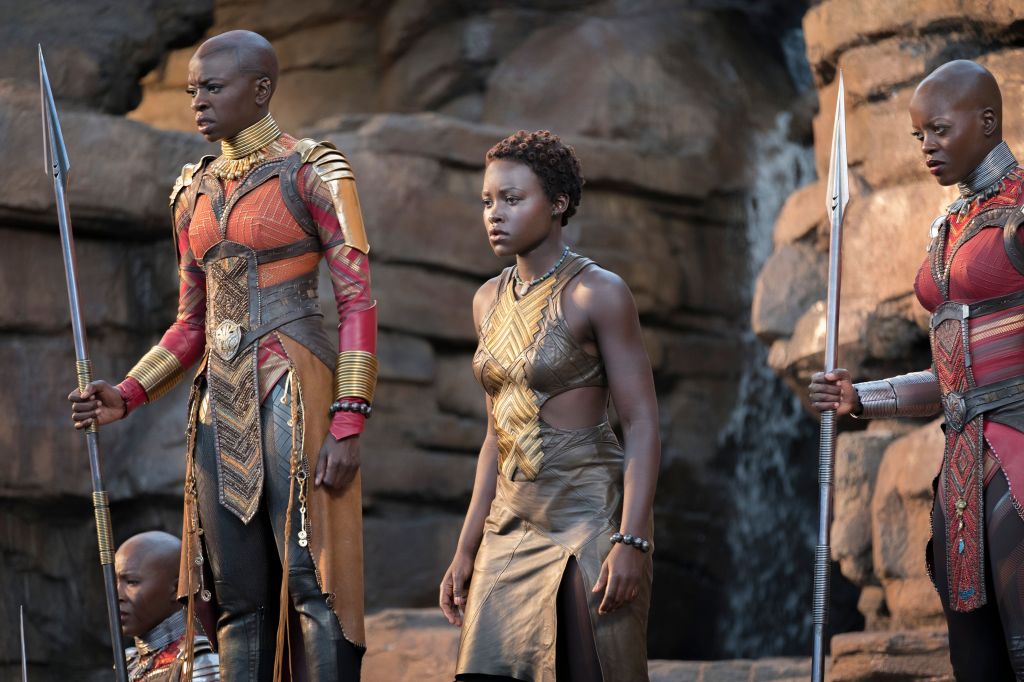
    Never have I seen black women who are bald or have short hair and darker skin praised for their beauty AND strength by…black men.  Black men have praised plenty of black women that have long, straight (or minimally kinky) hair, with lighter skin as beautiful. This type of praise is unconventional in the American black culture.  However, since Black Panther so brilliantly displayed women with such phenotypical features, they pretty much have gained goddess status.  Bruhs are like… “Nakia, Okoye, and Shuri, are my new standard for beauty…”  As a woman of dark skin who’s not always experienced this type of affirmation from black men, I appreciate that! My contention is with the “new-found way in which you’ve presumably embraced my strength as well.

    20180130_03_SHOT3_0040_C.JPG
    Letitia Wright, Lupita Nyong’o, Angela Bassett and Dania Gurira photographed exclusively for Entertainment Weekly by Koury Angelo is Los Angeles on January 30th 2018 photographed exclusively for Entertainment Weekly by Koury Angelo is Los Angeles on January 30th 2018

    STRONG BLACK WOMAN – not new, so let’s not treat it as such

    While Wakanda itself is a fictional place in Africa, the Dora Milaje Warriors of Wakanda are not.  Arica L. Coleman, of Time, recently wrote an article, “There’s a True Story Behind Black Panther’s Strong Women.  Here’s Why that Matters” that provides historical context.  Many black women are unofficially given the title of “strong black woman” and it carries with it unbelievable weight, often to the detriment of emotional, physical, and spiritual health.   Peep this book from Dr. Chanequa Walker-Barnes, Too Heavy a Yoke: Black Women and the Burden of Strength, if you desire some freedom here. This is not the strength that beams from my sistahs on the screen of Black Panther.  It is not the strength that simply ignores pain.  Not the strength that forsakes self-care for the care of everyone else in their tribe.  These women are physically and intellectually strong.  They are beautifully portrayed as women whose strengths are not seen as a threat, but as an additional weapon in the protection of a nation they all love.  Think asset not liability.

    Here’s why I’m salty.  I’m salty because my social media news feed has been full of posts and comments from black men that are practically giddy with the portrayal of women in this movie.  Especially commenting on their strength and beauty.  Well, guys, there seems to be a contradiction in what your social media post say and what I’ve experienced in life as a real-life Dora Milaje woman.  Yep, self proclaimed Milaje woman.  Here’s what’s been communicated directly and indirectly to me by men as a strong black woman:

    Your strength is intimidating, so tone it down and don’t have too many thoughts on the issue. 

    Be anything but assertive in the presence of men.  Too much sauce is too much sauce.  Minimize your intelligence at those times. 

    You are so much more beautiful if you have hair extensions that make your hair straight or very long.

    Regardless of your education and experience, your voice is always less valuable than any man in the room.

    Your dark skin is exotic.  You are not beautiful enough to be pursued in relationship, only observed.

    The list could continue, but the point is not to be exhaustive, but to challenge this notion that black men really do find the Dora Milaje warriors, Nakia, Queen Ramonda, and Okoye attractive with all of their strengths.   As a friend and I discussed the movie, she brought out the perspective that because T’Challa’s black panther suit was brilliantly designed to absorb kinetic energy with each bullet fired at him and later reused in his own defense, she often wanted him to take “more hits” so that his defense would be even stronger.  Such an interesting concept with parallels to black men across the diaspora.  Black men have been taking hits for a long time.  They’ve had a shield that absorbed a lot of the blows for them; the black woman.  Black women are still absorbing daily blows for black men.

    As we close out another Black History Month and a month that celebrates love, I ask men again, Wakanda woman do you really want? Many of you already have women with the strength of the Dora Milaje warriors as family members, colleagues, and friends.  Hug these women.  Protect these women.  Walk through healing with these women.  Help facilitate the dreams and gifts within these women.  Love those women. #InWakanda, strength is only a threat to the enemy, not family. We are all family in the African diaspora.

    After Wakanda, it appears I no longer must choose between beauty and strength.  As a dark-skinned woman with thick kinky hair, it’s always been one or the other.  Men, I hope my real-life experience begins to match what’s on your social media feed. I hope to see board room dynamics change.  I hope to see many of my beautiful and educated, black friends change their status from “single” to “in a relationship” this year.  I hope they will no longer be despised for their strength, but fully loved amid it.  Brothers, if there was ever a time to shoot your shot, it’s now.   Maybe elements of Wakanda will become a reality sooner rather than later…

    “Gender roles and strength don’t counter each other at all.” –

    Thought on Black Panther from Michelle Higgins of Truth’s Table

  • Unveiling Hidden Figures

    Unveiling Hidden Figures

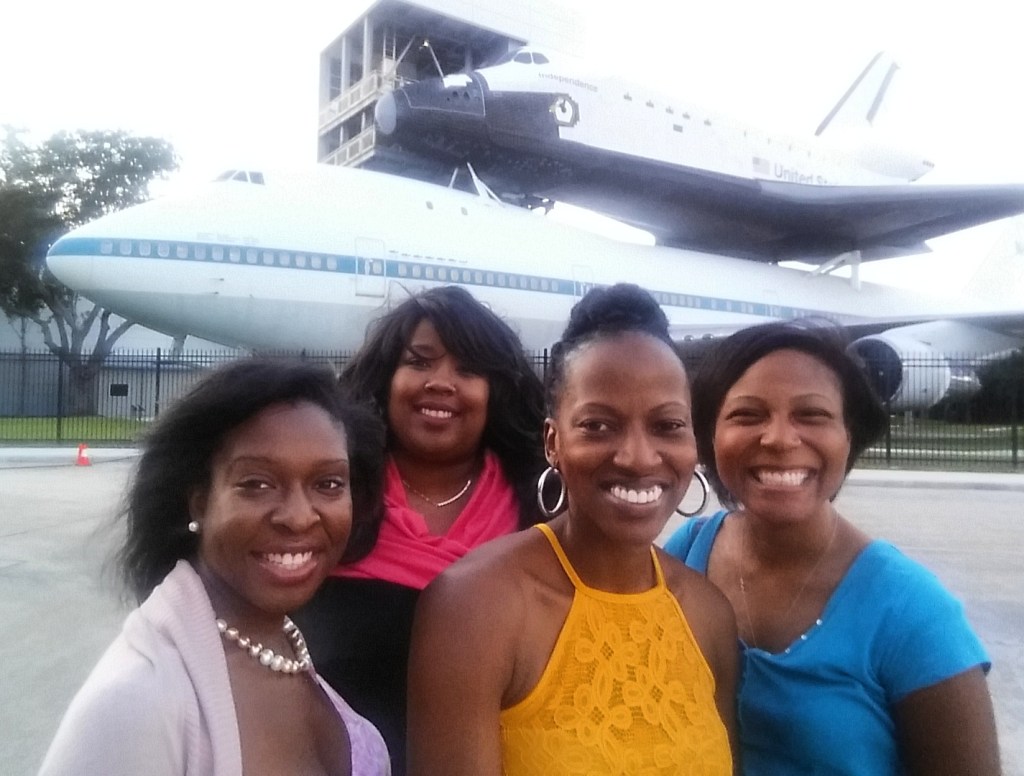
    The movie “Hidden Figures” took me on a roller coaster of emotions that I am not sure I’ve come down from.  Many [many] years ago, I was a budding engineer interning at NASA’s Kennedy Space Center in Cape Canaveral, FL who later turned down an offer to work as a long term engineer there.   At that time I had no idea of the premise of being a “hidden figure” in my career.  I was naive. Hopeful.  Trusting and hanging on to every word of those in authority; predominantly  the older, white men who were my managers.

    This derivation of mixed emotions comes from the simple, yet complex idea that things which are hidden are searched for intentionally, or remain hidden for a long time; only discovered by happenstance.  I honestly celebrate the healthy exposure that this movie has brought African American women in the science fields, yet my heart and life experience wrestle with the reality that any leader who chooses to unveil hidden figures in any industry must pay some cost.  It may cost some a bruised ego.   Others some of their influence.  Still others the very position that they may have aspired to or felt entitled to for years.  Truthfully, this is a cost that some are unwilling to pay.

    ***SPOILER ALERT***

    Choosing to Unveil

    When I re-imagine the bathroom scene where her manager tears down the “Colored Only” bathroom sign with every exertion of strength in his body, I am deeply moved.  Viscerally moved to tears.  I am moved because he had a choice.  He had a choice to leave things the way they were (which was perfectly legal) or to ensure equity for all on his staff at the expense of his social capital and the dissenting opinions of others. I won’t divulge details, but as a women of color who has experienced working on teams and with management who choose to unveil and those who don’t, I will say that I believe this act was far more courageous than depicted.  Now, before we toot too many horns, the most glaring paradox in this movie to me was that these women WERE ONLY unveiled because there was a DIRECT BENEFIT to those who had allowed them to remain hidden for so long.  In fact, the cost became too great for them not to be unveiled.  I mean, we’ve got to get John Glenn to space, right?  By the end of the movie, I joined everyone in celebrating the greater victory for America, but I could only think, the managers cowered because they had to; because they wanted victory so badly.  They DID NOT do the right thing simply because it was the right thing to do.

    I want to honor Martin Luther King, Jr. as we near the end of another #BlackHistoryMonth and highlight the response of Dorothy Vaughan, Octavia Spencer’s character,  who in fact did the right thing because it was the right thing to do. 

    martinlutherkingjrthetimeisalwaysright

    Leaders who Do the Right Thing (as reflected in Octavia’s charachter) are marked by:

    1. Recognition (of others) – She actively worked to recognize the gifts and talents of those on her team even if it warranted a promotion for them and practical obscurity for her.
    2. Innovation – She  developed a new way for those on her team to experience growth so that they were prepared to be unveiled when the time was right.  She risked the very promotion she had longed for so that the entire team rose to another level when she rose to another level.  Great innovation is often accompanied by great risk.
    3. Golden Rule Gratitude – With outward expressions of gratitude, she never delineated from treating others the way that she wanted to be treated.
    4. Hopefulness – She hung on to hope.  Her hopeful vision for the future propelled her and others forward.
    5. Tenacity – She displayed a dogged tenacity to lead and develop others with the influence given.

    There are hidden figures in classrooms, colleges, and places of employment everywhere.  Many systems in society have given visibility to some and not others.

    Today, I am less of a hidden figure.  Still being unveiled and grateful for it.

    One day, I hope it is said of me that I “did the right thing” as a leader; a person of influence.  I understand that I have a beautiful choice.  I will choose to unveil hidden figures when presented with the opportunity. Who will you help unveil today?

    “He must become greater; I must become less.” – John 3: 30, NIV