Category: Prayer

  • When Friendships Fail

    When Friendships Fail

    It has taken me decades to embrace the beauty and benefit of failure. I did not embrace it as a high school student, young engineer, or businesswoman. I didn’t believe then what I believe now; failure is not final. Failure is refining. Failure is formative. For so long it has held such finality in my life, that I have been almost acrobatic in my avoidance of it. I would only come to learn later, that a perfectly prescribed life is devoid of freedom. Perfection is a myth. Today I am free and yet failure abounds.

    I have grown skilled at bouncing back from failure in my career, but last year left me in a quandary when many of my friendships began to fail. When my friendships failed, they most certainly reflected a host of unmet expectations. Again and again. This was unfamiliar territory. Most of 2020 left me with a lingering feeling of disconnected Sundays and disloyal Mondays. I was surrounded by people who were unable to care/support me, but repeatedly expressed care/concern for me. In a move to find peace and interrogate my heart, at the end of 2020, I halted all communication with those friends and questioned whether these failures were final. This was not a moment of cancellation in a time of discomfort, but rather a pursuit of clarity in a time of chaos.
    It is near the end of 2021 and I have still not spoken to many of those friends. The time hasn’t come. This year long interrogation of my heart allowed me to see something which only becomes crystal clear in adversity; there was an idol among us called friendship. In western culture it is common for youthfulness and marriage to be idolized. People go to great lengths to appear young and unavailable. As a single woman who isn’t trying to reverse the clock and isn’t sprinting to the altar, I found myself unknowingly exalting the “strong friendships” I’ve held for years. The idol of friendship came tumbling down in 2020 when adversity hit hard.

    Meriam Webster defines idol as a representation or symbol of an object of worship; a likeness of something; a pretender, imposter. In earnest, I knew idolization was present when I began to subconsciously link their success or failure (as a friend) to my own success. I didn’t picture a reality where these individuals would deeply disappoint me, but they did. I didn’t picture a reality where these individuals would cause me such sadness, but they did. I definitely didn’t picture a world where I would willingly disrupt communication with them, but I did. I didn’t imagine a world where they would fail me. Idols are to be worshipped not humanized. In His sovereignty, God continues to use friendships to make me more like Him.

    God will use what we idolize to sanctify us.

    Preston Perry

    :

    When friendships fail – I can grieve

    The year 2020 nearly broke me and my relationship with the church. Although I don’t love God less, I am less likely to trust “his people.” This is a statement of grief I held over dismantled friendships with some christians. I recognize that trust will take time, but it is not impossible. When I thought failure was final in friendship, I packed away my grief and moved on. Time away from these friendships allowed me to grieve what was lost without the pressure to pretend all is well. Grief helped me see their humanity and tear down the idols.

    When friendships fail – I can begin again

    I am beginning the journey of rebuilding some of those friendships. It is strange to me, but I am beginning again with people I’ve known a long time. I’m learning that failure doesn’t have to be final in friendship. I’m also learning that sincere forgiveness is more powerful that superficial reconciliation. I don’t know that future of many of these friendships, but I do know that seeing them through a human lens changes everything. I don’t know at which point in life I moved away from that concept, but I’m getting back to humanity. Leaving the idea of perfect friendships behind hasn’t been easy, but I am confident it will be worth it.


  • Answerless Hope

    Answerless Hope

    The more complex my life circumstance, the less complex my prayers. More of Him. God with me. Less of me. Words fail. Presence succeeds every time. Keep me near thee, oh God. Those few lines sum up last year. Simple prayers. Deep lament. I’ve found depth in brevity; the closeness of God in times of deep sorrow. Gratitude has been an anchor for my grief preventing me from drowning in the trauma that was the year 2020.

    I have so many unanswered questions for an omniscient God. Why did my father die due to addiction? I was only 15. His addiction caused him to separate from our family when I was 2. Why did I grow up in poverty? Why did you give me THE BEST mom? A mom who lost both parents by the age of 35, yet parented and loved me so well. Why wasn’t she afforded the joy of experiencing the parent/child relationship with her mom? Why have I been a single woman for so many years? These questions may never be answered, but I am not without hope. How can I have hope without answers? I have spent the past 7 months pondering the power of hope when answers are few and why love is an even greater power than that.

    Hope doesn’t demand answers, yet longs for them. Hope requires possibility. If it is to sustain ones soul, it demands truth, something substantive to hold on to. I learned this summer that hope without truth is denial. I repeat. It does not demand answers. Possibility may prove more powerful than the answer itself. Hope’s power resides in the belief of possibility.

    The power of this principle was magnified last August when my mom became suddenly ill and subsequently tested positive for covid-19. This news sent rage, anger, and fear quickly through my body. With her pre-existing condition and age, I prepared for the worst and flew home to be present. Every news article and report I’d seen became much more than a story. Unable to see her – no hospital visits allowed. Unable to hear her – she could barely breathe let alone speak. Unable to comfort her through proximity. Unable to pray pithy prayers, I became deeply acquainted with simplicity. God, I need you. My mom needs you. During the day I busied myself caring for and supporting my mom and family anyway that I could, but at night I cried and cried and cried. It is no exaggeration to say that tears became my food day and night. Each day brought uncertainty; never before had I stared despair in the face and fought like ___ for hope. Go ahead and fill in the blank; yep, that’s how hard I fought for hope.

    In my humanity, I often wanted God to just tell me if my mom would live or die. I wanted finality, but God offered none of that, yet each day, I had enough hope to sustain me. And just like manna, hope fell daily and provided just what I needed. Hope holds us in our suffering and even soothes our souls – providing divine levels of comfort and perspective to fuel our persistence in prayer, justice, or relationships. Without hope the long haul is just long suffering. Hope leaves us longing, but love answers. Love says yes or no and the answer is always for our good. And this may be why love is more powerful. “Hope deferred makes the heart weak,” is a proverb I’ve held on to for years. To be in anguish for days, months, or even years with concern for the well being a loved one has a way of weakening the heart. When love answers, we may celebrate, grieve, or find ourselves somewhere in between. Love’s response allows us to eventually establish new hope.

    In December 2020, a dear friend of mine lost her father due to complications from covid-19. My nightmare became her own. While my mom survived the brutal effects of covid-19, her dad did not. The very thing I feared became her reality. I am still reeling from this loss. Truthfully it’s because I had such great hope in God. I know he is capable of healing. My hope was not misplaced, but my heart wasn’t ready for Love’s answer. This was one of the hardest no’s from God this year. I live with the loss of my father daily; the vacancy in my heart that longs for his physical presence is irreplaceable. I am well acquainted with this pain and I wish no child experienced it.

    2020 was the hardest year of my life and it is not lost on me that the multiple valleys brought exceptional clarity about what’s most important. I didn’t expect corrective vision to come in this fashion. Some things remain blurry and unanswered. I can long for answers and remain hopeful. Such is a paradox of life. “On Christ the Solid Rock” is a hymn reminding me of this longing. A portion of that hymn is below.

    “My hope is built on nothing less
    Than Jesus’ blood and righteousness
    I dare not trust the sweetest frame
    But wholly lean on Jesus’ name

    On Christ the solid rock I stand
    All other ground is sinking sand
    All other ground is sinking sand

    When darkness veils his lovely face
    I rest on His unchanging grace
    In every high and stormy gale
    My anchor holds within the veil

    His oath, his covenant, his blood
    Supports me in the ‘whelming flood
    When all around my soul gives way
    He then is all my hope and stay”

    John Onwuchekwa of Four in the Morning podcast said, ” Life is lived at the intersection not the freeway. Life will stop you at some point. Processing grief is a skill. It is not about time. Grief is not a pest to be exterminated.” Life certainly stopped me in 2020 and forced me to acknowledge loss. I am hopeful to live 2021 at the intersection of grief and gratitude. Both are powerful. Both allow me to reckon with loss and revel in victory. Resilience is born in this place. None of us are without loss and all of us have something for which to be grateful. The inextricable connection between hope and love has helped me to move through last year and will provide foundation for the new year.

    Last year’s personal trauma introduced so many new questions for God, but I am not without hope. I will bring those questions to Him in the quietness of the night. I will inquire of him when doubt is amiss. My soul will ask him to answer me especially when grief overwhelms me and words fail. I will remain vulnerable in angst and joy. I know he will answer. God is love and love always answers.

    “So now faith, hope, and love abide, these three; but the greatest of these is love.” – 1 Corinthians 13:13, ESV

  • Anti-Racist Checklist

    Anti-Racist Checklist

    Full lips, round hips, black skin is where I begin, but not where I end. – Black woman.

    It’s July 2020 and suddenly America has awakened to a realization that Black lives should matter in these United States. Operative word should. Just a few days shy of July 4th and Breonna Taylor’s family along with so many other Black families are aghast with performative measures of alliance and yet no substantive change. No arrests for the police officers who shot her while sleeping. SLEEPING. The message being communicated to Black people hasn’t changed; we say that we are with you, but our systems remain the same. Our systems don’t support your thriving and barely support surviving. Enter the work of anti-racism.

    It is unlikely that anyone can scroll on social media or watch mainstream news in recent weeks without some story or post discussing systemic racism or what it means to be anti-racist. I’m encouraged to see the proliferation of Black voices and the elevation of our story. I am also noticing some fatigue from White allies – we’ve only been having this global conversation on race for 1 month. 30 days. That’s it. When fatigued, it is likely that we will reach for the easiest possible solution and to some that looks like an anti-racism checklist. An insensitive move, in jest, to ask your Black friends to tell you a list of things you should do to be considered anti-racist.

    This ask has come as a direct and indirect proposition. It may sound like “I wish I just knew exactly what to do” or “I just want to show you that I am anti-racist.” A list sure would make things easier. To those beckoning for a list, I agree, that is way easier. However, EVERYONE is more complex than a list of “to dos.” Your most valued relationship can not be deduced to a list. When I think of an anti-racist list, I simply hear another request for comfort. Another request for me to acquiesce to your discomfort. I will not do that anymore. For centuries, the standard for Blacks has been unreasonably high (perfection before dignifying) and the standard for Whites shamefully low (accommodation of comfort).

    Anti-racism does not ask me to shrink my voice, presence, or pride (in my Blackness) for your comfort.

    Precious Jones

    I’m not asking your forgiveness to live in my fullness. For so long I’ve chosen to shrink parts of my ethnic identity to make White people, especially White Christians, comfortable. Always learning more about their culture. Always accommodating comfort. Executing survival tactics such as code switching to climb the corporate ladder and regrettably leaving parts of me buried below as I moved up. For decades there was very little love for this brown skin girl. I’m realizing that choosing between my ethnicity and Christianity is a false choice. I’m certain that Christ wants me to live fully Black AND fully redeemed; not some reduced version of myself. Else, why would God create humanity and allow our eyes to differentiate color variants if there was no intention for us to see the beauty in difference? At what point did beauty become a point of division? Don’t answer that. I repeat. Don’t answer.

    Image from Facebook

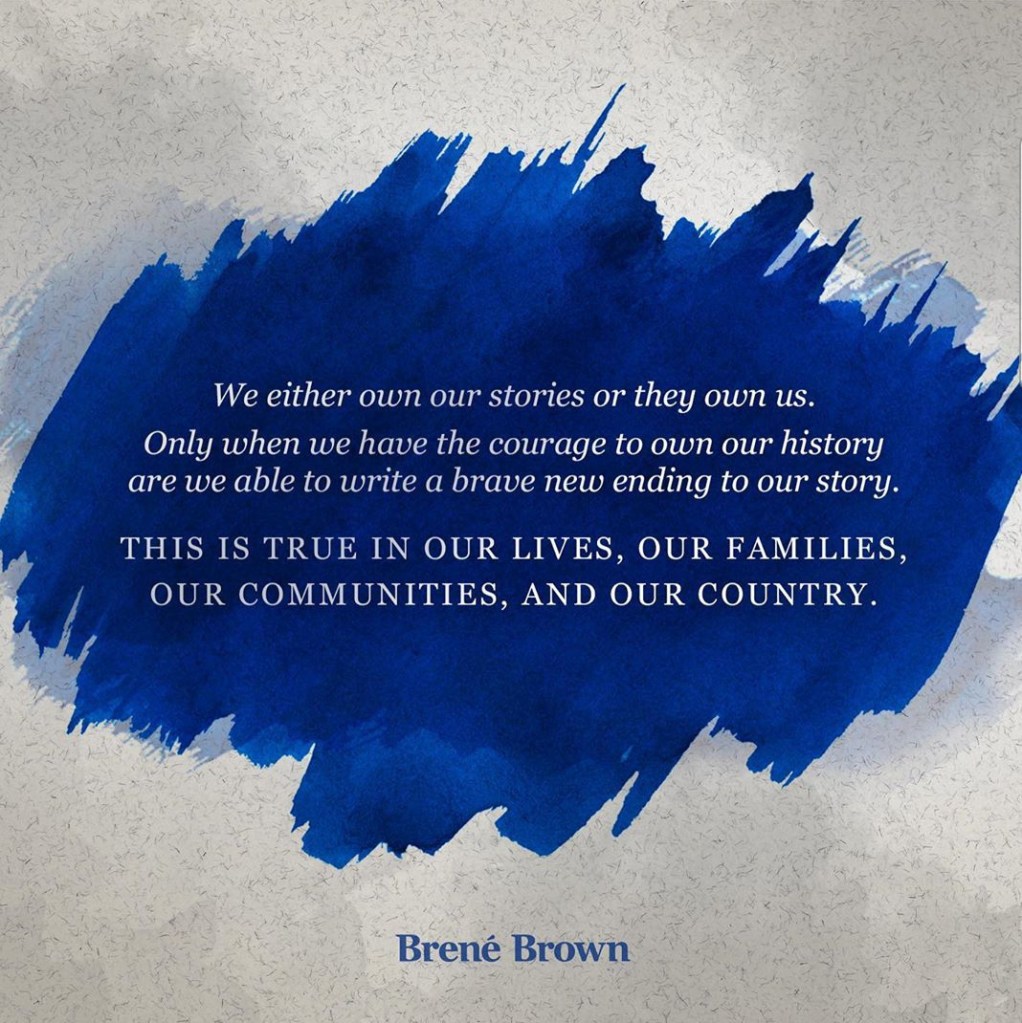
    Brene Brown noted, “We either own our stories or they own us. Only when we have the courage to own our history are we able to write a brave new ending to our story.” I own my history of placating Whites at work, in friendship, and at church to make them comfortable with me. I also own that I previously believed that their comfort was more important than my being. BUT NOW (say it with me church)…I’m writing a very different ending for myself. It looks like loving myself enough to move forward with those who pursue justice in word and deed. Who continue to do the personal work of becoming anti-racist. It looks like loving myself enough to end fruitless conversations that originate with interrogation instead of empathy. It looks like CHOOSING. I now realize that as a Black Christian I don’t have to accept every invitation into a conversation on race. This makes me no less Christian. This makes me healthier. This makes me wise. This allows me to endure.

    If there ever was an anti-racist checklist, it would be loaded with nuance and complexity; joy and pain. Not a lot of conditional statements, but real expectations. It might look something like this.

    Anti-Racism Checklist

    1. Hard work
    2. Failure
    3. Love
    4. Ambiguity
    5. Frustration
    6. Anger
    7. Disappointment
    8. Endurance
    9. Victories (small & large)
    10. Lament

    Anti-racism is spelled M-A-R-A-T-H-O-N. It is not spelled p-o-p-u-l-a-r-i-t-y. Neither is it spelled p-r-a-i-s-e. To the adults in the room, we are not in high school anymore. Therefore, our personal metric should not be “cool by association.” No longer permissible to rest on the laurels of having Black friend(s) or coworkers. Stop searching for a list of things to “check off” to arrive at the status of anti-racist. A list of things to “prove” your work is not primarily performative. Don’t exhaust yourself trying to prove who you are. That’s wasted energy. Marathons are about conservation and bursts of energy at appropriate times.

    You know who you are and where you are. If you do not know who you are, honestly interrogate your soul. If you are not where you would like to be, then put in work. And keep working. But don’t ask me for a list. If you do, I will reference the one above. It is the only list I have that counts in this work. A list that allows us to examine our privilege, power, and prejudice.

    White people, if your relationships feel particularly strained with your Black friends or coworkers right now, remember, “ambiguity and disappointment” are on the list. If you feel exhausted, remember, “hard work and endurance” are on the list. If you feel like, you are just not getting things right, remember, “failure and frustration” are on the list. Black people, if you are tired of empty apologies and excessive validation, remember, “anger and lament” are on the list.

    If you have resolved to keep putting in work, then others will benefit from these acts of love and we’ll share in mutual victories. But, if your goal is simply to check off an act of love or a moment of endurance, you’ve missed it. Ball the list up. Throw it away and ask the question, “Do I really want to become an anti-racist or is this all for show?”

    “Search me, O God and know my heart. Try me and know my thoughts.” – Psalm 139:23

  • Forty feels @ Forty

    Forty feels @ Forty

    Most of my birthdays begin with reflection and today was no different. Four decades of life…hard to believe. I often feared not living beyond 34 years of life (age my father died). Today I decided to list forty feelings I have as I enter my fortieth year of life. Here’s to the feels.

    I FEEL…

    1. Alive
    2. Grateful
    3. Challenged
    4. Fulfilled
    5. Hopeful
    6. Joyful
    7. Fit
    8. Whole
    9. Surprised
    10. Unfulfilled
    11. Sadness
    12. Loved
    13. Foolish
    14. Known
    15. Satisfied
    16. Beautiful
    17. Longing
    18. Light
    19. Free
    20. Courageous
    21. Connected
    22. Peace
    23. Jaded
    24. Anger
    25. Content
    26. Accepted
    27. Human
    28. Tired
    29. Unknown
    30. Alone
    31. Purposeful
    32. Deep Loss
    33. Enjoyed
    34. Experienced
    35. Misunderstood
    36. Feeble
    37. Strong
    38. Unseen
    39. Human
    40. Barren

    I don’t always feel capable. I don’t always feel strong. I don’t always feel loved. I don’t always feel known. Today, I am thankful to be in a place where these feelings can safely reside in me to remind me of my humanity and desperate need for God. No longer ignoring heart ache to search for heart joy, but rather embracing both as a sign that I am fully alive.

    Forty feels simultaneously amazing and complex. This is not how I thought forty would look and I’m okay with that. I really am okay with all of that.

  • Chronic Singleness

    Chronic Singleness

    I’ve lived a lot of life as a single Black woman and I’ve resisted writing down these thoughts for a while, but usually in my writing I find solace sprinkled with liberty and saturated with courage. Courage to share that I am nearly FORTY (yep, the big 4 0) and I have spent almost half of those years navigating life as a single woman. This is at times a difficult truth because it is far from my desire or even what I had “planned,” but that’s NOT what this post is about. This post isn’t about the difficult aspects of singleness, it’s about the silent directives whispered to women by well-meaning friends and family to be someone other than their authentic selves to rid them of this thing called singleness.

    The title “chronic singleness” is hyperbolic in nature and intended to conjure up thoughts of potential cures. Why? Because women who are single into their mid-to-late thirties begin to be treated as if their singleness was brought on by their selfishness (clearly they must be chasing a career), insecurities, high standards, or strong personality. In essence, the problem MUST belong to the woman… And of course some might say that all of the aforementioned “symptoms” are curable.

    Here’s where well meaning peeps enter the scene. They begin asking the woman about things she could possibly change about herself to garner the attention of a man. Even recommending that she change her standards of desirable characteristics in a partner to simply look like… “man with a job.” It may sound funny to some, but this is only comical through your twenties. Once you reach your mid-to-late thirties it becomes exhausting. If this sounds personal, it is. I’ve received advise from people I love dearly that varies from trying an online dating app to revealing less of my educational background to appear less intimidating to men.

    I’m exhausted fam. I have been told over and over again that I must shrink back so that the man can shine. Veil portions of my full self so that his presence can supersede mine. Why can’t we both shine together? This exhausting narrative has become awkward as I approach forty. Like, what else can you ask me to do to “prepare” for this mystery man? And why aren’t men being asked the same types of questions?

    Precious moment with my friend’s little one.

    Truthfully, at this stage, people engage me with caution as they see my love for children and family and approach me with uncertainty to ask if it’s okay to pray for my future husband. Or the look on their face indicates that they are genuinely baffled as to the cause of my singleness and long for a day where I will share in the joy of a long term relationship and family of my own. I want to thank friends and family for their concern and care, but I must also request that you all stop treating me like singleness is something to be cured. The longing in my heart persists for marriage and a family of my own, but my life is full today. I am not lacking as a single person.

    I remember the shame centered around this conversation as a woman in my mid-thirties when people who know me unintentionally communicated that I was not enough. A Christian community that idolizes marriage and gives little value to the single person often did the same. I began to embrace the idea of searching for a cure for my singleness; my chronic condition of incompleteness until I realized that I am enough. God’s design of me is COMPLETE. A change in marital status should only add to the beauty of my life as most relationships do. No single person completes another person. Periodt.

    I, like, Ekemini Uwan of Truth’s Table, now hold this desire of marriage loosely. Her post titled, Singleness: My Only Companion, beautifully expressed many of the sentiments of my heart and communicated that I am not alone. Thank you sis. This past year God has shown me the beauty in daily gratitude for every met need. As I said every day last year and will continue to say, “I have what I need TODAY, therefore I will not complain.” This includes not complaining about being single. Each year God adds new relationships to my life when I need them and for this I am grateful.

    When you see a woman in her mid-to-late thirties who is single, don’t offer her your unsolicited advice. Don’t make her feel like a leper because of her marital status. Don’t presume she is lonely or unfulfilled. Don’t even assume that marriage is a desire of hers. Remember, Jesus was single. I never hear anyone speak of his life of singleness with disdain. The Apostle Paul was single and that is never the first thing people mention when speaking about him. Peep this. All I want you to do is LISTEN if singleness is the topic of conversation. It is often more complicated than swiping left or right on an app or “putting yourself out there.” If the woman is a friend, a daughter, or colleague, listen to her heart when she shares it. Pray for her to live fully and freely in her singleness. And lastly, if she does desire marriage, pray for contentment in the longing. I believe she will benefit from those prayers. I know that I have. Life is full of unmet desires and yet God faithfully meets every need.

    But godliness with contentment is great gain. – 1 Timothy 6:6

  • Keep the Change

    Keep the Change

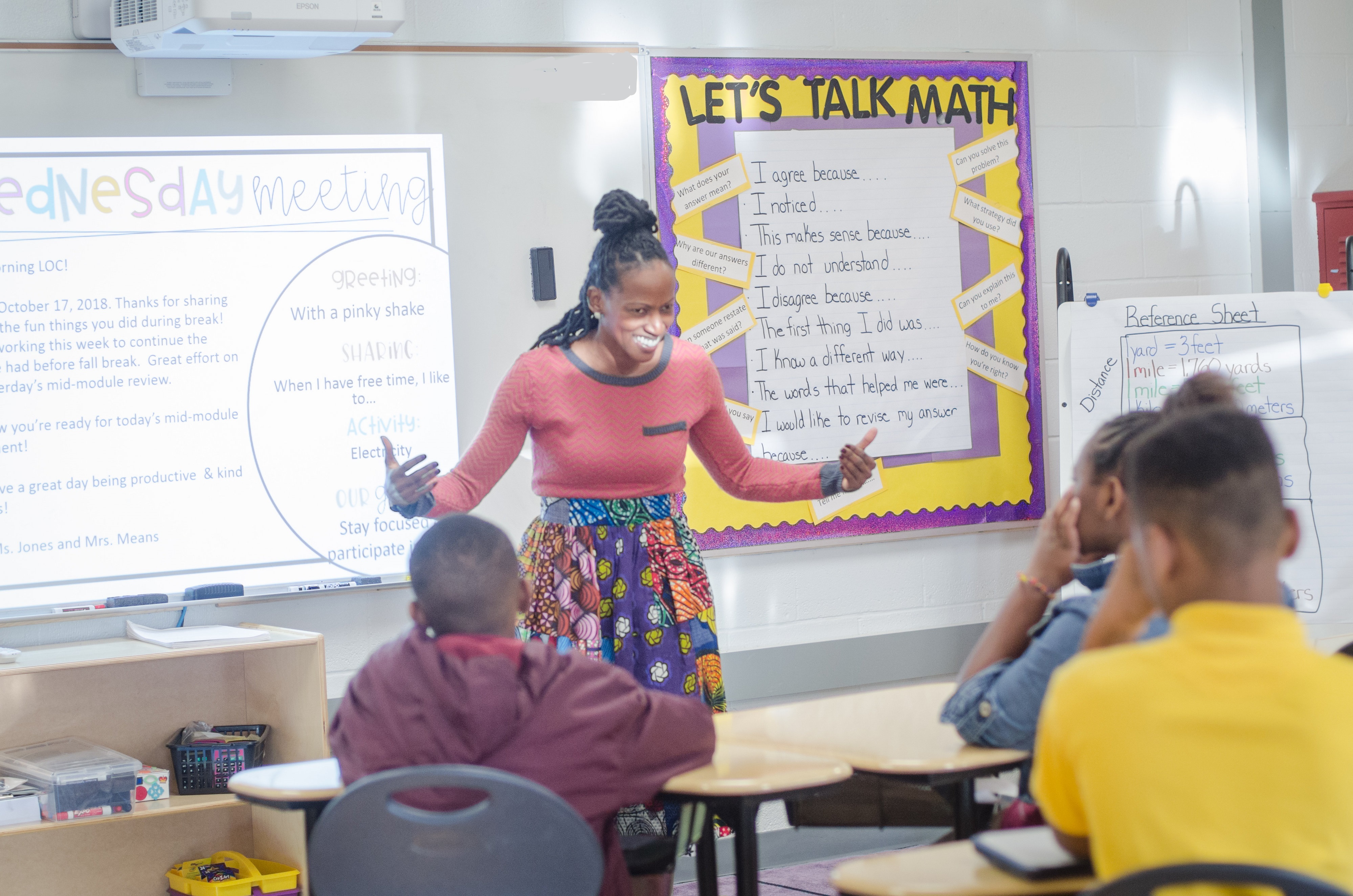
    I see the depth of my humanity at the intersection of my darkest secrets and greatest hopes.  At times I am secretly afraid and yet deeply hopeful. Teaching has unearthed a myriad of emotions.  It has been a place where great joy and great need have collided.  I believe I’ve needed the presence of students much more than they have needed any lesson I have taught them.

    Living this dream has been nothing I expected and everything I’ve hoped for.  I didn’t expect exhaustion or gaps in communicating with those I love.  I didn’t expect to see the beauty in becoming a reflective practitioner. I didn’t expect to treasure sound feedback as much as I do.  I hoped for joy filled days.  I hoped that I would not be the only teacher in the room; that I might learn profound truths from the mouth of babes.  I hoped that my discomfort would point me to Christ.  I hoped that I would grow personally and professionally; both have occurred.  A memorable student-led lesson that impacted my personal growth occurred on the first day in the classroom.

    InkedMTR Class of 2019 Residents-Vision Prep-0020_LI

    “Are you nice?” – 5th Grader somewhere in Memphis

    On the first day of school I was full of nerves; all kinds of nerves and this student “had the nerve” to question my kindness?  I should be nervous, right?  It was my first day as a teacher.  However, the candor with which this student spoke during my initial encounter with him was refreshing and taught me a lesson in token vs. true relationship.  My first day attire was thoughtfully chosen. I “carefully” selected a colorful blazer and shirt which I thought wouldn’t cause me to appear too uptight that kids wouldn’t approach me or  too casual that I wouldn’t be taken seriously.  Clearly the student could not easily decipher the type of teacher I was and therefore decided to ask.  Truthfully, his sweet candor never left me.

    As adults, quick, unfounded, judgments are made upon initial encounters, and rather than finding out more about that person (as this student attempted to do), token relationships are established.  True friendships are established as we seek to know and be known by others.  Tokenism selfishly prompts us to hold on to a relationship based on what it can provide us and only access it when it has some direct value to us.  It says, “I’ll use this token when I need it.”  It has little care for the token itself, only what it can provide.  Tokens are cheap and so are token relationships.  The first day of school encounter has guided my interactions with students and adults in a new way.  This student has encouraged me to seek to know others and allow others to get to know me.  This knowledge doesn’t imply depth, but rather an earnest attempt to connect with others in an authentic way. This posture of connection with others has caused me seek to humanize others.  It is the start of every conversation and every prayer. Game changer.  This student taught me a lesson in empathy.   For 2019, ya’ll can keep the change.  I’m not in search of tokens.

    1539920398091

    As a self-proclaimed late dreamer, my professional growth as a teacher has revealed itself through expressions of love.  I thought my first day in the classroom would be love at “first day,” but it wasn’t. In short, it didn’t feel like love, but it felt like I was exactly where I was supposed to be.  And maybe this is love; not explicitly a feeling, but a knowing.  A deep knowing that you are safe and that the reciprocation of the love that you’ve given will be returned without judgement.  I have been loved well by a few in this season. These beautiful expressions of love have undoubtedly reminded this caterpillar that it was made to fly.

    There is a love that liberates and a love that feels like it’s always been free.  I choose freedom.  – Queen Sugar

    Teaching has been the realization of an unspoken dream.  Dreaming doesn’t actually feel “dreamy” and comfortable, but I do feel ALIVE!  Is it possible that in the dreaming I feel more human?  Does this awakening of my humanity define what it means to really live?    Living in the tension of hopes and heartache.

    Dreaming is defined on www.dictionary.com as an aspiration; goal; aim.

    To dream is to hope.  To hope is to live.

    I now dream of teaching students more than math.  I dream of teaching them of their inner and outer beauty.  I dream of teaching them how to navigate a world which doesn’t always affirm them.  I dream of teaching them to fly.  Fly, babies, fly.  When loved well, I believe flying is the only option.

    Hope deferred makes the heart sick, but a desire fulfilled is a tree of life. – Proverbs 13:12

  • Bubble Trouble

    Bubble Trouble

    20171228_110728_040_01

    The beginning of the new year is generally bubbly; literally and figuratively.  Bubbles can be deceptively dangerous, distorting our perspective, limiting our impact, and diminishing our hope.  Yes, cute, friendly bubbles.  Bubbles look stunning from the outside.  Their iridescent color captures the eye.  Their ability to beautifully reflect exactly what is in front of them is impressive.  This is the allure of the bubbly perspective; it mirrors back to others your view in its best light.   The view from the inside of a bubble creates a fishbowl effect, most closely resembling that of tunnel vision.  And this is where the trouble lies, most of us live our adult lives inside of a bubble.  And what we see is not the full picture.

    Bubbles are troublesome because we don’t often realize that we’re encased by them.  Facebook recently projected that I would marry a White man.  Facebook projections are often outlandish, but whatevs. No prob with me because I’m open to marrying a man who’s outside of my ethnicity.  When I shared this “projection” with a friend, she stated, “Why would you want to go through all of that trouble?”  Her statement was a reference to some of the natural conflict and misunderstandings that she and I have in our friendship because we differ in ethnicity.  I jovially replied, well, if that’s the case, I probably shouldn’t have any friends outside of my ethnicity at all, right?  We both laughed and realized how much our friendship has enriched each others lives and knew the “trouble” had been worth it.  I’m glad that we can speak honestly to one another, but that perspective was down right bubbly.

    As one who grew up in poverty, I used to presume that safety was only found in the burbs, but a faulty presumption it was.  The first and only time my home was broken into was when I was a resident in the suburbs.  As a former resident of the suburbs, I found that it became increasingly easy to live in my bubble of lattes and chic eateries.  That’s what the neighbors were doing.  No one really left the bubble unless they had to.  For me, living like this certainly narrowed my view on social justice issues and lessened my conviction to respond politically or otherwise.   I don’t have an aversion to the burbs, but I had to find new ways to remain proximate to issues I care about.  To those things that keep me up at night else I knew the bubble of passivity (cloaked in apathy) would lure me to sleep.

    I realized a truth that Bryan Stevenson learned from his grandmother and so eloquently expounds on in his book, “Just Mercy,” when he recounts her telling him often, “You can’t understand anything from a distance, Bryan.  You have to get close.”  How could I say that I care so deeply about the marginalized and have such little interaction with them?  I had been living in a bubble.

    There is nothing like the disruption of life in your thirties to aid in the bursting of bubbles.  Life quickly moves out of the space of black and white when family and friends die of cancer.  An 8 year old child commits suicide.  Job loss occurs.  Home foreclosures for some and short sale for others.  From abundance to poverty.  In earnest, I lived in a bubble for most of my twenties.  While there was some struggle in college and thereafter, my life during this time was mostly euphoric.  I had a rude awakening, but an awakening nonetheless in my early thirties.

    The perspective from inside of a bubble is incapable of presenting the full picture.

    Bubbles are superficial and protect no one.

    They provide a false sense of security.

    Bubbles are going to burst.

    ant-pushing-a-water-droplet
    Photography by: Rakesh Rocky  http://onebigphoto.com/ant-pushing-a-water-droplet/#

    My hope as 2017 draws to a close and a new year begins is that I don’t let fear drive me to create bubbles that keep others out, magnify my own worldview, and blur the experiences of others that are right in front of me.  It takes more effort to recognize a bubble than to burst it.

    In 2018, I want to broaden my perspective, increase my impact, and not lose hope as I think outside of the box and live outside of bubbles.

    Join me.  Let’s go.