Recently, I have spent a lot of time thinking about suffering and my desire to avoid it at all costs. It sucks to suffer. End of story. January was laden with suffering and loss for a few of my friends; 3 funerals in 3 weeks to remember the lives of 2 fathers and 1 son. Grief and sorrow have a way of lingering. Jesus agreed with this sentiment as reflected in Matthew 26:38, where he stated, “My soul is overwhelmed with sorrow to the point of death…” Again, suffering sucks. The unsettling truth is that as a follower of Jesus, I should not only come to expect the blessings of God, but with great certainty I should be mindful that suffering is also on the path of sanctification. Difficult truth. And it sucks.
suf·fer
ˈsəfər/
verb
1. experience or be subjected to (something bad or unpleasant).
This fixation on the avoidance of suffering came about after spending time visiting a friend in South Africa, where there is a chasm of classism left from the wreckage of apartheid. During this visit more than any other, there was an acute awareness of the role that race has played in providing privilege to some and not to others. As our conversations grew in depth, we both surmised that without even knowing it, we had developed an unhealthy expectation of “entitlement” to blessings as a believer and follower of Jesus Christ.
en·ti·tled
inˈtīdld,enˈtīdld/
adjective
believing oneself to be inherently deserving of privileges or special treatment
It was almost as if we had said to God, suffering is for someone else, definitely not me. This unspoken paradigm of entitlement can wreak havoc on our faith when suffering arrives. I then began to ask this friend how she maintained her faith during her most difficult moment when she suffered the loss of someone she loves. She stated very simply and profoundly to “loosen my grip.” Loosen my grip on the possessions I have. Loosen my grip on the relationships that I hold dear. Loosen my grip on my definition of what my life should be at this exact moment. The “loosening of the grip” is an expression to hold those things and relationships dearly loved loosely in your hands, with gratitude and knowledge that all those things belong to God. All of them.
“Following Jesus wholeheartedly means facing the “most brutal facts of our current reality, whatever they might be” while holding on to our absolute certainty that we “prevail in the end” through his love and grace.” – Rick Lawrence, Jesus-Centered Life
Perhaps a small part of what makes suffering bearable is our ability to savor what is good in that moment. Another nugget of truth is that we can’t always see the things that are good in the moment of suffering. What I learned during my time with my friend is that it is NOT in the overt acknowledgement of “all that is good” that gratitude arises. It actually arises as we choose to be present with those who are suffering. Present during the smiles. Present during the sorrow. Present during the silence.
I observed a lot of natural beauty during my time in South Africa, but there was nothing more beautiful than the comfort of a friendship that has lasted 13 years. There was no pretense. I liken it to the comfort of a good pair of old jeans. They have holes, they aren’t perfect, but they fit in all the right places.
I thought my time in South Africa would leave me only longing to ease the suffering of strangers. That occurred. I didn’t know that my time in South Africa would teach me in part, how to lament with the suffering saint and also teach me that suffering/sorrow/grief has no zip code.
I want Jesus; fully and completely. However, I still don’t want to suffer, but if I must, may I do so by leaning into Jesus and loosening my grip on all the things I’ve deemed too precious to lose.
Those that know me well know that I love truth more than I love comfort. This past week, the ugly truths of police brutality, implicit racial bias, and systemic oppression of black and brown people made many uncomfortable. In fact, many are still uncomfortable; particularly in the christian community. This past week has pushed the christian community to take a serious look in the mirror and introspectively determine if diversity is something that is only espoused in word or actually lived. And when I say actuallylived, I ask… Are we brave enough to listen, empathize, and act courageously when it is counter cultural to do so? When we might be afraid to do so? When it is uncomfortable to do so.
I have pondered why the #AltonSterling and #PhilandoCastile killings (by police officers) have caused me to grieve so deeply; more deeply than previous incidents of police abusing power. More than #FreddieGray. More than #SandraBland. More than #MikeBrown. More than #TamirRice. More than #SamDubose. More than…
And then it hit me – this list does not seem to end. Data from http://mappingpoliceviolence.org/ shows us that this brutality by police officers upon black lives is a systemic problem. And…many of my non-minority christian friends have become mute. I liken it to an ethnically mixed group of high school kids who are friends discovering that one of the black guys has chosen to go to the teacher after class and speak up for another black student who is repeatedly being poorly treated by someone in authority. Most in this ethnically diverse group vow to show up to help defend this black friend because they all believe this student is worthy of defense. You may be able to finish this hypothetical story for me. The friend arrives at the class room and sees that primarily his black friends kept their word to stand with him.
Welcome to the #BlackLivesMatter movement. The silence of a segment of the christian community has been deafening because it feels like fear has rewritten the justice narrative and it has been more comfortable to remain silent, just give money or hide behind the cloak of one’s ethnic identity. None of these positions equate to solidarity. And none of them will bring reconciliation.
Don’t be silent – your silence speaks loudly. All week this “silence” has been ringing in my ears to the tune of “How can we say that we are the church when there doesn’t appear to be a willingness to bear one another’s burden?” I’ve said it before and I will say it again; lament with us first. No solutions, just solidarity for justice. A few days ago, a White, Christian friend of mine found courage to speak even among fear. As I read her account, I could see how she beautifully wrestled with the fear of speaking publicly regarding Black Lives Matter and how the comfort of this fear was no longer greater than the cost of her silence. Truthfully, her voice on this issue will speak more loudly than mine and this is why silence and/or apathy is not an option for the white christian. Your silence may be communicating the wrong message. PLEASE READ HER PERSPECTIVE.
Don’t JUST give your money – because settlements don’t settle it. Now is the time to leave our paternalism at home. This god-complex which causes us to want to “fix” the problems in the lives of those they are serving through money is crippling. When we take a look at 11 recent high profile cases of men and women who had died at the hands of police, several of them received settlements between $5 million and $6.5 million dollars. Settlement after settlement injustice remains. Giving money is a necessary part of the solution, but it is not the solution. It takes courage to speak. To attach YOUR NAME to cause in which you advocate for equitable treatment. There is such anonymity in “only giving money,” but, when there’s person associated with a cause, there is a different cost.
Don’t forsake your eternal identity for your ethnic identity – I am a follower of Christ first and then I am a black woman. #Realtalk – I am unapologetically black, but our eternal identity as Christians is what unites us. This means that as sisters and brothers in Christ, the higher call for all of us is to act justly, love mercy, and walk humbly (Micah 6:8). When I rise each day, I have to remember not to lead with my #blackness and that it is not the primary narrative that shapes my life. The banner over my life is one of redemption from sin. We have seen what sin can produce individually and on a larger scale systemically. To my White brothers and sisters, I encourage you as well to lead with your identity as a follower of Jesus. To seek justice for the marginalized. To see the #imagodei (image of God) in others. The practical steps to make this occur may be scary, but this is what I want to do. I want to talk with you. To share in and learn of your fears. To seek God together for our nation. To serve God together in our nation.
I have decided to follow Jesus. No turning back. No turning back. Jesus didn’t simply advocate for the marginalized when it was easy and comfortable. He lived in the difficult places; had difficult, yet honest conversation to reveal and then reconcile hearts. I too will live in that place if that is the first step towards reconciliation.
Here is a sermon preached a few days ago on #Justice by Pastor Léonce Crump Jr. of Renovation Church. This sermon will make many uncomfortable before it encourages. He is speaking the truth in love, so I’m comfortable with that.
Learn to do good; Seek justice, Reprove the ruthless, Defend the orphan, Plead for the widow. – Isaiah 1:17
“Am I Black?” This question has echoed in my mind since it was so loudly projected from the mouth of a little boy (approximately 5 years old) to his parents as he sat with them and watched a portion of a video about the middle passage at The Griot Museum of Black Historyin St. Louis, MO. The innocence and complexity of his question is what wrenches my heart. In this beautiful world, it would be great if slavery never existed and if African American parents and those of other ethnicities never had to share with their kids the atrocity of their nation’s past. In particular, their decision to treat certain people inhumanely. This little boy could not understand why, in his own words, “only black people were treated this way…” He actually asked his parents, “where are the white people?” His mind could not process the reasoning behind the variation in treatment. They spoke honestly and with lots of grace; not with malice or slander, but with love for their son and his tender, impressionable mind. I am not a parent, but I commend these parents for walking gingerly with their son to help him understand his history and the importance of valuing all human life. This indeed was one of the most precious moments I’ve experienced recently in our racially charged society that wants to dismiss the impact of years of oppression on people groups.
For the past few days I have juxtaposed this little boy’s simple question with the recent events in Orlando, from the #PulseShooting to the shooting of #ChristinaGrimmie. I love the city of #Orlando and I’ve been grieving with those in my hometown. My community and people that I love and know are hurting deeply. We cannot understand the senseless act of these shootings.
The beauty I beheld as this little boy asked this question was profound. You see, he didn’t “know” he was black because his experience as a little black boy was just as it should be. He has not yet known what it is to be treated differently because of his skin color. I am not sure that I want to wake him up from this dream.
As a follower of Christ, I believe the church is called to make this child’s “ideal perspective” more of a reality, but we have to first deal with the sin in our own heart. The reality that we just may be treating people differently because of their skin color. Sunday is still a very segregated day in our nation. The reality that we, the church, may be choosing not to get to know people because their lifestyle(s) don’t align with our beliefs.
People are more than their ethnicity. They are more than their sexual identity. Oh that we would learn to live and love one another as people. Not as pretentious, external, superficial, descriptors such as race, gender, and economic status. This week in the wake of the Orlando tragedies I believe I was granted a gift from God to spend time in Colorado with a couple who co-founded a non-profit, which is making a difference in the lives of children who are aging out of foster care. The gift for me was that although I “knew I was Black” in Colorado, I didn’t “feel” Black when spending time with their family. I held tightly to this feeling because it was refreshing. Typically, “feeling Black” when I am the minority means that I am treated as inferior and presumed weak. To be in a community where I am clearly an ethnic minority (Colorado isn’t particularly racially diverse) and to be welcomed and loved as a person first, is a gift I treasure. There might have been second glances from others as I sat around the table with this couple, their daughters, and a friend, at a local eatery, but at that table we laughed together and enjoyed each other’s company in earnest. And although I am not their daughter, I felt protected by this couple in an incredibly beautiful way. This was a dose of authentic love.
If there was a gift that I could give to those who’ve experienced marginalization, it would be the gift of authentic love. To authentically love allows us to accept people as a part of God’s beautifulcreation. There is no doubt today that I am proud to be black. But if I am honest, I have had to fight for this freedom of pride in my ethnicity, namely the darkness of my skin and kinkiness of my hair and all that I’ve been told that this represents in our western society. What I have recognized recently is that fighting for freedom of an insecurity can be costly. It can mean rejection from those that love you. It can mean career assassination. It can mean depression and sleepless nights. I do not presume to understand the fight of those who are in the LGBTQ community. What I do know is that I would like for #America and at times, those in the church, to stop making presumptions about their character and worth because of their sexual identity alone. This is nonsensical. Seriously. We are people first. Let’s treat each other as such.
I grieve with all of the families whose loved ones lost their life during this tragedy. I grieve with those in the LGBTQ community who feel the palatable weight of being targeted because of their sexuality. I grieve with the family members of the shooter who may now be treated differently because of what he did. I grieve for the christian church who has yet to learn that we all share a mutual brokenness as people; we are all in need of a Savior (Jesus Christ). Those who are black are in need. Those who are white. Those who are heterosexual. Those who are homosexual. Those who are wealthy. Those who are poor. Those who are human are in need. As we have a greater understanding of this need, we will lower our personal pedestals and stand together as people.
“Be happy with those who are happy, and weep with those who weep.” Romans 12:15
We have come to the end of Black History Month, however, I have one more topic to discuss…
There are few movies that leave an indelible mark on my mind and heart upon exiting the theater, however “Selma” and “12 Years a Slave” did just that. The mark they left have driven me to consider whether or not the consciousness that we aim to achieve through social media is actually leaving us in a greater state of unconsciousness and self absorption.
I draw such conclusion as I recount Martin Luther King Jr.’s moving speech and audacious challenge to those marching with him in Selma, AL to have a willingness to die for equal rights. Martin stated, “Deep down in our non-violent creed is the conviction that there are some things so precious, some things so eternally true, that they’re worth dying for. And if a man happens to be 36-years-old, as I happen to be, some great truth stands before the door of his life- some great opportunity to stand up for that which is right. …A man dies when he refuses to stand up for that which is right. A man dies when he refuses to stand up for injustice. A man dies when he refuses to take a stand for that which is true.”
I juxtapose Martin Luther King’s position with a recent account of a peer who decided to attend a forum to mobilize the justice movement in our city as a response to the Ferguson, MO situation. As the forum started and the facilitator asked attendees how they should mobilize in our city, an individual stated, “I don’t know what we will do, but I know that I am not laying in the streets…” You may recall that there were some individuals who laid in the streets as a form of non-violent protest to the loss of Michael Brown’s life and the larger systemic issue of police profiling of African American men. I assure you that this person did not refuse to lay in the street because it was cold in Cincinnati at the time, but the statement spoke to the culture of our society which has a deep disdain for inconvenience.
Let me tell you what’s convenient for us…Facebook and Twitter posts. It is quite convenient to post still images of us at a single point in time doing something noble or honorable (as we see it) and sharing that image with the world to garner “likes.” It seems to me that the only thing Facebook and Twitter are making us conscious of is how “great we think we are.” These mediums are making us unconscious to the reality that anything worth living for is also worth dying for. They are making us unconscious to what is happening in our nation as it relates to the bankruptcy of our educational system. They are lulling us to sleep and singing a deceptively sweet lullaby that tells us that the world needs to know what we are eating, where we are vacationing, and what we are wearing (especially if we’ve personally deemed it “swagged out” or “on fleek”).
If social media existed during Solomon Northrup or Martin Luther King, Jr’s. day, I imagine it would be used as a platform for justice not a pedestal for pride-fullness. To be clear, I am not against Facebook or social media; in fact, I use them all the time. But, as I watched these movies, I was convicted because I realized that I too was drifting into the abyss of apathy and not using my voice (whether through social media or vocally) to advocate and communicate the causes that God has placed in my heart. I was becoming socially unconscious. You, know, just conscious enough to know what’s happening, but NOT conscious enough to DO anything about it. Not conscious enough to risk anything, but just conscious enough to post everything.
I understand that the way in which we become socially conscious will be uniquely different for all of us. Solomon Northrup stated while he was still a slave, “I don’t want to survive. I want to live.” Even on the journey to freedom he intentionally set his heart upon the end goal as he exclaimed, “I will not fall into despair! I will keep myself hardy until freedom is opportune!” I believe we have much to learn from these two ordinary men and others who resisted the dangers of apathy and willingly sacrificed their lives for freedom, both literally and figuratively.
Martin Luther King, Jr. was on to something when he stated that we are not makers of history, but rather made by history. When the next generation looks back and sees how we have historically used social media, may it garner a desire in them to let their voices be heard and not just their faces seen. For it is in what we make of social media today that will shape tomorrow.
This is post is not a call for you to quite your job and march in the streets. This post is a call for you to position your heart to sacrifice your life, career, or comfort for the cause(s) that keep you consciously awake at night. Significant change is often produced via the path of least resistance. Selma cost many within our nation something. There is an individual cost to living socially conscious when it takes place apart from social media.
“Awake, O sleeper, and arise from the dead, and Christ will shine on you.” Ephesians 5:14 (ESV)
We live in a society that superficially superimposes colorblindness over colorism. I’m sure you’ve heard it, “We should all be colorblind…and so on and so forth…” The reality is that nothing could be further from the truth. You see, kids aren’t born colorblind (in the literal sense) and neither are we, but somewhere our image of color has become perverted. In fact, we as adults provide tremendous context for a child’s ideals of who they are, whether or not they see themselves as beautiful, and how they view others who are not like them (in color or in class). Children only have the historical context of color provided by adults. So why do some children prefer to “wash away their color” if they had the choice? Why are some children ashamed simply because they are a darker shade of their peers within their ethnicity? How did we arrive here? Are we comfortable with this destination? I AM NOT and I will tell you why. Colorblindness and colorism have both marred us as a society. One of these perspectives appears harmless and the other clearly catastrophic. Long term, they both prove deadly to one’s identity.
Color blindness, innocently enough suggests that skin color is not seen as a differential characteristic of one’s ethnicity. Color blindness, by definition, is not a form of blindness at all, nearly a deficiency in the way one sees color. While those who are genetically colorblind have no choice in the matter, society purports color blindness as the goal, when it is an outright choice not to recognize one of the many external facets of our beauty. I can see evidence of God’s love for color in creation from the beautiful shores of Capetown, South Africa to the smallest pores on the skin of the human being. If we were all the same color, I believe our world would be bland and not nearly as beautiful.
If we shift to the other end of the extreme, we run headlong into the concept of colorism.
col·or·ism [ˈkələrˌizəm]
noun
prejudice or discrimination against individuals with a dark skin tone, typically among people of the same ethnic or racial group.
“colorism within the black community has been a serious emotional and psychological battle”
How am I to feel when I enter the store and see skin lightening cream with my name on it and a much lighter image of an African American woman advertising her skin color as the color to aspire to? Colorism affects so many young women and men around the world, that I could not “not talk about it.” When most think of racism, it is primarily between two distinct ethnic groups, however, colorism has caused additional division among people within their own ethnicity. Today, many praise and extol the beauty of Yale graduate and Oscar winner, Lupita Nyong’o, but Lupita herself did not initially find beauty in her own skin because of its darkness. And even when others began to describe her as beautiful in recent years she admittedly was perplexed and desired to reject this view because of the seduction of inadequacy. You can read her entire speech at the following link http://www.salon.com/2014/02/28/read_lupita_nyongos_amazing_speech_about_blackness_and_beauty/. To paint a fuller picture of colorism’s deep impact, I would like to use a few clips from a compelling documentary which is now on Netflix, called “Dark Girls.” Below, I have included the trailer from this documentary which gives a snap shot of some of the challenges and impact to young men and women who are darker. You can also take a look at the history of colorism and an everyday example of how this plays out.
Does opposition always have to be diabolical? It seems that there has been such a negative connotation of opposition, which has in essence produced a myopic view of the need for opposition. As an engineer, I learned that resistance, or put another way, opposition, was necessary and in fact useful in certain situations. I think we can all appreciate the healthy resistance of electrical current flowing through the appliances in our home. Too much resistance and it doesn’t work properly, too little resistance and we have a fire on our hands. However, just the right amount of resistance and it operates exactly as intended.
The imperfect perspective of humanity means that there will be natural resistance in our relationships with others. Healthy and honest dialogue allows us to work through our opposing views. Don’t resist resistance; welcome it. In honor of of Black History Month and the history of humanity, let us do away with colorblindness and colorism as both ask individuals to devalue themselves in some fashion. This devaluation happens by ignoring the uniqueness and beauty of various people groups (colorblindness) or by espousing the idea that one gradation of an ethnicity is better than another (colorism). I want to live a life in opposition of these positions and celebrate the creativity, beauty, and intentionality that God demonstrated when He made us different. As John Cheng states, “We should strive to be color “full” rather than colorblind.”
We are all beautiful. Lupita has learned as we all will, that we can either lead voluntarily or involuntarily. She now uses her position to help others see their own beauty as she writes to a viewer who decided not to lighten her skin after seeing her success, “I hope that my presence on your screens and in the magazines may lead you, young girl, on a similar journey,” Nyong’o said, in closing. “That you will feel the validation of your external beauty but also get to the deeper business of being beautiful inside. There is no shade to that beauty.” Help someone to see their own beauty today.
And God saw everything that he had made, and behold, it was very good…Genesis 1:31 (KJV)


 “Am I Black?” This question has echoed in my mind since it was so loudly projected from the mouth of a little boy (approximately 5 years old) to his parents as he sat with them and watched a portion of a video about the middle passage at The
 We have come to the end of Black History Month, however, I have one more topic to discuss…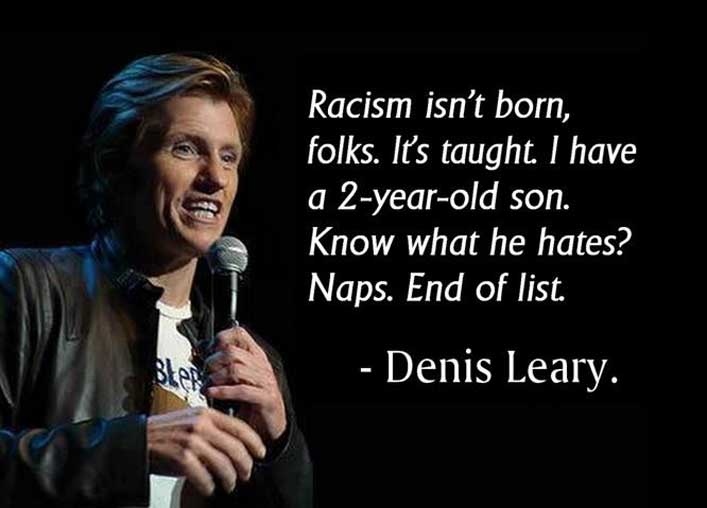
 We live in a society that superficially superimposes colorblindness over colorism. I’m sure you’ve heard it, “We should all be colorblind…and so on and so forth…” The reality is that nothing could be further from the truth. You see, kids aren’t born colorblind (in the literal sense) and neither are we, but somewhere our image of color has become perverted. In fact, we as adults provide tremendous context for a child’s ideals of who they are, whether or not they see themselves as beautiful, and how they view others who are not like them (in color or in class). Children only have the historical context of color provided by adults. So why do some children prefer to “wash away their color” if they had the choice? Why are some children ashamed simply because they are a darker shade of their peers within their ethnicity? How did we arrive here? Are we comfortable with this destination? I AM NOT and I will tell you why. Colorblindness and colorism have both marred us as a society. One of these perspectives appears harmless and the other clearly catastrophic. Long term, they both prove deadly to one’s identity.
 African American woman advertising her skin color as the color to aspire to? Colorism affects so many young women and men around the world, that I could not “not talk about it.” When most think of racism, it is primarily between two distinct ethnic groups, however, colorism has caused additional division among people within their own ethnicity. Today, many praise and extol the beauty of Yale graduate and Oscar winner, Lupita Nyong’o, but Lupita herself did not initially find beauty in her own skin because of its darkness. And even when others began to describe her as beautiful in recent years she admittedly was perplexed and desired to reject this view because of the seduction of inadequacy. You can read her entire speech at the following link
  Precious Predilections