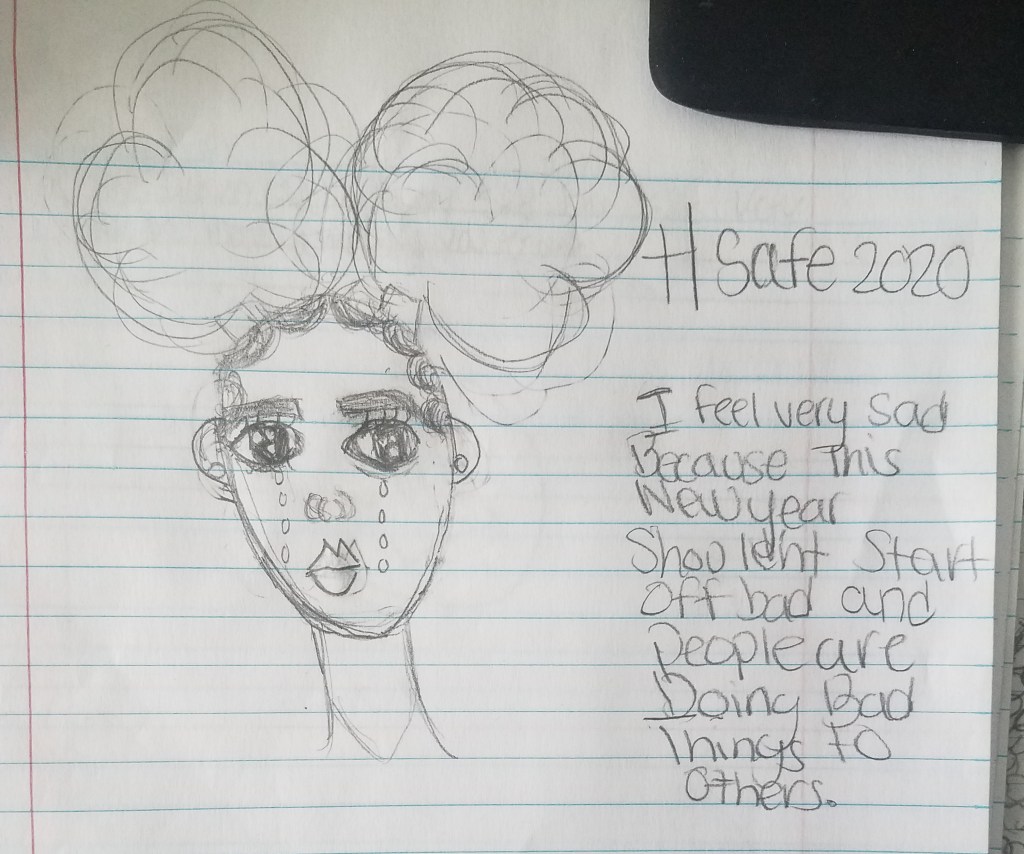
It is the third quarter of the school year and I am scarred. I look the same on the outside. What has happened to my soul is undetectable to the human eye, but I AM SCARRED. As a proud Black woman from the south, I have traditionally looked for scars on the exterior of my body; perhaps they would show up in physical form. This time they have mostly been internal. My thoughts race with “what if” scenarios that spiral out of control. What if another child is shot? Can my soul bear that news? What if another parent has to bury their child? What if I have additional sleepless nights with recurring sound clips of grief deeply laden within a parents voice. What if…
A few weeks ago, I learned that a 9 year old student at our school had been shot while playing outside. He did not survive. He was just playing with his siblings and family. It was nearly 6 o’clock in the evening and the sun had just gone down less than thirty minutes prior. Earlier in the school year, a 7 year old student who attends our school was hit by gun fire when someone shot into their home. In both cases, I have older siblings of each student in my 5th grade class.
As my students and I spent time trying to process our feelings through writing, drawings, and tears, I was unprepared to hear of how many additional stories of gun related trauma they had encountered. For the past three weeks, my soul has been overwhelmed with grief. I enter the school building and tears have flooded my eyes. I have no regret with the choice I have made to teach in this community. It is one of my greatest honors, however, I wasn’t prepared for this type of loss. I wasn’t prepared for the shattering of my soul as I walked through the hallways thinking about what my student would experience when she returns knowing these are the same hallways her brother often walked down. As a person who likes to have answers. I have none. I have been giving hugs. Lots of them. I have been honestly sharing with my students and other teachers how this grief has impacted me. I have also decided to seek professional help. I am looking for a Black therapist in my area who can help me process.
There are times when our souls are enlarged through suffering. Supernaturally or divinely, we are able to experience or relate to God and others in a new way through suffering. At this time, my soul doesn’t feel enlarged through suffering. I just feel lost. I’m teaching, but I feel deep sadness daily. Sad that a little black boy was shot down in the midst of black joy. Sad that my students expressed that they don’t feel safe in their community. Sad that the siblings of this student have experienced such loss so early in life. Sad that I can only support students in limited ways. Sad that our western society cries out that we must continue to educate our children in the midst of tragedy. Just keep teaching. I am sad that we are sending them a message far too early in life that when your heart aches, when loss grips you, when depression overtakes you; don’t lament, just work. Don’t cry; just work. Don’t slow down; just work.
This sudden loss triggered the trauma I experienced as a sixteen year old when I received the news that my dad had passed away. I remember how helpless I felt returning to school the next day. Yep, I went right back to school. It was one of the safest places I knew and it brought me great joy. I remember being afraid to share with friends or teachers that my dad was dead. I remember how much relief it brought me to have a teacher point to a name in the obituary and ask…”Was this your father?” I was relieved that someone else knew and cared. Honestly, what teacher reads the daily obituary looking for student names? That teacher understood the experiences of my neighborhood and the trauma my classmates and I encountered. I remember simply answering “yes” and not having the resolve to say much more.
As a teacher working in a similar neighborhood as that of my childhood, I now realize that the invisible scars from my youth in addition to those incurred this year can do immeasurable damage to my mental and physical health if I am not honest with myself. If I don’t seek help. If I don’t take time to grieve. I’m doing that ya’ll. I’m taking mental health days. I’m slowing down. Taking the deep breaths. Increasing my gratitude. Loving those around me. Loving myself. Asking God for insight/wisdom each day in the classroom. My greatest partnership is with the Holy Spirit as I teach. I know I am not in the classroom alone and lately, God’s presence has been palpable and I’ve needed that. I am so grateful for friends that have stopped by my classroom to give me the best hugs; no words, just a warm embrace reminding me that I am cared for. Grateful for friends and family who have called to hear my voice and ask me if I am okay. Grateful for friends who have encouraged me to take the mental health day(s) necessary to care for my soul. Grateful for friends who have brought me freshly baked cookies and sweet notes that lift my spirit and my energy. You all should know, that although my head is not fully lifted and days are still cloudy, your acts of kindness and care have sustained me.
I wanted to write this particular blog to encourage my friends who work in industries of service (social work, health, education, etc.) to be just as vigilant about your mental health as some of you are about your physical health. They are inextricably linked. And lastly, because this is Black History Month and we (black people) have a history of falsely believing that we can carry EVERY burden and NEVER ask for help, this post is for you. Friends, take care of yourself. Take care of your souls. Don’t carry burdens that were not yours to carry alone. Don’t let your invisible scars manifest as physical scars. Both are painful. Let’s work to minimize our scars.
After you read this post, I don’t want your pity or praise, just your prayers and presence. Just your commitment to take care of yourself before you try to take care of others. I have chosen to teach in a community that experiences high trauma and some tragedy. It is still one of my greatest joys.


 Precious Predilections