Tag: #ohio

  • My Messy Beginning

    My Messy Beginning

    Friend, Joy Becker, finishes this blog series sheer bravery.  Her willingness to express where she is on this messy journey of privilege and racial reconciliation is authentic.  I’ve been honored to collaborate and share the perspectives of Mika, Amy and Joy during the past four weeks.  Perspectives unlike my own.  I’ve grown.  I pray that you read this last post with great expectation. Expecting God to speak to you.  I believe He will. With courage, obey whatever He speaks.


    I prefer when my writing culminates into a complete thought, when stories and anecdotes sit with me long enough to reach a finish line. I tend not to hit that Publish button until I’ve drawn a conclusion, tidied things up, and feel a sense of a closure.

    Today is different.

    There is no sense of closure because I’m just beginning this journey. I have so many conclusions spinning in my head I hardly know what to do next. I’m in the midst of so much learning and thinking and questioning; it is terrifying and thrilling. There are days I’d like to rewind the clock to before I wrestled with privilege and injustice. I’d like to unread and unlearn information that has left me wondering how me – this affluent, white, stay-at-home mom in the suburbs of Cincinnati – can possibly be part of reconciliation. Other days I want to shake myself because I spent so many years missing it, looking right past it.

    In the spring of 2016, I began reading the book Seven. Oh, to this day, there are times I wish I could unread it. God knocked the wind out of me within the pages of that book, awakening me to the intensity and responsibility of the privilege I was born into.

    Up until that day, I had thought very little of privilege and what it looked like in my life. I suppose when privilege is your norm, it is easy to miss.  

    But soon I saw it everywhere.

    I saw privilege when I opened my fridge, stared at shelves full of food, and ordered pizza because I didn’t feel like eating anything we had.

    I saw privilege when I put my contacts in each morning because I’ve had resources to correct my failing eyes for nearly 30 years.

    I saw privilege when I handed in my letter of resignation, voluntarily leaving my job to stay home with my children.

    I saw privilege when I was pulled over for a missing headlight and never considered a police officer might treat me unfairly.

    I saw privilege when I freely disagreed with colleagues and never thought twice that my race would be the backdrop for how others interpreted my words.

    I saw privilege when our president was elected because as much as I hate how he speaks of the oppressed, I knew my day to day life would not be much different.

    God put a fire in my gut the week I read that book, a restless stirring I haven’t been able to shake. I can’t stop reading and talking and asking questions. I can’t unlearn that I am in the top 1% of wealthiest people in the world, practically drowning in resources. I can’t pretend educational opportunities are the same for all children. I can’t ignore the hundreds of thousands of refugees who are desperately trying to come to America, and yet live such isolated lives once they are here. I can’t unsee the hate-filled eyes in those videos of Charlottesville.

    This is my messy beginning, my shuffling along, fighting my way through the weeds, with my hands outstretched, asking God, “What now? What can you do with the hesitant offering of a woman prone to wander, resist, and cling to privilege? Can you dig it out by its ugly roots? Can you keep forgiving me? Can you make reconciliation my heart’s cry rather than an item on my to-do list?”

    *****

    During the past year, I have looped through a cycle of emotions regarding the abundant advantages in my life.

    I am ignorant.

    I am overwhelmed.

    I am disgusted.

    I am paralyzed.

    I am afraid.

    I am humbled, forgiven, and obedient.

    Repeat.

    Those first five stages are fruitless at best; sinful if I’m honest, and I need to deal with them as such. I need to call out the sin in my life.

    I am ignorant. That is sin. Ignorance is choosing foolishness. It is looking away from truth and ignoring the mind God gave me for learning and questioning and engaging. Ignorance is choosing oblivion to global and national crises, excusing myself because it’s too sad, it’s too hard.

    I am overwhelmed. That is sin. I am looking to my own ability to solve injustice rather than following the lead of Him who came to change the world through servanthood. I am sinking into defeat, rather than clinging to a God of victory. Nothing is impossible for Him, and to be overwhelmed is to disregard the power of the Holy Spirit who is alive and active in me.

    I am disgusted. That is sin. The Lord needed to bring me to a place of disgust, a harsh realization of my abundant privilege. But to stay in that place of guilt, apologizing for all I have, is to forget the One who gave it to me. He did not accidentally place me in this life at this time in history, and He is not interested in my apologies for living in America, for being white, for being educated, or for succeeding in a career.

    I am paralyzed. That is sin. The reality of injustice is so thick and so heavy, I get lost in it. And then I do nothing. I stay in my neighborhood and in my home, with my conveniences and luxuries. I hang out with people who look like me and think like me. We talk about how thankful we are Jesus came to do all that messy work, but disengage ourselves from real action. Pretty soon, doing nothing in my norm.

    I am afraid. This is sin. Fear will lie to me every time, coaxing me to believe injustice is too much for my God. Fear tells me I will fail if I seek reconciliation. Fear tells me I will say the wrong thing and do the wrong thing. Fear tells me I will put myself in danger and be in over my head. Fear tells me I will upset people and annoy my friends. But God did not give me a spirit of fear, and to believe otherwise is sin.

    I am humbled, forgiven, and obedient. Confronting my own selfishness is miserable, but once each of those daggers have been humbly laid down, I can claim Christ’s forgiveness and move on to obedience.  

    The Bible tells me to feel the pain of others. Be wrecked by injustice. Be burdened. The Bible tells me to pray, and not just on the days after horrific events like Charlottesville, but to get on my knees every day, crying out for the broken and forgotten, repenting from my sins and the sins of this nation. The Bible says to be faithful in prayer, be persistent, keep bugging God to shake my soul and not look away from oppressive systems that have handed me a life of advantage.

    This doesn’t have to be an either/or approach. I can carry on with my daily life and remember the marginalized around me. I can write on my blog about eating dessert in the bathroom, and I can write about racial reconciliation. I can take my children to our community pool where they see dozens of children who look just like them, and I can take them to a church where they are the racial minority. My husband and I can celebrate special occasions at overpriced restaurants, and we can volunteer with the Cincinnati Refugee Resettle Program. I can go to the gym to teach Zumba classes, and I can learn to correctly pronounce the names of the colored women in my class, not just the white students. I can talk with my girlfriends about curtains and crockpot dinners and playdates, and we can talk about teaching our children to stand up for others. I can read Real Simple magazine and I can read about how to love my friends of color well. I can pray with my children for God to heal their owies, and I can pray with my children for God to awaken their eyes and hearts to those who need love.

    This isn’t a checklist. It isn’t more to add to my plate. It isn’t one or the other. It is awareness. It is courage. It is a transformation of my heart to move past the years I spent desiring peace and wishing well to those on the sidelines.

    Jesus spent His life on the bottom rung of the ladder. He surrounded himself with the powerless, the outcasts, the bottom dwellers, the marginalized. By his own choosing, He never made it up past that bottom rung. But I was born on the top rung; I was born into a life so far from Jesus. White. American. Middle class. Educated. Excess everything. It is a life so many long for, but it is a life that has proven to be my greatest hindrance in knowing the true Jesus. It is so far from the Savior who said He was “close to the brokenhearted” (Psalm 34:18) and that “the highborn are but a lie” (Psalm 62:9). There is such a distance from me and the man who constantly cared for the widows, the orphans, the poor, and the needy. It is so much harder to “seek justice and encouraged the oppressed” (Isaiah 1:17) from up on this top rung.

    It’s ironic how you can read something a dozen times and always hope someone else is taking it to heart. How did I miss it?

    In every corner of the Bible, God is screaming, begging, pleading, urging me to love mercy and justice, to care for the last and least. If I’m going to believe the Bible is the Word of God, then it seems God is obsessed with social justice, and He asking me to stay engaged and join Him.

    This is my messy beginning.

    *****

    A note from Mika, Amy, Precious, and Joy:

    It has been a joy to share our hearts with you over the past month. The four of us have each been challenged, convicted, and inspired. We have each prayed earnestly for our readers, and for ourselves asking God to shake some souls and spur on conversations that would bring Him glory. We would love to end this series by praying for our nation, together pleading with God to heal and restore.

    Oh Jesus,

    We come before You with our mess. We acknowledge our sin and repent from it. We need You to do your thing. We need your power to bring change because we know we are powerless without You.

    I pray, God, that You would heal our nation and bring us to racial reconciliation. I pray that our hearts and minds would be changed and that change would lead to action. May our hearts break for the damage white supremacy has caused in our nation – that we would see it for the sin it is, and commit to not being complicit in it. I pray we would move outside our comfort zones, invite people into our homes that don’t look like us, and build relationships in an effort to reconcile.

    I pray America would become comfortable with being uncomfortable and no longer shy away from our horrid past. I pray we would know that racial reconciliation is not simply a good option; it’s important to You. May our hearts remain pliable for You to mold and change; performing open heart surgery if necessary to make us into a people that not only embodies the ethos of reconciliation, but the life style. May our days be less comfortable and more courageous.  May our love for You, Jesus, cause us to actively love our neighbors well.

    I pray we would lay down our privilege to serve and to see. I pray we would open our hands and our eyes. We are in need of Your grace and Your grit to do and hear hard things. Lead us, Jesus. Please do exceedingly above what we ask.

    Amen.

    Chains fall

    Fear bow

    Here, now

    Jesus, you change everything

    Lives healed

    Hope found

    Here, now

    Jesus, you change everything

    Lyrics from Holy Ground


    About the Author

    Joy

    Joy Becker is a wife and mama living in Cincinnati, Ohio. She recently resigned from a twelve-year career as a literacy coach and first grade teacher to become a full time stay-at-home-mom with her two young darlings. She is a lover of new notebooks, October, and goat cheese, and a hater of traffic, scary movies, and overcooked asparagus. You can peek even further into her love for Jesus, food, motherhood, and friendship over at 44 & Oxford.
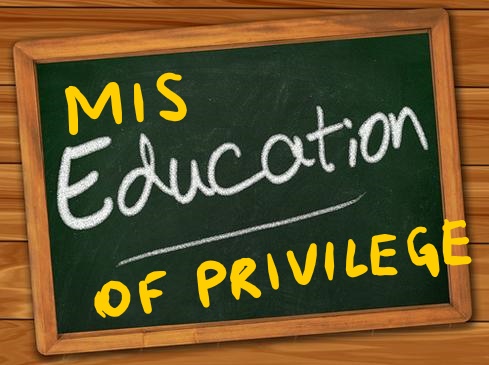
  • Miseducation of Privilege

    Miseducation of Privilege

    As a Black Christian woman I have more anxiety on the Sunday or Monday following tragic events such as the #Charlottesville attack because the work of racial reconciliation is exhausting.  The Sunday following Charlottesville (which happened to be less than 24 hours later), I remember being hopeful as I entered church that I would regain some of my sanity.  At least a little bit.  Thinking to myself,  this Sunday at least one non-person of color would come up to me and legitimize the concern I privately expressed to many.  I recounted the personal conversations held following the election of our President regarding his rhetoric and lack of empathy for non-whites.  At the time, I shared that I thought his views would give credence to those who held extremist and racist views to become hyper-visible and less concerned with “hiding” their views or their faces.  We witnessed that in #Charlottesville.


    This was not a moment of wanting to be right.  This was a moment of wanting to be validated.  I wanted to feel sane, if only for a moment.  The context here is that I have spent countless hours listening, sharing, and praying with congregants and colleagues as we earnestly look to live reconciled.   Yet, I exited my phenotypically diverse church that day without a single conversation or acknowledgement from a white person.  I exited with increased ache in my heart.  I exited wondering how many more Sundays will I sit in this pew and wrestle with the passivity of privilege and the tone policing of my voice. I then hoped for a face to face conversation, text, phone call on Tuesday, Wednesday, or any day.  It did not occur.  Exhaustion enters stage right.

    After reflecting on Amy’s blog, How Do I Handle My Privilege, and her compelling question at the end which asked ‘What privilege do you have, and how can you use it to serve the underprivileged?’  I stumbled upon a revelation.  


    In the United States of America, privilege has been a silent teacher for hundreds of years.  Privilege, white privilege, for those who possess it, has taught that good things will come to them simply because of who they are – even if that good thing is racial reconciliation.   

    Many would argue that hatred is a learned behavior.  I’d contend that just as hatred is taught, so is the passivity of privilege.  It is mostly taught without using words.  Privilege by its very nature is passive.  It demands absolutely nothing of its possessor. It teaches its possessor to protect it at all cost.  Privilege indirectly teaches that if one desires racial reconciliation, then it will be achieved by simply waiting for the “perfect, comfortable, opportunity” to have a difficult conversation, ask an awkward question, or get to know a person outside of your ethnicity.  Privilege has written thousands of history books and passed hundreds of laws. And with events like #Charlottesville, it waits patiently to reconcile.  We’ve been miseducated, and the western church has been an active pupil.  

    Miseducation definition: a wrong or deficient education

    Racial reconciliation is costly.  It takes work.  

    Many desire racial reconciliation through a five-step process or a “quick read.”  I’ve had countless people ask me to give them a resource to navigate this difficult and messy space. For instance, there’s a local church in our city that offers a fantastic six week workshop on race which creates a safe space for people in the community to listen to one another, grow in empathy, and dialogue.  However, I’ve encountered many who’ve been content with attending this six week session and reference this as their “work” in racial reconciliation.  I commend people for attending; however, when this session ends, the work of racial reconciliation doesn’t.  If the only desire is a resource, racial reconciliation may not be realized.  It happens over time through empathy, honesty, contrition, and proximity.  Get close. Get uncomfortable. Get honest.  

    If the American church desires to really model racial reconciliation, the Church must re-educate itself.   Learn from Black folks.  Listen to Black folks.  Lament with Black folks.  Let Black folks lead.

    I don’t want a racial reconciliation that demands more of one follower of Christ than the other.  I pray that my encounter on the Sundays following tragic events are less anxious and more intentional.  As Amy stated in the previous blog, may we be known by what we lay down, rather than by any privilege we hold high.  

    As a follower of Christ, I remain hopeful that racial reconciliation will occur in earnest as I continue to engage in uncomfortable conversations, love others where they are, and speak truth to power.   I’m encouraged that others are doing the same.  I have not thrown in the towel on racial reconciliation.  Each day I hold tightly to the hope I have in Christ, anchored by the reality of my desperate need for Jesus as I do justice, love mercy, and walk humbly with my God.  

    Greater love has no one than this, that someone lay down his life for his friends. – John 15:13

    Maybe the first act of laying down one’s life is to lay down the passivity of privilege.

    As we lay down our respective privilege, I pray that we build authentic relationships across multiple ethnic groups, help restore broken communities, and recognize systems that perpetuate marginalization for disadvantaged groups. May we use our power, resources, and influence to tear these oppressive systems down; decision by decision. Racial Reconciliation, like sanctification (process of becoming more like Christ), is worked out daily.  It is not a one time act.  It is a lifestyle.  

    The church has been “waiting” for racial reconciliation for too long.  Let’s intentionally give differently, life differently, and love differently.  Not just in words, but in lifestyle.

    May privilege be ousted as primary instructor in the work of racial reconciliation and be replaced by empathy that leads to action.

    “He has told you, O man, what is good; and what does the Lord require of you but to do justice, and love kindness, and to walk humbly with your God?”  – Micah 6:8 ESV

  • How Do I Handle My White Privilege?

    How Do I Handle My White Privilege?

    In this blog, Amy Seiffert shares her authentic perspective on privilege in a vulnerable way.  Amy and I are participating in a collaborative blog series  with other women where we will share our perspective on privilege and racial reconciliation.  Our collective prayer is that as you journey with us your heart will be open to what God wants to reveal to you.


    “Life’s most persistent and urgent question is: ‘What are you doing for others?  — Martin Luther King Jr.

    My name is Amy and I have white privilege. I was born into a white, middle class, educated family. I got a college degree and married a white male who also has his degree and is now a small business owner. We have three kids and reside in a predominately white neighborhood in a college town.

    I deeply miss the diverse relationships I had in high school; we had various cultures, religions, and race in my friend circle. Korean, Black, Indian, Arabic, Mexican, White, Jewish, Hindu, Christian. I miss recognizing and celebrating diverse friendships, having the weeds of prejudice pulled from my white privilege perspective, and raising my children with a colorful and beautiful view of the world.

    I miss the daily academic environment where the table is set to have hard conversations. We had many respectful and robust discussions about our distinct heritages. We not only talked, we were in each others’ homes. I loved the food, the practices, the clothing, and the family life of my friends who were very different from me.  My family now continues to cultivate relationships with other races that are around us, but we would love to – we need to –  cultivate more. The richness of other races in our lives grows such beauty, humility, understanding, joy, and hope. Our soul-soil is in a great deficit when we close it off to any kind of vital diversity.

    Privilege, according to the oxford dictionary, is: “a special right, advantage, or immunity granted or available only to a particular person or group of people.” Privilege can feel as obvious as our skin color and as subtle as our literacy. Even right now, if you are reading this blog, your literacy gives you advantage. I absolutely amen “education is a right, not a privilege” – but we can agree, for those who can read, there is an absolute upper hand.

    And today, as I come together with four different kinds of women, writing four diverse kinds of blog posts about privilege, race, ethnicity, reconciliation, fears, hopes and dreams – we also have one common denominator:

    Jesus.

    I sit humbled and thankful that King Jesus is King of a colorful Kingdom. His rule and reign is one where every knee will bow and every tongue will confess that He is Lord when it’s all said and done. “Every” being the game-changer. We will not be segmented under His rule, we will come under one allegiance, and we will all bow down on the same, level ground next to the cross.

    “After this I looked, and behold, a great multitude that no one could number, from every nation, from all tribes and peoples and languages, standing before the throne and before the Lamb, clothed in white robes, with palm branches in their hands,  and crying out with a loud voice, “Salvation belongs to our God who sits on the throne, and to the Lamb!” And all the angels were standing around the throne and around the elders and the four living creatures, and they fell on their faces before the throne and worshiped God… — Revelation 7:9-11

    King Jesus had stunning leadership regarding privilege. He was enthroned in glory, fully God, crowned in all comfort. And He laid it all down. He put down His rights, His throne, His everything. Nothing was taken with Him when He took up human skin and moved into the neighborhood. Paul explains this beautifully:

    “Think of yourselves the way Christ Jesus thought of himself. He had equal status with God but didn’t think so much of himself that he had to cling to the advantages of that status no matter what. Not at all. When the time came, he set aside the privileges of deity and took on the status of a slave, became human! Having become human, he stayed human. It was an incredibly humbling process. He didn’t claim special privileges. Instead, he lived a selfless, obedient life and then died a selfless, obedient death—and the worst kind of death at that—a crucifixion. — Philippians 2:5-8 MSG

    It is tempting to forget that this is GOD who lived this way. Setting the pace for the good life, He set aside the privileges of deity and took on the status of a slave. He took up a towel, got down on His knees, and washed grimy feet. He served his heart out, to the point of death.

    And so when it circles back to us, to me, I have a big question to answer: What do I specifically do with my white privilege? I often freeze just thinking about my advantages, I feel guilty about them, or I hide them because I don’t know how to handle them well. I want to weed out the prejudices in the garden of my heart and sow seeds of racial reconciliation; I feel sad and embarrassed when I find incongruities in my soul. Who can help us in handling our white privilege?

    Praise be to God! If we take our cues from the King, we will find the answer. We don’t have to struggle or hide or be perfect with our privilege. Like Jesus, we simply lay them down to serve.

    After some soul-searching, just one of the ways my entire family (kids included) can lay down our white privilege and serve the underprivileged is being a Licensed Foster Care Family. Before you object in your heart and think “that’s for saints” – please reconsider. Those who foster are not saints, they simply have a safe home. The requirement to foster is very basic: a safe environment.

    At different times this past year, we have laid down our routines, our comforts, our possessions, and had children in our home for short periods of time (we have done short-term Respite Care), giving a sweet child (we’ve housed hispanic, black and white children) a safe place to be in the middle of insanity. In the middle of abuse. In the middle of drugs.

    Do we lay aside our white privilege perfectly? Absolutely not. Do we try to by faith? Yes. Even if it’s the size of a peppercorn. This is the way King Jesus lived, always by faith. He came down by faith, He laid aside everything by faith, He died by faith – faith in the resurrection to come.

    I often have the famous phrase “With great privilege comes great responsibility,” running through my mind. And I can freeze. But, friend, if you also freeze – let’s unthaw together and simply serve. Let’s serve in as many ways as we can. Serve in little ways and great ways. Serve with our voices when we see injustice and serve with our actions when we see helplessness. Serve using our strength for the weak and leveraging our power for the vulnerable.

    What privilege do you have, and how can you use it to serve the underprivileged?

    May we be known by what we lay down, rather than by any privilege we hold high. 


    About the Author

    Amy

    Amy is a wife of 17 years and mom of 3, who never thought she would love raising her family in a small college town. She works at Brookside Church as the Director of Outward movement and has the privilege of occasionally preaching. Amy loves tennis, ice cream, and making beautiful things . In between diapers changes, laundry, and soccer practices, she writes, blogs, speaks, and is working on her book on motherhood.  She has been in a monthly book club for 17 years and cannot believe Oprah has not brought them on her show. Amy inspires, teaches and humbly relates to the mystery and messiness of life. She tells all at www.amyseiffert.com.

  • Collective Heroism

    Collective Heroism

    Super Ron
    My nephew during the day and superhero at night.

    Just as there are angels among us, I am certain that there are heroes among us.  Unlike those we see in comic books or movies, they aren’t donning a cape and symbol on their chest. A recent visit to Orlando taught me much about heroism and the unparalleled beauty witnessed when the community rises to the occasion and collective heroism is on display.


    “You’re the real hero…” is what the manager of a local Starbucks said to me after she had returned from jetting out of her store to run after the vehicle which contained a young man who’d just exited her store and snatched the purse from one of her customers.   At the time I happened to be working outside from that location and looked up as the young man grabbed the purse, jumped over the railing, and hopped into an SUV.  I kept an eye on the vehicle and shouted so the manager could write down the correct tag number.  The cops came and traced the tag and found that the vehicle was stolen.  I do not know if her purse was recovered.  I do know she attributed my “following the vehicle” as a major heroic act.  I tend to disagree with her perspective; I am no hero.

    That day I witnessed so many people who did not know one another come to the aid of a woman who had just been violated.  No questions asked; no judgement.  Everyone wanted justice for her.  Collective heroism.  We need it.

    Heroic is the lady who ran after the purse snatcher.  She was an unlikely hero.

    Spending time with my nieces and nephews this past week gave me a sneak peak into what life can be like when your father is your first hero.  Time and time again, whether it was to share a new skill learned, a silly joke, or simply receive comfort after a fall, the arms of daddy provided the greatest comfort.  Daddy was ALWAYS the hero.  Living with a belief that there is nothing your father won’t do to protect you and there is nothing that he couldn’t do is absolutely incredible.  It is a sacred gift to a child or the vulnerable.  I’ve not personally experienced the heroism of my father, but I have experienced the collective heroism of family.  The extraordinary lengths my family goes through to care for one another is nothing short of amazing.  In this family, my heroes are rich in love.  Much sacrifice; many needs met.  Collective heroism.  We need it.

    Heroic is the single father who rises early to provide for his family while actively fighting off (as any hero would) the traps of poverty which attempt to lure him into a  lifestyle which promises quick money coupled with high risk.

    The last leg of my time in Orlando, I learned that the police officers involved in the death of #TamirRice were not indicted.  I’m so exhausted by this story line.  It’s ending seems to be stuck in a ridiculous loop in which our “justice” system justifies a way to remove culpability and place the victim on trial.  I would have lost hope, but in the spirit of collective heroism, I know that I am not in this fight alone.  Besides, heroes don’t give up!  I stand shoulder to shoulder with those I count as heroes who refuse to sit idly and allow those advancing oppressive systems to continue to do so.   I shudder to think about the arguments used to support the idea that police officers did not have to answer for shooting a 12 year old boy in less than 1 second (which was caught on video). However, I find strength when I think of those who earnestly count the cost and find it worth it to stand for justice…and keep standing for justice.

    So, I’d like to end this last blog of the year by reminding us that collective heroism is about community.  My time in Orlando reminded me that we are stronger together.  If there was ever a time our community needs to come together, it is now.  Displays of solidarity such as those seen during the #notonedime2015 economic boycott launched by Rahiel Tesfamariam during the Black Friday weekend and the decision of some University of Missouri Football players to proclaim the racial injustice they witnessed rather than play the game breathe life into the souls of the heroic at heart.

    Heroic is the community who refuses to be silent in the face of injustice.  We need you.

    To those in my community, I ask that you stand with me and be image bearers of collective heroism.  Not because we have an “S” on our chest, but because we possess an unrelenting desire for justice.  Gone are the days of our silence.  Our collective voices are stronger.  Our collective lament creates a depth of resolve which is mountainous in structure.  And one day our collective victory will be glorious.

    A hero is an ordinary individual who finds the strength to persevere and endure in spite of overwhelming obstacles. – Christopher Reeves

    Most heroes are unlikely heroes.  I hope 2016 produces many more unlikely heroes.  We need them.

    “We who are strong have an obligation to bear with the failings of the weak, and not to please ourselves. Let each of us please his neighbor for his good, to build him up.” – Romans 15:1-2 [ESV]

  • Legal Cannabis – Capitalization or Decriminalization?

    Legal Cannabis – Capitalization or Decriminalization?

    “I was gonna clean my room until I got high
    I gonna get up and find the broom but then I got high
    My room is still messed up and I know why
    ‘Cause I got high…” – Afroman

    In just a few days, as a citizen of Ohio, I will have to option to vote on the legalization of marijuana; a drug that has directly ravaged the lives of many minorities in my community.  I am sickened by repeated commercials airing on television with such a remarkably positive spin on the use of marijuana and why this is “good for Ohio.”  There are two prevailing thoughts on this issue – this will decriminalize marijuana users and largely reduce the cost spent on “policing the sell / possession of marijuana.”  This sounds quite noble, but I boldly reject these claims.  The law, issue 3, allows only 10 commercial marijuana grow facilities.  While those growing marijuana can not sell it, those who would like to sell it are limited in the amount they can sell and will need to purchase a state license to sell.

    The very same drug that painted Trayvon Martin as a “thug” and fueled the media to all but mar his character is now on the ballot for legalization because a few wealthy people have spent millions of dollars attempting to change the narrative for their direct benefit.  This is not about the people of Ohio; it’s about money.  This feels like the reverse golden rule – he who has the gold makes the rules.     Surprisingly, there is little clarity for those incarcerated for possession of marijuana and how those selling illegal marijuana will be affected.  Interesting details to be left out.  It is highly unlikely that people in poverty will procure a state license to sell.  Let us not be fooled – there will still be policing of those illegally selling marijuana.  Decriminalization isn’t only about changing a law, but it is more profoundly about changing a predominant view.

     If we ignore the social costs and look at the potential for profit, well, this law is definitely good for venture capitalist and oligopoly participant, Nick Lachey, former 98 Degrees singer.  According to The Times Reporter, “The same investors who’ve pumped millions into the legalization campaign would operate the 10 grow facilities, reaping financial rewards that are estimated to gross $1.14 billion for growers alone. We believe that’s anything but responsible.  The effort ignores basic free market principles and is aimed solely at lining the pockets of a select few. They’ve even set the tax rate themselves.”

    One bone of contention I have rests in the reality that in Ohio there are a disproportionate amount of arrests for minorities in possession of marijuana, although, there is basically parity in the number of users when comparing minorities and whites.   This speaks to a broken justice system.  A report in 2009 by Jon Gettman, Ph.D. on “Marijuana in Ohio,” indicates that, “Marijuana arrests have a disproportionate impact on two demographic groups – young people and minorities.  In many cases an arrest for marijuana possession makes a criminal out of an otherwise law‐ abiding individual.  …However differences in the arrest rates between whites and blacks cannot be explained by differences in marijuana use.  In 2007, for example, 10.5% of whites used marijuana in the last year while 12.2% of blacks reported such use.  These figures indicate that marijuana use by blacks is about 20% more prevalent than use by whites.   While this is a statistically significant difference, it does not explain why arrest rates for marijuana possession for blacks are three times higher nationally than for whites.”

    It may seem like a win for social justice if marijuana is legalized in our state, however, this thought implicitly relies on the assumption that a profitable change for a few will be a profitable change for the commonwealth.  This law does not change the implicit bias of our current criminal justice system and it does not protect the interest of the most vulnerable in our society; children.    I think this will open doors that we are already having a difficult time closing.  The heroin epidemic is growing like a bad weed (pun intended) in Ohio; it is also no secret that marijuana is a popular drug with young people and often and introductory drug to other illicit drugs.  You tell me, is this a case of capitalism cloaked in social justice? 

    Most disturbing about this initiative is the legalization of marijuana edibles.  What kid does not like candy, brownies or cookies, unless allergic? Comparisons to alcohol prohibition are not as strong, in my opinion, because the introduction of edibles changes the game for our children.  There is a natural appeal for children.  Everyone is singing Colorado’s praises, but social costs are once again being ignored.

    After visiting Colorado in early October 2015, where marijuana was legalized in 2012, Attorney General Mike DeWine said Colorado officials advised against passing the measure. He said that nearly half of the marijuana sold in Colorado is in an edible form, and he expressed his concern that children will accidentally eat marijuana. He stated:[53]

    Ohio will be fundamentally changed … There’s going to be plenty of marijuana to go around.[6]

    Andy Mineo has said, “Truth disturbs the comfortable and comforts the disturbed.”  I hope you are uncomfortably disturbed by a law that seeks to fatten the pockets of the wealthy and prey on the plight of the poor.  I am disturbed.

    Issue 3 is detailed here.  To find out more about the Social Costs of marijuana in Ohio, click here.

    “Speak up for those who cannot speak for themselves, for the rights of all who are destitute. Speak up and judge fairly; defend the rights of the poor and needy.” -Proverbs 31:8-9 (NIV)