Tag: Justice

  • Anti-Racist Checklist

    Anti-Racist Checklist

    Full lips, round hips, black skin is where I begin, but not where I end. – Black woman.

    It’s July 2020 and suddenly America has awakened to a realization that Black lives should matter in these United States. Operative word should. Just a few days shy of July 4th and Breonna Taylor’s family along with so many other Black families are aghast with performative measures of alliance and yet no substantive change. No arrests for the police officers who shot her while sleeping. SLEEPING. The message being communicated to Black people hasn’t changed; we say that we are with you, but our systems remain the same. Our systems don’t support your thriving and barely support surviving. Enter the work of anti-racism.

    It is unlikely that anyone can scroll on social media or watch mainstream news in recent weeks without some story or post discussing systemic racism or what it means to be anti-racist. I’m encouraged to see the proliferation of Black voices and the elevation of our story. I am also noticing some fatigue from White allies – we’ve only been having this global conversation on race for 1 month. 30 days. That’s it. When fatigued, it is likely that we will reach for the easiest possible solution and to some that looks like an anti-racism checklist. An insensitive move, in jest, to ask your Black friends to tell you a list of things you should do to be considered anti-racist.

    This ask has come as a direct and indirect proposition. It may sound like “I wish I just knew exactly what to do” or “I just want to show you that I am anti-racist.” A list sure would make things easier. To those beckoning for a list, I agree, that is way easier. However, EVERYONE is more complex than a list of “to dos.” Your most valued relationship can not be deduced to a list. When I think of an anti-racist list, I simply hear another request for comfort. Another request for me to acquiesce to your discomfort. I will not do that anymore. For centuries, the standard for Blacks has been unreasonably high (perfection before dignifying) and the standard for Whites shamefully low (accommodation of comfort).

    Anti-racism does not ask me to shrink my voice, presence, or pride (in my Blackness) for your comfort.

    Precious Jones

    I’m not asking your forgiveness to live in my fullness. For so long I’ve chosen to shrink parts of my ethnic identity to make White people, especially White Christians, comfortable. Always learning more about their culture. Always accommodating comfort. Executing survival tactics such as code switching to climb the corporate ladder and regrettably leaving parts of me buried below as I moved up. For decades there was very little love for this brown skin girl. I’m realizing that choosing between my ethnicity and Christianity is a false choice. I’m certain that Christ wants me to live fully Black AND fully redeemed; not some reduced version of myself. Else, why would God create humanity and allow our eyes to differentiate color variants if there was no intention for us to see the beauty in difference? At what point did beauty become a point of division? Don’t answer that. I repeat. Don’t answer.
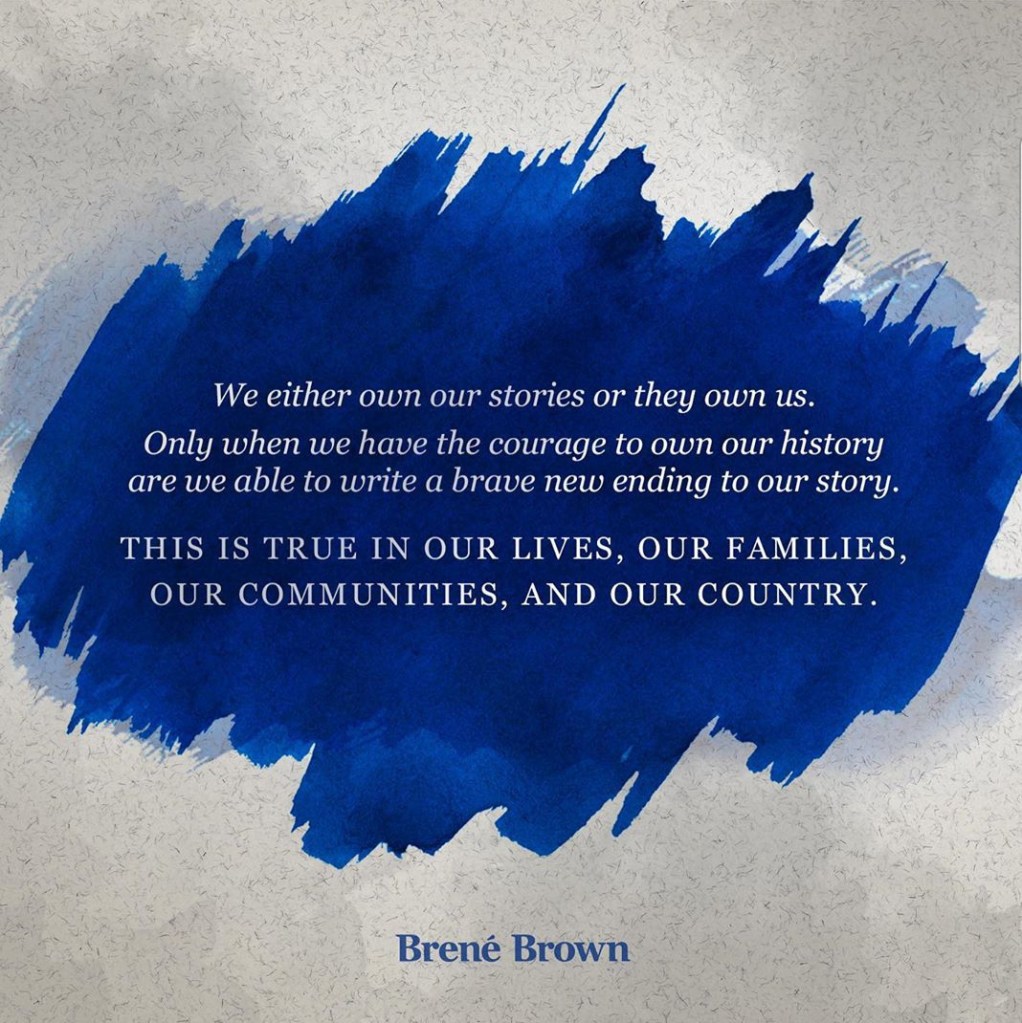
    Image from Facebook

    Brene Brown noted, “We either own our stories or they own us. Only when we have the courage to own our history are we able to write a brave new ending to our story.” I own my history of placating Whites at work, in friendship, and at church to make them comfortable with me. I also own that I previously believed that their comfort was more important than my being. BUT NOW (say it with me church)…I’m writing a very different ending for myself. It looks like loving myself enough to move forward with those who pursue justice in word and deed. Who continue to do the personal work of becoming anti-racist. It looks like loving myself enough to end fruitless conversations that originate with interrogation instead of empathy. It looks like CHOOSING. I now realize that as a Black Christian I don’t have to accept every invitation into a conversation on race. This makes me no less Christian. This makes me healthier. This makes me wise. This allows me to endure.

    If there ever was an anti-racist checklist, it would be loaded with nuance and complexity; joy and pain. Not a lot of conditional statements, but real expectations. It might look something like this.

    Anti-Racism Checklist

    1. Hard work
    2. Failure
    3. Love
    4. Ambiguity
    5. Frustration
    6. Anger
    7. Disappointment
    8. Endurance
    9. Victories (small & large)
    10. Lament

    Anti-racism is spelled M-A-R-A-T-H-O-N. It is not spelled p-o-p-u-l-a-r-i-t-y. Neither is it spelled p-r-a-i-s-e. To the adults in the room, we are not in high school anymore. Therefore, our personal metric should not be “cool by association.” No longer permissible to rest on the laurels of having Black friend(s) or coworkers. Stop searching for a list of things to “check off” to arrive at the status of anti-racist. A list of things to “prove” your work is not primarily performative. Don’t exhaust yourself trying to prove who you are. That’s wasted energy. Marathons are about conservation and bursts of energy at appropriate times.

    You know who you are and where you are. If you do not know who you are, honestly interrogate your soul. If you are not where you would like to be, then put in work. And keep working. But don’t ask me for a list. If you do, I will reference the one above. It is the only list I have that counts in this work. A list that allows us to examine our privilege, power, and prejudice.

    White people, if your relationships feel particularly strained with your Black friends or coworkers right now, remember, “ambiguity and disappointment” are on the list. If you feel exhausted, remember, “hard work and endurance” are on the list. If you feel like, you are just not getting things right, remember, “failure and frustration” are on the list. Black people, if you are tired of empty apologies and excessive validation, remember, “anger and lament” are on the list.

    If you have resolved to keep putting in work, then others will benefit from these acts of love and we’ll share in mutual victories. But, if your goal is simply to check off an act of love or a moment of endurance, you’ve missed it. Ball the list up. Throw it away and ask the question, “Do I really want to become an anti-racist or is this all for show?”

    “Search me, O God and know my heart. Try me and know my thoughts.” – Psalm 139:23

  • When privilege speaks

    When privilege speaks

    WE ARE HERE AGAIN. Another #unarmed Black man murdered under the guise of a citizen’s arrest. #AhmaudArbery and #SeanReed are the latest trending hashtags attempting to shine light on injustice. This time my anger feels different. I’m enraged. Maybe it’s because we’re here again. It’s more likely because I know that my voice is not enough. My pain will linger; longer than I want. Seventy-four days after Ahmaud’s murder, the two white men were arrested. Seventy-four. However, when [white] privilege spoke, with 36 hours of public outcry, the process of justice was initiated. Thirty six hours vs. seventy four days. Sinking in… A deeper sense of sadness is ever present as I also realize that I am not as free as I once believed. This makes me jealous of the freedom that [white] privilege provides.

    silence is harmful

    When privilege is silent, unjust systems reflect sizeable inequities and marginalized people live with the pain. The Black people of Brunswick, GA were speaking about this injustice immediately and yet no arrests were made. Privilege protected. Privilege remained silent. The passivity of leaders who embolden white supremacy and the oppression of the marginalized has sickened me once again. It’s sickening because America still clearly hears a predominant voice before all others; that of the white American.

    I’m learning that many people of privilege are afraid that their words may fail them in times like these so they fail to speak, call, text, or listen. They fail us. Once again privilege exhalts itself rather than those on the margins. It chooses comfort. Once again white fragility wins. Once again I (and other people of color) are expected to single handedly bear the burden of racial injustice and love an America that repeatedly ignores the implications of its sin. America has not love Black people well. America has not loved people of color well.

    A new lament has surfaced in addition to black bodies being devalued – the power privilege is grossly underestimated. When people of privilege in every sector and class joined their voices with those on the margins chanting “I #RunWithMaud,” things changed. If you love me. If you love God. If you love your neighbor. Pull up. Stop making excuses for standing with the other. Now is the time to use your voice in a public manner. Let your privilege shine in a way that brings glory to God, elevates the voice/stories of people of color, and fights for equitable systems. Bree Newsome and James Tyson project a model of what it looks like for white allies to allow their lament to move them to action. Bree Newsome was not alone the day she scaled a pole and took the Confederate flag down in an act of protest following the massacre of the Charleston 9. James Tyson, a white activist, was literally her foundation of support to help her begin her climb. They were both arrested that day. As my friend’s husband, Nii Ato, processed his grief regarding #ahmaudarbery, he stated that we don’t just need allies at this time…we need accomplices. I couldn’t agree more. Ask yourself, what skin do you have in the game? As a Black woman, my skin color forces me into the game whether fatigued, injured, or down right helpless. I could use your help. Truth is, America has never really listened to the Black voice alone.

    “Black America needs to see that white people are willing to step up and put some skin in the game.”

    James Tyson, Charlotteobserver.com

    longing for freedom

    I’m grateful that so many of my white friends and others of privilege responded so swiftly and publicly to Ahmaud’s murder. If I’m honest, I have been wondering why. Was this bandwagon behavior or “hashtag activism”? Have my friends changed their perspective due to proximity to the poor? Have their friendships changed and become more diverse? Did this experience produce a different level of empathy because #neighborhoodsowhite? I know how much my friends value running and the freedom it provides. I’m jealous of the freedom with which my white friends are able to go for a run or a walk without worry. I’ve never felt that free. I’m always worried when I walk or go for a bike ride alone. Always. I’m jealous that they don’t know what it’s like to experience to have someone view your physical body as a threat. As criminal.

    I imagine white people could envision themselves “running” in the Brunswick neighborhood just as Ahmaud was running. I imagine they could empathize with the initial feeling of joy and ease Ahmaud had they day as he began his run. I imagine that for the first time, they could put themselves in the unarmed victim’s shoes. This Black man was “just running.” He was not in a Black neighborhood. He was not selling cigarretes. He was doing something that people of privilege do. There were less calls for Ahmaud to justify his humanity. For the first time, the hashtag is one of solidarity. I.run.WITH.Ahmaud. It is not just his name. What a powerful lesson empathy teaches here. Empathy makes us incapable of apathy and illuminates our humanity. When we can see ourselves, we can see the other. It’s been said several times on social media that authorities only responded because “we” saw the video. The public has seen many videos of unarmed Black people being shot and they didn’t speak out. I believe differently.

    Privilege didn’t speak out because it saw the video. It spoke out because it could see itself in the video. #RunWithMaud

    Precious Jones

    I hope the Black community gains more accomplices to justice than allies. More people willing to pray AND act. Friends of [white] privilege, I dare you to live truly unafraid because some of us will never be able to do so. America still listens and responds to you.

    May our lament leave us with bruised knees and lift us up from that position into courtrooms, classrooms, and boardrooms where we use our voices to cry out.

  • New Hope

    New Hope

    Money can’t buy you love, but it can buy you justice. This position is not one for arguing – today’s contention is how to ignite hope in a community that has seen it’s dream of equality shot down decade after decade. Not false hope. Not pipe dreams. So far, this is the type of hope that generations of Black Americans have been given; false premises of being seen, heard, and valued. Unfortunately this view also permeates classrooms. Dreams devoid of hope vanish into thin air leaving it more difficult to breathe for all of us. Gasping for a hope that seems to evade.

    I was unprepared for the reckoning my heart would face when I watched the movie Just Mercy. I read the book a few years ago and was wrecked by Bryan Stevenson’s compelling proposition to be proximate to the poor if you want to see change (in yourself and larger systems). I made moves. Became proximate. But let me tell you, when this book was brought to life on the screen, I could only see two things; black men in my family and the black boys in my classroom. I was unable to shake the reality of how so many of their dreams vanish into thin air early. Historically, the criminal justice system presumes guilt before trial and the classroom deems incompetent before demonstrating capability. As I wept in that theater over and over again at real lives who were deemed to have zero meaning, I asked myself about the power of hope to fuel justice.

    Hopelessness is the end of justice. – Bryan Stevenson

    This movie reminded me of the power of knowing you have someone in your corner fighting for you. The power of knowing that someone believes your life has value. The power of knowing that you aren’t the only one who hasn’t given up hope. The power of knowing what it feels like to receive mercy. The power of proximity to drive empathy-fueled action.

    I have chosen the classroom as a place to restore hope. It is the most difficult thing I have done. It is complex and nuanced. No parent or child is the worst thing they have ever done. Each child I behold not only bears the image of God but also the hopes of their parents; their people. I get that. I know what it is to have the dreams of your family resting on your shoulders. When my students are older, I hope they know how much I fought for them. I hope they know how much I loved them. I hope they know how much I valued them.

    There are lots of lessons to learn throughout the course of a school year, but I hope to infuse students and the families I serve with new hope. A new hope which restores truth to a generation of black and brown children who have been told that they are incapable. All children are capable of learning. All children are worthy of love. This blog is more of a note-to-self. May I always stand in these truths in the classroom.

    “I got my truth back…you gave that to me. Ain’t nobody gone take that from us.” – Walter McMillian [Just Mercy]

  • Neighboring Fear

    Neighboring Fear

    How has fear become my neighbor? Close enough to be a predictor of behavior, yet distant enough for me to ignore when discomfort arises.

    Have you ever experienced a fear so great that it paralyzed you? A fear so magnificent that you felt powerless to respond and instead, you ran? I have. Two weeks ago I learned through an experience that fear not only keeps you from purpose, it keeps you from humanizing. Fear can make us irrational.

    Embarrassingly, a few weeks ago I had the opportunity to respond to a person’s need and comfort them after something pretty traumatic happened; trauma that I induced. Now, pause the tape. A rational  response by me would have been to provide comfort to a “fellow neighbor” in need, but I didn’t. My feet were so mired in fear, that I irrationally did nothing. Press play. I did nothing. Nothing to comfort. Nothing to support. What I did do repeatedly in the moment was conjure up a myriad of reasons why “not responding to my neighbor” was the best idea. I have since made amends with that neighbor, but this life experience left me keenly aware of the power fear has to dehumanize others. The more salient lesson is that I am not exempt from such dehumanizing behavior. A humbling and indelibly heart gripping moment which is unforgettable.

    Fear is rarely disruptive on the grand stage of life, but it lives in the mundane decisions happening minute by minute. It resides in our decision to ignore the outsider and choose our “known friends” repeatedly. It breathes in our decision to avoid eye contact with the marginalized or homeless. It contaminates our ability to see beyond external, often, superficial differences. Fear comfortably rests in our desire to remain comfortable in this life. No new relationships. No sacrificial giving of time or resources. No need to learn about another’s culture. No need for diversity of perspective or life experience.

    As a Black woman, I look forward to the month of February because I’m most hopeful that it will afford me the unique opportunity to enter into conversations with people who are otherwise guarded on conversations of race. Then fear moves into the neighborhood… hello, neighbor…

    During Black History Month, one of the most palpable things a non-person of color might fear is a meaningful discussion surrounding racialized systems which privilege some and prohibit others. Fear of being labeled a racist. Fear of not knowing what to say. Fear of saying the wrong thing. All valid concerns, yet, without such discussions, my history becomes dumbed down to a single speech, a rescued slave, or a heroic conductor. This history, my history, LIVES in the fabric of our education system, the socioeconomic strata, and undoubtedly in me. Black History, which is also American History, has somehow been re-categorized as a single month within the year where people of color can liberally speak of and celebrate their story. A story laden with triumph, not just tragedy. Fear supports an ethos of separate, but equal because of it’s irrationality.

    Fear and love elicit visceral responses. Fear freezes. Love frees.

    – Precious Jones

    Vocabulary.com says that something visceral is felt in the gut. A visceral feeling is intuitive – there might not be a rational explanation, but you feel that you know what’s best.

    I’m not certain that we can live our lives entirely absent of fear, but, I do believe the more we choose love, the more we’ll find ourselves likely to respond to our neighbors in the way that we desire to be responded to. A personal prayer of mine is to love others well and I am still learning how to do this when fear is pounding on my door, demanding re-entry. How can you evict fear and invite love into your community this February? This year? This lifetime? These are indeed the same questions I am left pondering.

    There is no fear in love, but perfect love casts out fear. For fear has to do with punishment, and whoever fears has not been perfected in love. – 1 John 4:18 (ESV)

  • Keep the Change

    Keep the Change

    I see the depth of my humanity at the intersection of my darkest secrets and greatest hopes.  At times I am secretly afraid and yet deeply hopeful. Teaching has unearthed a myriad of emotions.  It has been a place where great joy and great need have collided.  I believe I’ve needed the presence of students much more than they have needed any lesson I have taught them.

    Living this dream has been nothing I expected and everything I’ve hoped for.  I didn’t expect exhaustion or gaps in communicating with those I love.  I didn’t expect to see the beauty in becoming a reflective practitioner. I didn’t expect to treasure sound feedback as much as I do.  I hoped for joy filled days.  I hoped that I would not be the only teacher in the room; that I might learn profound truths from the mouth of babes.  I hoped that my discomfort would point me to Christ.  I hoped that I would grow personally and professionally; both have occurred.  A memorable student-led lesson that impacted my personal growth occurred on the first day in the classroom.

    InkedMTR Class of 2019 Residents-Vision Prep-0020_LI

    “Are you nice?” – 5th Grader somewhere in Memphis

    On the first day of school I was full of nerves; all kinds of nerves and this student “had the nerve” to question my kindness?  I should be nervous, right?  It was my first day as a teacher.  However, the candor with which this student spoke during my initial encounter with him was refreshing and taught me a lesson in token vs. true relationship.  My first day attire was thoughtfully chosen. I “carefully” selected a colorful blazer and shirt which I thought wouldn’t cause me to appear too uptight that kids wouldn’t approach me or  too casual that I wouldn’t be taken seriously.  Clearly the student could not easily decipher the type of teacher I was and therefore decided to ask.  Truthfully, his sweet candor never left me.

    As adults, quick, unfounded, judgments are made upon initial encounters, and rather than finding out more about that person (as this student attempted to do), token relationships are established.  True friendships are established as we seek to know and be known by others.  Tokenism selfishly prompts us to hold on to a relationship based on what it can provide us and only access it when it has some direct value to us.  It says, “I’ll use this token when I need it.”  It has little care for the token itself, only what it can provide.  Tokens are cheap and so are token relationships.  The first day of school encounter has guided my interactions with students and adults in a new way.  This student has encouraged me to seek to know others and allow others to get to know me.  This knowledge doesn’t imply depth, but rather an earnest attempt to connect with others in an authentic way. This posture of connection with others has caused me seek to humanize others.  It is the start of every conversation and every prayer. Game changer.  This student taught me a lesson in empathy.   For 2019, ya’ll can keep the change.  I’m not in search of tokens.

    1539920398091

    As a self-proclaimed late dreamer, my professional growth as a teacher has revealed itself through expressions of love.  I thought my first day in the classroom would be love at “first day,” but it wasn’t. In short, it didn’t feel like love, but it felt like I was exactly where I was supposed to be.  And maybe this is love; not explicitly a feeling, but a knowing.  A deep knowing that you are safe and that the reciprocation of the love that you’ve given will be returned without judgement.  I have been loved well by a few in this season. These beautiful expressions of love have undoubtedly reminded this caterpillar that it was made to fly.

    There is a love that liberates and a love that feels like it’s always been free.  I choose freedom.  – Queen Sugar

    Teaching has been the realization of an unspoken dream.  Dreaming doesn’t actually feel “dreamy” and comfortable, but I do feel ALIVE!  Is it possible that in the dreaming I feel more human?  Does this awakening of my humanity define what it means to really live?    Living in the tension of hopes and heartache.

    Dreaming is defined on www.dictionary.com as an aspiration; goal; aim.

    To dream is to hope.  To hope is to live.

    I now dream of teaching students more than math.  I dream of teaching them of their inner and outer beauty.  I dream of teaching them how to navigate a world which doesn’t always affirm them.  I dream of teaching them to fly.  Fly, babies, fly.  When loved well, I believe flying is the only option.

    Hope deferred makes the heart sick, but a desire fulfilled is a tree of life. – Proverbs 13:12

  • Village People

    Village People

    “You’ve been here a LOOOOONNNNGGG time, Auntie…”  – my 7 year old niece

    And by “long time” she means that I’ve been in Orlando longer than 5 weeks.  Of course, children her age have a skewed concept of time generally leading to hyperbolic expressions of events.  Her tone was sweet and endearing as she described my return home from South Africa after a 3 month stay; this account was quickly met with bewilderment as to why I wasn’t allowed to stay as I had intended.  She didn’t understand why my plans had changed.  There was joy and sadness in her voice.  Joy as we laughed and played together, but sadness because she knew that something “felt broken” in her auntie and there was seemingly no remedy in sight.  I realized in that moment the depth of my village.  It’s deep y’all.  So, this blog is one of gratitude.  Gratitude to my village.

    “It takes a village to raise a child.” – African Proverb

    I’ve been a “village person” all of my adult life.  I’ve had the opportunity to be a part of the communal support system of nieces, nephews, cousins, and children in the various cities I’ve lived.  I adore being a part of the village.  The village isn’t just something we can benefit from as children.  I’m learning, “As an adult, it takes a village to really live.”  There are things that my friends provided that my family could not.  There are thoughtful ways that my family supported me to remind me that I am more than what I do.  I am family.  The warmth of my niece’s presence and her hand-written notes with God at the center that say, “We love you God,” remind me not to take for granted her place in my village.Niece Art

    Without this village, I would have floundered upon my return from South Africa.  Instead, I’ve been able to share my disappointment with my niece from the vantage point of a diamond, not defeat.  I want my nieces and nephews to know that they can do hard things.  They can try new things and succeed.  They will also try new things and fail.  But, they must try.  Their village is strong.

    In the last 6 months I’ve experienced very high highs and low lows.  I’ve cried.  I’ve lamented.  I’ve laughed.  I’ve dreamed.  I finally dreamed.  My village came through as I took deep breaths and acted with new courage imbued by faith.  I was no longer a reservoir in the village, I had become a recipient.  This transition has brought me face to face with my need for village people.  I am thankful for the expanse of people in so many different places that I know are a part of my village and I theirs.  Thank you all for your prayers, texts, meals, couch-surfing opportunities, and encouragement.  Thank you for allowing me to do hard things; to live freely.  This freedom has allowed me to throw off yet one more chain.  The chain that links my identity to what I do has been thrown off!  What does that look like for me?  Well, I’m glad you’re interested!

    20180414_230319

    When I envision myself really living in freedom, it takes me to a place where I am most myself; when I am teaching and in the presence of children.  Therefore, I will no longer hesitate to make moves to make this a reality.  I’m moving deeper into the village!  I’ve accepted an offer to be a resident in a teacher residency program in Memphis while completing a Master’s in Urban Education.  I’m excited to become a teacher after this year of residency.  Teaching is hard work, but I can think of no other space where I will be more alive.  I am certain there are beautiful exchanges I will have with the community of Memphis as we learn from one another.  Memphis, here I come!

    Some might describe my journey from engineering to education as steps backwards, but I would describe them as the most courageous and invigorating steps forward.  When I stand in the classroom, I know I will not stand alone.  I echo the words of Maya Angelou in saying, “I come as one, but I stand as 10,000.”   As my heart enlarges for the vulnerable and marginalized, I am compelled to do things I’ve never done before to see justice lived out in a way I’ve never seen.

    Have I not commanded you? Be strong and courageous. Do not be frightened, and do not be dismayed, for the LORD your God is with you wherever you go. – Joshua 1:9 (ESV)


  • Bubble Trouble

    Bubble Trouble

    20171228_110728_040_01

    The beginning of the new year is generally bubbly; literally and figuratively.  Bubbles can be deceptively dangerous, distorting our perspective, limiting our impact, and diminishing our hope.  Yes, cute, friendly bubbles.  Bubbles look stunning from the outside.  Their iridescent color captures the eye.  Their ability to beautifully reflect exactly what is in front of them is impressive.  This is the allure of the bubbly perspective; it mirrors back to others your view in its best light.   The view from the inside of a bubble creates a fishbowl effect, most closely resembling that of tunnel vision.  And this is where the trouble lies, most of us live our adult lives inside of a bubble.  And what we see is not the full picture.

    Bubbles are troublesome because we don’t often realize that we’re encased by them.  Facebook recently projected that I would marry a White man.  Facebook projections are often outlandish, but whatevs. No prob with me because I’m open to marrying a man who’s outside of my ethnicity.  When I shared this “projection” with a friend, she stated, “Why would you want to go through all of that trouble?”  Her statement was a reference to some of the natural conflict and misunderstandings that she and I have in our friendship because we differ in ethnicity.  I jovially replied, well, if that’s the case, I probably shouldn’t have any friends outside of my ethnicity at all, right?  We both laughed and realized how much our friendship has enriched each others lives and knew the “trouble” had been worth it.  I’m glad that we can speak honestly to one another, but that perspective was down right bubbly.

    As one who grew up in poverty, I used to presume that safety was only found in the burbs, but a faulty presumption it was.  The first and only time my home was broken into was when I was a resident in the suburbs.  As a former resident of the suburbs, I found that it became increasingly easy to live in my bubble of lattes and chic eateries.  That’s what the neighbors were doing.  No one really left the bubble unless they had to.  For me, living like this certainly narrowed my view on social justice issues and lessened my conviction to respond politically or otherwise.   I don’t have an aversion to the burbs, but I had to find new ways to remain proximate to issues I care about.  To those things that keep me up at night else I knew the bubble of passivity (cloaked in apathy) would lure me to sleep.

    I realized a truth that Bryan Stevenson learned from his grandmother and so eloquently expounds on in his book, “Just Mercy,” when he recounts her telling him often, “You can’t understand anything from a distance, Bryan.  You have to get close.”  How could I say that I care so deeply about the marginalized and have such little interaction with them?  I had been living in a bubble.

    There is nothing like the disruption of life in your thirties to aid in the bursting of bubbles.  Life quickly moves out of the space of black and white when family and friends die of cancer.  An 8 year old child commits suicide.  Job loss occurs.  Home foreclosures for some and short sale for others.  From abundance to poverty.  In earnest, I lived in a bubble for most of my twenties.  While there was some struggle in college and thereafter, my life during this time was mostly euphoric.  I had a rude awakening, but an awakening nonetheless in my early thirties.

    The perspective from inside of a bubble is incapable of presenting the full picture.

    Bubbles are superficial and protect no one.

    They provide a false sense of security.

    Bubbles are going to burst.

    ant-pushing-a-water-droplet
    Photography by: Rakesh Rocky  http://onebigphoto.com/ant-pushing-a-water-droplet/#

    My hope as 2017 draws to a close and a new year begins is that I don’t let fear drive me to create bubbles that keep others out, magnify my own worldview, and blur the experiences of others that are right in front of me.  It takes more effort to recognize a bubble than to burst it.

    In 2018, I want to broaden my perspective, increase my impact, and not lose hope as I think outside of the box and live outside of bubbles.

    Join me.  Let’s go.