Tag: Burdens

  • Silence Doesn’t Feel Like Solidarity

    Silence Doesn’t Feel Like Solidarity

    sumo-wrestlers
    http://s.hswstatic.com


    Those that know me well know that I love truth more than I love comfort.  This past week, the ugly truths of police brutality, implicit racial bias, and systemic oppression of black and brown people made many uncomfortable.  In fact, many are still uncomfortable; particularly in the christian community.  This past week has pushed the christian community to take a serious look in the mirror and introspectively determine if diversity is something that is only espoused in word or actually lived.  And when I say actually lived, I ask… Are we brave enough to listen, empathize, and act courageously when it is counter cultural to do so?  When we might be afraid to do so?  When it is uncomfortable to do so.

    I have pondered why the #AltonSterling and #PhilandoCastile killings (by police officers) have caused me to grieve so deeply; more deeply than previous incidents of police abusing power.  More than #FreddieGray.  More than #SandraBland.  More than #MikeBrown.  More than #TamirRice.  More than #SamDubose.  More than…

    And then it hit me – this list does not seem to end.  Data from http://mappingpoliceviolence.org/ shows us that this brutality by police officers upon black lives is a systemic problem.  And…many of my non-minority christian friends have become mute.  I liken it to an ethnically mixed group of high school kids who are friends discovering that one of the black guys has chosen to go to the teacher after class and speak up for another black student who is repeatedly being poorly treated by someone in authority.  Most in this ethnically diverse group vow to show up  to help defend this black friend because they all believe this student is worthy of defense.  You may be able to finish this hypothetical story for me.  The friend arrives at the class room and sees that primarily his black friends kept their word to stand with him.

    Welcome to the #BlackLivesMatter movement. The silence of a segment of the christian community has been deafening because it feels like fear has rewritten the justice narrative and it has been more comfortable to remain silent, just give money or hide behind the cloak of one’s ethnic identity.  None of these positions equate to solidarity.  And none of them will bring reconciliation.

    Don’t be silent – your silence speaks loudly.  All week this “silence” has been ringing in my ears to the tune of “How can we say that we are the church when there doesn’t appear to be a willingness to bear one another’s burden?”  I’ve said it before and I will say it again; lament with us first. No solutions, just solidarity for justice.  A few days ago, a White, Christian friend of mine found courage to speak  even among fear. As I read her account, I could see how she beautifully wrestled with the fear of speaking publicly regarding Black Lives Matter and how the comfort of this fear was no longer greater than the cost of her silence.  Truthfully, her voice on this issue will speak more loudly than mine and this is why silence and/or apathy is not an option for the white christian.  Your silence may be communicating the wrong message. PLEASE READ HER PERSPECTIVE.

    Don’t JUST give your money – because settlements don’t settle it.   Now is the time to leave our paternalism at home.  This god-complex which causes us to want to “fix” the problems in the lives of those they are serving through money is crippling.  When we take a look at 11 recent high profile cases of men and women who had died at the hands of police, several of them received settlements between $5 million and $6.5 million dollars.  Settlement after settlement injustice remains. Giving money is a necessary part of the solution, but it is not the solution.  It takes courage to speak.  To attach YOUR NAME to cause in which you advocate for equitable treatment.  There is such anonymity in “only giving money,” but, when there’s person associated with a cause,  there is a different cost.

    Don’t forsake your eternal identity for your ethnic identity – I am a follower of Christ first and then I am a black woman.  #Realtalk – I am unapologetically black, but our eternal identity as Christians is what unites us. This means that as sisters and brothers in Christ, the higher call for all of us is to act justly, love mercy, and walk humbly (Micah 6:8).  When I rise each day, I have to remember not to lead with my #blackness and that it is not the primary narrative that shapes my life.  The banner over my life is one of redemption from sin.  We have seen what sin can produce individually and on a larger scale systemically.  To my White brothers and sisters, I encourage you as well to lead with your identity as a follower of Jesus.  To seek justice for the marginalized.  To see the #imagodei (image of God) in others.  The practical steps to make this occur may be scary, but this is what I want to do.  I want to talk with you.  To share in and learn of your fears.  To seek God together for our nation.  To serve God together in our nation.

    I have decided to follow Jesus.  No turning back.  No turning back.  Jesus didn’t simply advocate for the marginalized when it was easy and comfortable.  He lived in the difficult places; had difficult, yet honest conversation to reveal and then reconcile hearts.  I too will live in that place if that is the first step towards reconciliation.

    Here is a sermon preached a few days ago on #Justice by Pastor Léonce Crump Jr. of Renovation Church. This sermon will make many uncomfortable before it encourages.  He is speaking the truth in love, so I’m comfortable with that.

    Learn to do good; Seek justice, Reprove the ruthless, Defend the orphan, Plead for the widow. – Isaiah 1:17


  • When the Healer Doesn’t Heal

    When the Healer Doesn’t Heal

    Heart_with_Bandage-512Sometimes I use music to silence the ache of my heart, but there is no song loud enough to remedy the ache I feel when death comes incredibly close.  Death always feels sudden and unexpected; sometimes it is and sometimes it isn’t.  In youth and old age, the heart ache is just the same.  What is not expected is the piercing pain that is with you when you rise and prevents you from sleeping.  Causing you to toss and turn with questions you’ve never fully considered until tragedy has made it’s home in your inner circle of friends or family.  No longer a tweetable article you sympathize with, YOU KNOW the victim(s).
    I write about this as my heart has wrestled with what is true and what I feel.  I feel pain, anger, and hurt because I know God can (and does) heal, but He has not in this instance.  How do I reconcile my aching heart with what my mind knows to be true?  A friend is no longer here; a family member will never again give me a warm embrace and tell me that I “need to eat more chicken to put some meat on my bones.”

    As I increase in age, I have intentionally sought to simplify my life (some might call me a minimalist), but somehow it has become more complex.  Somehow in my thirties, trite answers such as, “everything happens for a reason” are no longer sufficient.  This response leaves me with little ability to be receptive to a statement which lacks empathy and seeks to assuage my ache if only temporarily.   This response now seems artificial; like ingredients that shouldn’t be touched.   Artificial when family and friends are dying of cancer.   Artificial when sudden car accidents end the life of the first,  consistent,  positive male role model I ever had.  Artificial when drug and alcohol addiction destroys the life of a young man biologically deemed father,  yet emotionally and physically distant.

    Tragedy has made its home in my heart and it is bitterly painful.  Parts of me want to apologize because of the toll this grief has taken – that’s not going to happen.  This need for apology causes me to desire to tuck away my vulnerability so that my friends and family can behold an apparently “happier” version of myself.  That is not healthy and is no longer my method of coping.  In earnest, I am not sure how long grief will be present, but I have made space for it. I am allowing myself to feel the pain of loss and to cry about it over and over again because this brings some healing to my soul.  When the Healer (Jesus) doesn’t heal physically, I know of no greater remedies than:

    • Those who remain close enough to  listen,  pray,  and cry with me.
    • Constant reminders of the beauty of community and that I do not have to be alone.   I can choose the presence of those that love me especially in my weakest,  most vulnerable state.
    • Those who speak the truth in love.
    • Beautiful memories imbued with laughter.
    • Honestly sharing my disappointment with Jesus who can shoulder it.  No longer waiting for all of the answers to life’s complex situations,  but somehow gaining better perspective of the resurrection and the beautiful gift of eternal life that death gave me.  Learning the spiritual principle of God producing life out of death.

    At the crucifixion, death came when some of the people present wanted healing.   From Jesus’ selfless act a newness of life has been made possible for all.   All can be made new.  Brand new.   Maybe death is more complex than I thought.   More complex than my longing for extended life so that I might personally gain or benefit.   More complex for sure.  I’ve learned how to praise God when prayers are answered as I expected; I am now embracing the difficulty of learning how to do so when they are not.  In order to do the latter, I must remember who the God I serve is…He is just; He is love; and He is a good father.

    My thoughts are nothing like your thoughts,” says the LORD. “And my ways are far beyond anything you could imagine. – Isaiah 55:8 [NLT]

  • The Blessings and Burdens of being Black

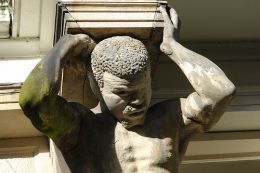
    burdenA burden by definition is a load that is especially heavy for one to carry. A blessing, on the contrary, is a beneficial thing for which one is grateful.  Is it feasible for someone to be grateful for a load that is especially heavy for them to carry?  I submit to you that it depends on the load.  There is not a day that I rise that I am not grateful that God made me a Black woman.  This is true.  I am honored and proud to be Black.  But there is another truth; and it is that I’ve had some negative experiences as a direct result of being Black.

    Today I would like for readers to reflect upon a burden that is carried and rarely spoken of.  It is the burden of being Black.  In the same vein, I ask readers to identify blessings of being Black.  I have asked friends and family (across gender, socioeconomic, and demographic strata) to provide their perspective and highlight what they see as some of the blessings and burdens of being Black.  Their responses are honest and thought provoking.  I implore you to take a gander.

    Some of the BLESSINGS of being Black:

    1. I love the fellowship of sistaness and the support and love from Black brothas.  I love how we celebrate and lament our lives together.
    2. Though I have been fed lies as a Black man, the validity of my worth as a human isn’t hinged on another group of people feeling less than.
    3. It is a blessing that many Blacks have developed a sympathy for the un-white/ non-western world.
    4. As a Black woman, I feel powerful.  Knowing that some people’s perception of me incite feelings of intimidation, gives me a slight advantage and presumed confidence.
    5. Blacks have a culture that encompasses a lot of good, including THE ABILITY TO DANCE!
    6. We are blessed to possess DNA that enabled us to survive the treacherous roar of the Middle Passage. Blacks all over the world were stripped from their homeland only to be beaten and starved in every corner of the earth. Somehow we now outnumber the Europeans who trafficked us. Our greatest blessing is biologically proven strength.
    7. I don’t know what the blessing is of being Black, said a 5 year old girl.
    8. Black women are stigmatized as strong and overbearing. I find this a blessing because in leadership roles, especially at work, when decisions have to be made as a lead administrator, people are not surprised by my “strong personality” and tend to follow more willingly. It’s sort of a catch 22 because in my world where I work with older white men, women in general are not expected to be very vocal or to have strong opinions. As a black woman, I unfortunately get a “pass.” They may even talk about me and stereotype me, but they do what I ask them to do. This stigmatization/stereotype makes me less likely to be incorrectly handled or taken advantage of in a work environment.
    9. It is a blessing to be a part of a strong heritage.  When I look at what we have overcome as a people, and even in my own family, I am reminded of the strength that my ancestors have walked in before me.  I remind my children of their heritage to realize that no matter what they face, they come from a lineage of over-comers.
    10. The African Diaspora is beautiful. The harmony of colors found in a people group. The collective community. The pride of surviving hate crimes against our skin with love. We are a grateful people who have learned that weapons drawn against you can be a witness of grace for future generations.

    Some of the BURDENS of being Black

    1. I don’t view being Black as a blessing or a burden. I view other people’s reaction to the fact that I’m black as the burden.
    2. As a Black male, it is a burden to fight for the freedom of an independent existence without the burden of stereotypes, generalizations, and unfair expectations.
    3. It is a burden to get others who’ve succumbed to the oppression of Blacks, to see the light.
    4. As an American descendant of the African diaspora, I am confronted with the barrier of conformity on a regular basis. Most blacks will experience an inability to conform to their Eurocentric environments without losing a portion of who God created them to be. The workplace provides an excellent example, as natural hair can present a problem in many corporate environments. Unfortunately, the barrier of conformity extends far beyond the workplace.
    5. The profiling of Black people sometimes turns out to be true. Our communities need more role models because we often fall into the stereo types that are placed on us.
    6. It burdens me that Blacks are presumed guilty and incompetent until proven otherwise.
    7. As a young Black teenage male, I am burdened when I see  that other students (of other races, white particularly) are allowed to be outspoken on any topic and not be called out by the teacher. On the other hand, when I am outspoken on the exact same thing, I’m told to quiet down or not share my views.
    8. Blacks have to work twice as hard as our white counterparts, only to get half as far as they have. This speaks, I feel, to the work place. Biases, perceptions, experiences, and the media paint a picture of African Americans that we have to overcome to gain respect in the marketplace (sometimes not given the benefit of the doubt).
    9. I am burdened that I have to prove over and over that being Black doesn’t make me who others think I am.  I’m just as good as anybody. The color of my skin does not define who I am.
    10. I hate having to prove that my Black experience is valid…over and over and over again.  It’s so hard – and sometimes I have to do it with other Black people too.  I also grieve at the colorism – why in the heck would I ever be more beautiful than my sistas that are darker than me?
    11. It burdens me that we are still fighting for something which every human is entitle to, and that is equality.
    12. I am burdened by the media’s repeated negative portrayal of the Black community because some folks then take these misconceptions/inaccurate portrayals (along with other preconceived notions and judgments) to dictate how they treat the Black diaspora.
    13. As a Black man in America, I am constantly put under the radar whenever I step outside of the box. I am still not welcomed with open arms until proving that I am not what others fear.
    14. I struggle not necessarily as a black woman, but as a black woman with natural hair. There is something about natural, kinky textured hair that is less acceptable in corporate America. Most of my counterparts have hair that is bone straight or the black women have perms/straightened hair. When I meet new people or have to be the face of the department at an event, I always pull my hair back. I never wear It out for the fear that I will be taken less seriously or perceived as less professional than my counter parts. I have to work twice as hard to make sure that people not only see beyond my skin color, but beyond my hair as well.
    15. Blacks are captured and live on captured land.  The fertility of our land has been removed from our hands and so our opportunity for wealth. Our minds have been captured by concepts of superiority, favoritism and division based on race. Our hearts have been removed from our communities and have assimilated into an individualistic paradigm leaving us disengaged and vulnerable.
    As in the lyrics of the song, “Glory” by John Legend, is there a possibility for the “…Sins that go against our skin to become blessings?” Can our burdens be turned into blessings? I believe that some of them have. This blog has been written in honor of Black History Month, to provide a sneak peek into some of the present day predilections of various generations of Black people.  However, blessings and burdens are not exclusive to one ethnicity.  I hope this post will help us all acknowledge that each ethnic group possesses blessings and burdens of being born into that particular group.  As I spoke with many who provided input for this blog, they mentioned the natural tendency to focus on the burdens and the difficulty of identifying blessings.  There is no doubt that these burdens are heavy, but if we all lift together, it will be lighter.  I have found my burdens much easier to bear when others simply recognize that what I am “carrying” is too heavy and they come along side me to help me lift.  They lift even if my burden was not their burden initially.    For me, many of my friends and family have helped me lift my confidence, my courage, and my pride in the beauty of this hue I’ve been given.    Whose burden can you help lift today?  #itdoesntmatterifyouareblackorwhite  #helpliftsomeonesburden
    Bear one another’s burdens, and so fulfill the law of Christ.  Galatians 6:2 (ESV)