
Full lips, round hips, black skin is where I begin, but not where I end. – Black woman.
It’s July 2020 and suddenly America has awakened to a realization that Black lives should matter in these United States. Operative word should. Just a few days shy of July 4th and Breonna Taylor’s family along with so many other Black families are aghast with performative measures of alliance and yet no substantive change. No arrests for the police officers who shot her while sleeping. SLEEPING. The message being communicated to Black people hasn’t changed; we say that we are with you, but our systems remain the same. Our systems don’t support your thriving and barely support surviving. Enter the work of anti-racism.
It is unlikely that anyone can scroll on social media or watch mainstream news in recent weeks without some story or post discussing systemic racism or what it means to be anti-racist. I’m encouraged to see the proliferation of Black voices and the elevation of our story. I am also noticing some fatigue from White allies – we’ve only been having this global conversation on race for 1 month. 30 days. That’s it. When fatigued, it is likely that we will reach for the easiest possible solution and to some that looks like an anti-racism checklist. An insensitive move, in jest, to ask your Black friends to tell you a list of things you should do to be considered anti-racist.
This ask has come as a direct and indirect proposition. It may sound like “I wish I just knew exactly what to do” or “I just want to show you that I am anti-racist.” A list sure would make things easier. To those beckoning for a list, I agree, that is way easier. However, EVERYONE is more complex than a list of “to dos.” Your most valued relationship can not be deduced to a list. When I think of an anti-racist list, I simply hear another request for comfort. Another request for me to acquiesce to your discomfort. I will not do that anymore. For centuries, the standard for Blacks has been unreasonably high (perfection before dignifying) and the standard for Whites shamefully low (accommodation of comfort).
Anti-racism does not ask me to shrink my voice, presence, or pride (in my Blackness) for your comfort.
Precious Jones
I’m not asking your forgiveness to live in my fullness. For so long I’ve chosen to shrink parts of my ethnic identity to make White people, especially White Christians, comfortable. Always learning more about their culture. Always accommodating comfort. Executing survival tactics such as code switching to climb the corporate ladder and regrettably leaving parts of me buried below as I moved up. For decades there was very little love for this brown skin girl. I’m realizing that choosing between my ethnicity and Christianity is a false choice. I’m certain that Christ wants me to live fully Black AND fully redeemed; not some reduced version of myself. Else, why would God create humanity and allow our eyes to differentiate color variants if there was no intention for us to see the beauty in difference? At what point did beauty become a point of division? Don’t answer that. I repeat. Don’t answer.
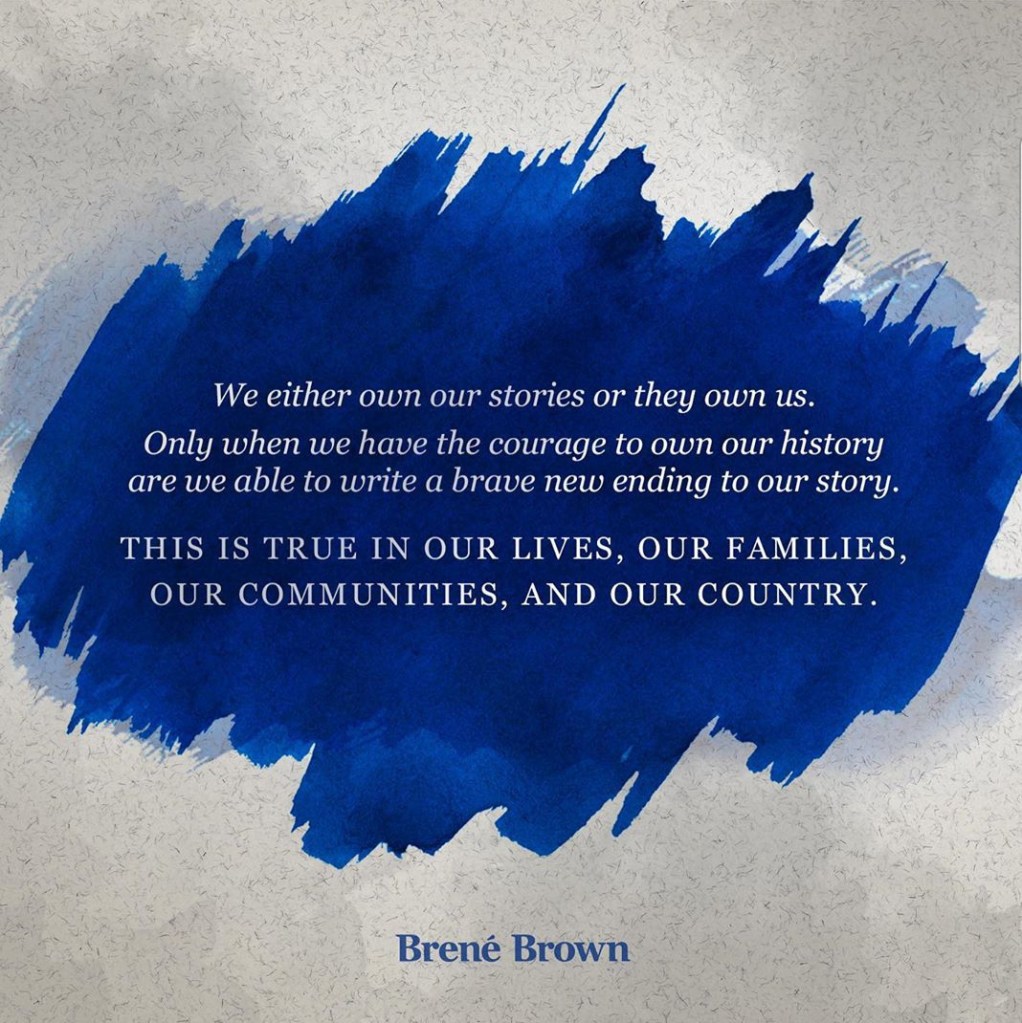
Brene Brown noted, “We either own our stories or they own us. Only when we have the courage to own our history are we able to write a brave new ending to our story.” I own my history of placating Whites at work, in friendship, and at church to make them comfortable with me. I also own that I previously believed that their comfort was more important than my being. BUT NOW (say it with me church)…I’m writing a very different ending for myself. It looks like loving myself enough to move forward with those who pursue justice in word and deed. Who continue to do the personal work of becoming anti-racist. It looks like loving myself enough to end fruitless conversations that originate with interrogation instead of empathy. It looks like CHOOSING. I now realize that as a Black Christian I don’t have to accept every invitation into a conversation on race. This makes me no less Christian. This makes me healthier. This makes me wise. This allows me to endure.
If there ever was an anti-racist checklist, it would be loaded with nuance and complexity; joy and pain. Not a lot of conditional statements, but real expectations. It might look something like this.
Anti-Racism Checklist
- Hard work
- Failure
- Love
- Ambiguity
- Frustration
- Anger
- Disappointment
- Endurance
- Victories (small & large)
- Lament
Anti-racism is spelled M-A-R-A-T-H-O-N. It is not spelled p-o-p-u-l-a-r-i-t-y. Neither is it spelled p-r-a-i-s-e. To the adults in the room, we are not in high school anymore. Therefore, our personal metric should not be “cool by association.” No longer permissible to rest on the laurels of having Black friend(s) or coworkers. Stop searching for a list of things to “check off” to arrive at the status of anti-racist. A list of things to “prove” your work is not primarily performative. Don’t exhaust yourself trying to prove who you are. That’s wasted energy. Marathons are about conservation and bursts of energy at appropriate times.
You know who you are and where you are. If you do not know who you are, honestly interrogate your soul. If you are not where you would like to be, then put in work. And keep working. But don’t ask me for a list. If you do, I will reference the one above. It is the only list I have that counts in this work. A list that allows us to examine our privilege, power, and prejudice.
White people, if your relationships feel particularly strained with your Black friends or coworkers right now, remember, “ambiguity and disappointment” are on the list. If you feel exhausted, remember, “hard work and endurance” are on the list. If you feel like, you are just not getting things right, remember, “failure and frustration” are on the list. Black people, if you are tired of empty apologies and excessive validation, remember, “anger and lament” are on the list.
If you have resolved to keep putting in work, then others will benefit from these acts of love and we’ll share in mutual victories. But, if your goal is simply to check off an act of love or a moment of endurance, you’ve missed it. Ball the list up. Throw it away and ask the question, “Do I really want to become an anti-racist or is this all for show?”
“Search me, O God and know my heart. Try me and know my thoughts.” – Psalm 139:23

 Precious Predilections