Tag: blacklivesmatter

  • Silence Doesn’t Feel Like Solidarity

    Silence Doesn’t Feel Like Solidarity

    sumo-wrestlers
    http://s.hswstatic.com


    Those that know me well know that I love truth more than I love comfort.  This past week, the ugly truths of police brutality, implicit racial bias, and systemic oppression of black and brown people made many uncomfortable.  In fact, many are still uncomfortable; particularly in the christian community.  This past week has pushed the christian community to take a serious look in the mirror and introspectively determine if diversity is something that is only espoused in word or actually lived.  And when I say actually lived, I ask… Are we brave enough to listen, empathize, and act courageously when it is counter cultural to do so?  When we might be afraid to do so?  When it is uncomfortable to do so.

    I have pondered why the #AltonSterling and #PhilandoCastile killings (by police officers) have caused me to grieve so deeply; more deeply than previous incidents of police abusing power.  More than #FreddieGray.  More than #SandraBland.  More than #MikeBrown.  More than #TamirRice.  More than #SamDubose.  More than…

    And then it hit me – this list does not seem to end.  Data from http://mappingpoliceviolence.org/ shows us that this brutality by police officers upon black lives is a systemic problem.  And…many of my non-minority christian friends have become mute.  I liken it to an ethnically mixed group of high school kids who are friends discovering that one of the black guys has chosen to go to the teacher after class and speak up for another black student who is repeatedly being poorly treated by someone in authority.  Most in this ethnically diverse group vow to show up  to help defend this black friend because they all believe this student is worthy of defense.  You may be able to finish this hypothetical story for me.  The friend arrives at the class room and sees that primarily his black friends kept their word to stand with him.

    Welcome to the #BlackLivesMatter movement. The silence of a segment of the christian community has been deafening because it feels like fear has rewritten the justice narrative and it has been more comfortable to remain silent, just give money or hide behind the cloak of one’s ethnic identity.  None of these positions equate to solidarity.  And none of them will bring reconciliation.

    Don’t be silent – your silence speaks loudly.  All week this “silence” has been ringing in my ears to the tune of “How can we say that we are the church when there doesn’t appear to be a willingness to bear one another’s burden?”  I’ve said it before and I will say it again; lament with us first. No solutions, just solidarity for justice.  A few days ago, a White, Christian friend of mine found courage to speak  even among fear. As I read her account, I could see how she beautifully wrestled with the fear of speaking publicly regarding Black Lives Matter and how the comfort of this fear was no longer greater than the cost of her silence.  Truthfully, her voice on this issue will speak more loudly than mine and this is why silence and/or apathy is not an option for the white christian.  Your silence may be communicating the wrong message. PLEASE READ HER PERSPECTIVE.

    Don’t JUST give your money – because settlements don’t settle it.   Now is the time to leave our paternalism at home.  This god-complex which causes us to want to “fix” the problems in the lives of those they are serving through money is crippling.  When we take a look at 11 recent high profile cases of men and women who had died at the hands of police, several of them received settlements between $5 million and $6.5 million dollars.  Settlement after settlement injustice remains. Giving money is a necessary part of the solution, but it is not the solution.  It takes courage to speak.  To attach YOUR NAME to cause in which you advocate for equitable treatment.  There is such anonymity in “only giving money,” but, when there’s person associated with a cause,  there is a different cost.

    Don’t forsake your eternal identity for your ethnic identity – I am a follower of Christ first and then I am a black woman.  #Realtalk – I am unapologetically black, but our eternal identity as Christians is what unites us. This means that as sisters and brothers in Christ, the higher call for all of us is to act justly, love mercy, and walk humbly (Micah 6:8).  When I rise each day, I have to remember not to lead with my #blackness and that it is not the primary narrative that shapes my life.  The banner over my life is one of redemption from sin.  We have seen what sin can produce individually and on a larger scale systemically.  To my White brothers and sisters, I encourage you as well to lead with your identity as a follower of Jesus.  To seek justice for the marginalized.  To see the #imagodei (image of God) in others.  The practical steps to make this occur may be scary, but this is what I want to do.  I want to talk with you.  To share in and learn of your fears.  To seek God together for our nation.  To serve God together in our nation.

    I have decided to follow Jesus.  No turning back.  No turning back.  Jesus didn’t simply advocate for the marginalized when it was easy and comfortable.  He lived in the difficult places; had difficult, yet honest conversation to reveal and then reconcile hearts.  I too will live in that place if that is the first step towards reconciliation.

    Here is a sermon preached a few days ago on #Justice by Pastor Léonce Crump Jr. of Renovation Church. This sermon will make many uncomfortable before it encourages.  He is speaking the truth in love, so I’m comfortable with that.

    Learn to do good; Seek justice, Reprove the ruthless, Defend the orphan, Plead for the widow. – Isaiah 1:17


  • Am I Black?

    Am I Black?

    20150611_123830“Am I Black?”  This question has echoed in my mind since it was so loudly projected from the mouth of a little boy (approximately 5 years old) to his parents as he sat with them and watched a portion of a video about the middle passage at The Griot Museum of Black Historyin St. Louis, MO.  The innocence and complexity of his question is what wrenches my heart.  In this beautiful world, it would be great if slavery never existed and if African American parents and those of other ethnicities never had to share with their kids the atrocity of their nation’s past.  In particular, their decision to treat certain people inhumanely.  This little boy could not understand why, in his own words, “only black people were treated this way…”  He actually asked his parents, “where are the white people?”  His mind could not process the reasoning behind the variation in treatment.  They spoke honestly and with lots of grace; not with malice or slander, but with love for their son and his tender, impressionable mind.  I am not a parent, but I commend these parents for walking gingerly with their son to help him understand his history and the importance of valuing all human life.  This indeed was one of the most precious moments I’ve experienced recently in our racially charged society that wants to dismiss the impact of years of oppression on people groups.

    For the past few days I have juxtaposed this little boy’s simple question with the recent events in Orlando, from the #PulseShooting to the shooting of #ChristinaGrimmie.  I love the city of #Orlando and I’ve been grieving with those in my hometown.  My community and people that I love and know are hurting deeply. We cannot understand the senseless act of these shootings.

     The beauty I beheld as this little boy asked this question was profound. You see, he didn’t “know” he was black because his experience as a little black boy was just as it should be.  He has not yet known what it is to be treated differently because of his skin color.  I am not sure that I want to wake him up from this dream.

    As a follower of Christ, I believe the church is called to make this child’s “ideal perspective” more of a reality, but we have to first deal with the sin in our own heart.  The reality that we just may be treating people differently because of their skin color.  Sunday is still a very segregated day in our nation.  The reality that we, the church, may be choosing not to get to know people because their lifestyle(s) don’t align with our beliefs.

    People are more than their ethnicity.  They are more than their sexual identity.  Oh that we would learn to live and love one another as people.  Not as pretentious, external, superficial, descriptors such as race, gender, and economic status.  This week in the wake of the Orlando tragedies I believe I was granted a gift from God to spend time in Colorado with a couple who co-founded a non-profit, which is making a difference in the lives of children who are aging out of foster care.  The gift for me was that although I “knew I was Black” in Colorado, I didn’t “feel” Black when spending time with their family.  I held tightly to this feeling because it was refreshing.  Typically, “feeling Black” when I am the minority means that I am treated as inferior and presumed weak.  To be in a community where I am clearly an ethnic minority (Colorado isn’t particularly racially diverse) and to be welcomed and loved as a person first, is a gift I treasure.  There might have been second glances from others as I sat around the table with this couple, their daughters, and a friend, at a local eatery, but at that table we laughed together and enjoyed each other’s company in earnest.  And although I am not their daughter, I felt protected by this couple in an incredibly beautiful way.  This was a dose of authentic love.

    If there was a gift that I could give to those who’ve experienced marginalization, it would be the gift of authentic love. To authentically love allows us to accept people as a part of God’s beautiful creation.  There is no doubt today that I am proud to be black.  But if I am honest, I have had to fight for this freedom of pride in my ethnicity, namely the darkness of my skin and kinkiness of my hair and all that I’ve been told that this represents in our western society.  What I have recognized recently is that fighting for freedom of an insecurity can be costly.  It can mean rejection from those that love you.  It can mean career assassination.   It can mean depression and sleepless nights.  I do not presume to understand the fight of those who are in the LGBTQ community.  What I do know is that I would like for #America and at times, those in the church, to stop making presumptions about their character and worth because of their sexual identity alone.  This is nonsensical.  Seriously.  We are people first.  Let’s treat each other as such.

    I grieve with all of the families whose loved ones lost their life during this tragedy.  I grieve with those in the LGBTQ community who feel the palatable weight of being targeted because of their sexuality.  I grieve with the family members of the shooter who may now be treated differently because of what he did.  I grieve for the christian church who has yet to learn that we all share a mutual brokenness as people; we are all in need of a Savior (Jesus Christ). Those who are black are in need. Those who are white.  Those who are heterosexual.  Those who are homosexual.  Those who are wealthy.  Those who are poor.  Those who are human are in need.  As we have a greater understanding of this need, we will lower our personal pedestals and stand together as people.

    “Be happy with those who are happy, and weep with those who weep.”  Romans 12:15

  • Collective Heroism

    Collective Heroism

    Super Ron
    My nephew during the day and superhero at night.

    Just as there are angels among us, I am certain that there are heroes among us.  Unlike those we see in comic books or movies, they aren’t donning a cape and symbol on their chest. A recent visit to Orlando taught me much about heroism and the unparalleled beauty witnessed when the community rises to the occasion and collective heroism is on display.


    “You’re the real hero…” is what the manager of a local Starbucks said to me after she had returned from jetting out of her store to run after the vehicle which contained a young man who’d just exited her store and snatched the purse from one of her customers.   At the time I happened to be working outside from that location and looked up as the young man grabbed the purse, jumped over the railing, and hopped into an SUV.  I kept an eye on the vehicle and shouted so the manager could write down the correct tag number.  The cops came and traced the tag and found that the vehicle was stolen.  I do not know if her purse was recovered.  I do know she attributed my “following the vehicle” as a major heroic act.  I tend to disagree with her perspective; I am no hero.

    That day I witnessed so many people who did not know one another come to the aid of a woman who had just been violated.  No questions asked; no judgement.  Everyone wanted justice for her.  Collective heroism.  We need it.

    Heroic is the lady who ran after the purse snatcher.  She was an unlikely hero.

    Spending time with my nieces and nephews this past week gave me a sneak peak into what life can be like when your father is your first hero.  Time and time again, whether it was to share a new skill learned, a silly joke, or simply receive comfort after a fall, the arms of daddy provided the greatest comfort.  Daddy was ALWAYS the hero.  Living with a belief that there is nothing your father won’t do to protect you and there is nothing that he couldn’t do is absolutely incredible.  It is a sacred gift to a child or the vulnerable.  I’ve not personally experienced the heroism of my father, but I have experienced the collective heroism of family.  The extraordinary lengths my family goes through to care for one another is nothing short of amazing.  In this family, my heroes are rich in love.  Much sacrifice; many needs met.  Collective heroism.  We need it.

    Heroic is the single father who rises early to provide for his family while actively fighting off (as any hero would) the traps of poverty which attempt to lure him into a  lifestyle which promises quick money coupled with high risk.

    The last leg of my time in Orlando, I learned that the police officers involved in the death of #TamirRice were not indicted.  I’m so exhausted by this story line.  It’s ending seems to be stuck in a ridiculous loop in which our “justice” system justifies a way to remove culpability and place the victim on trial.  I would have lost hope, but in the spirit of collective heroism, I know that I am not in this fight alone.  Besides, heroes don’t give up!  I stand shoulder to shoulder with those I count as heroes who refuse to sit idly and allow those advancing oppressive systems to continue to do so.   I shudder to think about the arguments used to support the idea that police officers did not have to answer for shooting a 12 year old boy in less than 1 second (which was caught on video). However, I find strength when I think of those who earnestly count the cost and find it worth it to stand for justice…and keep standing for justice.

    So, I’d like to end this last blog of the year by reminding us that collective heroism is about community.  My time in Orlando reminded me that we are stronger together.  If there was ever a time our community needs to come together, it is now.  Displays of solidarity such as those seen during the #notonedime2015 economic boycott launched by Rahiel Tesfamariam during the Black Friday weekend and the decision of some University of Missouri Football players to proclaim the racial injustice they witnessed rather than play the game breathe life into the souls of the heroic at heart.

    Heroic is the community who refuses to be silent in the face of injustice.  We need you.

    To those in my community, I ask that you stand with me and be image bearers of collective heroism.  Not because we have an “S” on our chest, but because we possess an unrelenting desire for justice.  Gone are the days of our silence.  Our collective voices are stronger.  Our collective lament creates a depth of resolve which is mountainous in structure.  And one day our collective victory will be glorious.

    A hero is an ordinary individual who finds the strength to persevere and endure in spite of overwhelming obstacles. – Christopher Reeves

    Most heroes are unlikely heroes.  I hope 2016 produces many more unlikely heroes.  We need them.

    “We who are strong have an obligation to bear with the failings of the weak, and not to please ourselves. Let each of us please his neighbor for his good, to build him up.” – Romans 15:1-2 [ESV]

  • Legal Cannabis – Capitalization or Decriminalization?

    Legal Cannabis – Capitalization or Decriminalization?

    “I was gonna clean my room until I got high
    I gonna get up and find the broom but then I got high
    My room is still messed up and I know why
    ‘Cause I got high…” – Afroman

    In just a few days, as a citizen of Ohio, I will have to option to vote on the legalization of marijuana; a drug that has directly ravaged the lives of many minorities in my community.  I am sickened by repeated commercials airing on television with such a remarkably positive spin on the use of marijuana and why this is “good for Ohio.”  There are two prevailing thoughts on this issue – this will decriminalize marijuana users and largely reduce the cost spent on “policing the sell / possession of marijuana.”  This sounds quite noble, but I boldly reject these claims.  The law, issue 3, allows only 10 commercial marijuana grow facilities.  While those growing marijuana can not sell it, those who would like to sell it are limited in the amount they can sell and will need to purchase a state license to sell.

    The very same drug that painted Trayvon Martin as a “thug” and fueled the media to all but mar his character is now on the ballot for legalization because a few wealthy people have spent millions of dollars attempting to change the narrative for their direct benefit.  This is not about the people of Ohio; it’s about money.  This feels like the reverse golden rule – he who has the gold makes the rules.     Surprisingly, there is little clarity for those incarcerated for possession of marijuana and how those selling illegal marijuana will be affected.  Interesting details to be left out.  It is highly unlikely that people in poverty will procure a state license to sell.  Let us not be fooled – there will still be policing of those illegally selling marijuana.  Decriminalization isn’t only about changing a law, but it is more profoundly about changing a predominant view.

     If we ignore the social costs and look at the potential for profit, well, this law is definitely good for venture capitalist and oligopoly participant, Nick Lachey, former 98 Degrees singer.  According to The Times Reporter, “The same investors who’ve pumped millions into the legalization campaign would operate the 10 grow facilities, reaping financial rewards that are estimated to gross $1.14 billion for growers alone. We believe that’s anything but responsible.  The effort ignores basic free market principles and is aimed solely at lining the pockets of a select few. They’ve even set the tax rate themselves.”

    One bone of contention I have rests in the reality that in Ohio there are a disproportionate amount of arrests for minorities in possession of marijuana, although, there is basically parity in the number of users when comparing minorities and whites.   This speaks to a broken justice system.  A report in 2009 by Jon Gettman, Ph.D. on “Marijuana in Ohio,” indicates that, “Marijuana arrests have a disproportionate impact on two demographic groups – young people and minorities.  In many cases an arrest for marijuana possession makes a criminal out of an otherwise law‐ abiding individual.  …However differences in the arrest rates between whites and blacks cannot be explained by differences in marijuana use.  In 2007, for example, 10.5% of whites used marijuana in the last year while 12.2% of blacks reported such use.  These figures indicate that marijuana use by blacks is about 20% more prevalent than use by whites.   While this is a statistically significant difference, it does not explain why arrest rates for marijuana possession for blacks are three times higher nationally than for whites.”

    It may seem like a win for social justice if marijuana is legalized in our state, however, this thought implicitly relies on the assumption that a profitable change for a few will be a profitable change for the commonwealth.  This law does not change the implicit bias of our current criminal justice system and it does not protect the interest of the most vulnerable in our society; children.    I think this will open doors that we are already having a difficult time closing.  The heroin epidemic is growing like a bad weed (pun intended) in Ohio; it is also no secret that marijuana is a popular drug with young people and often and introductory drug to other illicit drugs.  You tell me, is this a case of capitalism cloaked in social justice? 

    Most disturbing about this initiative is the legalization of marijuana edibles.  What kid does not like candy, brownies or cookies, unless allergic? Comparisons to alcohol prohibition are not as strong, in my opinion, because the introduction of edibles changes the game for our children.  There is a natural appeal for children.  Everyone is singing Colorado’s praises, but social costs are once again being ignored.

    After visiting Colorado in early October 2015, where marijuana was legalized in 2012, Attorney General Mike DeWine said Colorado officials advised against passing the measure. He said that nearly half of the marijuana sold in Colorado is in an edible form, and he expressed his concern that children will accidentally eat marijuana. He stated:[53]

    Ohio will be fundamentally changed … There’s going to be plenty of marijuana to go around.[6]

    Andy Mineo has said, “Truth disturbs the comfortable and comforts the disturbed.”  I hope you are uncomfortably disturbed by a law that seeks to fatten the pockets of the wealthy and prey on the plight of the poor.  I am disturbed.

    Issue 3 is detailed here.  To find out more about the Social Costs of marijuana in Ohio, click here.

    “Speak up for those who cannot speak for themselves, for the rights of all who are destitute. Speak up and judge fairly; defend the rights of the poor and needy.” -Proverbs 31:8-9 (NIV)

  • Paralysis of Injustice

    Paralysis of Injustice

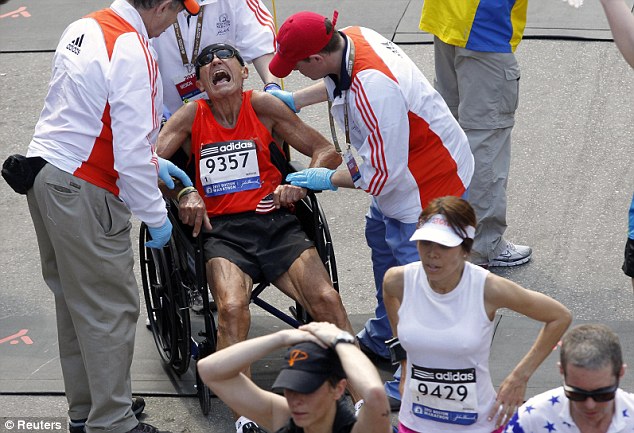
    Marathon Runner I have never run a marathon and I do not intend to add this item to my bucket list.  However, annually, in our city of #Cincinnati, thousands of people gather in support of “The Flying Pig Marathon.”  Why it’s called the Flying Pig, I do not know; however, I do know that marathon runners can teach me something about pushing through the pain to get to the finish line. In a brief conversation with a friend, I encouraged her to remember that the fight for justice is one in which we may not see victory in this generation. I was unaware how true these words would be since the untimely deaths of #SandraBland  and #SamDubose occurred at the hands of injustice just a few months after I made that statement. So, why keep going? Why keep advocating, fighting, resisting the status quo and encouraging others to do the same? Because we all win when justice wins and we all lose if injustice prevails.  This only becomes glaringly clear once you have been the recipient of injustice.  It is different when it is your daughter or son.  Quite different when people of your ethnicity are repeatedly treated unfairly by those hired by the public to protect and serve you.

    As communities come together to search for solutions to the growing racial and socioeconomic chasms in their cities, the effort can become overwhelming; even paralyzing.  I have wrestled with the reality that this work makes one tired; tired of being patient.  Tired, because the goal seems so far away.  Sometimes so tired that I feel like my body will give way to the stress and emotional drain of it all.  But then I think of former “marathon runners” in the fight for justice and I learn the following:

    1. Tiredness is normal and to be expected.
    2. Proper expectation of the journey ahead, preparation, and pace are all necessary for sustainability in this race.
    3. [Emotional] fatigue increases the desire to betray your mission.  In a marathon, comfort, not the cause (or the goal), becomes most important to us when we experience fatigue.  For the “justice runner” this shows up as apathy and the idea that things will always remain the same.
    4. “Justice runners” experience many of the same stages of marathon runners.  This funny video highlights the 8 Stages of Marathon Runners .  In the video, stage 6, which is known as “The Wall” shows up most frequently when it feels as if “nothing is happening” and justice appears to have reached a stalemate.

    I want to encourage those who have committed to the cause of justice to press through and as you press through, DO NOT become bitter WHEN CHANGE TAKES PLACE AT A LESS THAN DESIRED PACE.  Bitterness separates us and can so quickly become hate.  And hate drives us to make horrible decisions against mankind that are often filled with regret.

    BLMI learned recently that justice begins with love.  What do I mean by this? Well, when we love someone, their value becomes significantly higher to us.  Their value is not dumbed down to their skin color or the amount of money in their bank account or whatever external thing that can easily divide us.  When we love a person, their value becomes based on a common thread we all have; humanity.

    Sometimes the paralysis of injustice remains because we have chosen not to love.  A friend of mine recently wrote a blog post,  A Poem: Tomorrow is Not Promised, Love Today, which challenges us to choose love.  It is a choice.  We can not choose how long we will be on the earth, but we can choose to love those we encounter.  After reading her post, I acknowledged that the path to racial reconciliation and justice is paved with difficult conversations, offense, and even anger; but NONE of these things should stop me from moving towards the goal.  In fact, I must remember to lead with love and this can even mean laying down the “right” to “be right” if it means losing the opportunity to reconcile.

    If I give all I possess to the poor and give over my body to hardship that I may boast, but do not have love, I gain nothing.  –  1 Corinthians 13:3 [NIV]

  • Prayer Isn’t a Placebo

    Prayer Isn’t a Placebo


    I’m guilty.  I’m guilty of treating prayer at times as if it is a placebo pill.  Placebo – a harmless, unmedicated preparation given as a medicine merely to humor a patient, or used as a control in testing the efficacy of another, medicated substance. At times, it has been easy to take “a dose of prayer” for a particular circumstance without sincerely believing that this “method of treatment” will be effective.  These moments of unbelief speak to my humanity.  There is no other intent of the placebo than for it to validate that the actual drug works well.  Selah (think about that).  Even the placebo points to the real thing. And even in my time of unbelief, God responds, reminding me, that He is the real thing and that praying in Jesus name is not a passive, powerless action.  You see, God isn’t encouraging us to pray, just to humor us with “one more thing to do.”

    Now, on to prayer and its power.  I have read several blog posts and comments [via social media] of people expressing anger or hopelessness at the state of our nation and then saying, “I’m tired of Christian people praying…”   “Don’t black people have have the right to hold a grudge over what happened in Charleston?”  “Why do we (Christians) always resort to prayer?”  When I heard this, something in my stomach turned because it seems that we have forgotten what the secret is in our secret sauce; IT IS PRAYER.  It is prayer to a God who is all-powerful (omnipotent), all-knowing (omniscient), and all-around (omnipresent).  Let me provide further clarity.  The main ingredient in our secret sauce of prayer is faith in a God who is faithful. Immutable.  So consistent, that he makes #StephenCurry free throws look inconsistent.  It is uncanny how much we can trust in ourselves and at times, how little we trust in God.

    Prayer isn’t a placebo.  It is the most powerful weapon we have in dismantling the work of the enemy when dealing with heart issues.  Beloved, some of the most daunting issues of our day are heart issues.   Injustice is a heart issue.  Racism is a heart issue.  Pride is a heart issue.  Lust is a heart issue.  Greed is a heart issue. Bottom line, sin is a heart issue.  All of these issues are presented with the possibility of mending by taking them to #thegreatphysician, Jesus Christ, and allowing Him to operate as He sees fit.

    Perhaps in all of the privilege we have in the world, the privilege to communicate with God directly holds no greater honor and no greater power.  This indeed may be the best “non-secret,” secret weapon we have as followers of Jesus Christ.  Let us not forsake this opportunity to commune with God.  To bring heaven into the ordinary.

    “As an instinct, prayer is a response to our innate but fragmentary knowledge of God.  It is like a note in a bottle to “whatever gods there be.”  As a gift of the Spirit, however, prayer becomes the continuation of a conversation God has started.  If that conversation proceeds, as in the best of conversations, praying becomes meeting with God – heaven in the ordinary.”  – Tim Keller, “Prayer”

    Prayer can be seen as a placebo if the action alone is not connected to the reality that God is with us. In us.  Desires to converse with us.  Be with us.  It is no different than a parent than desires to know, really know, how their child is doing.  At times, the parents may already really know what’s going on, but they see the opportunity for much deeper connection with their child as they are allowed to simply bring the concerns of their heart to their parent and leave them there.  The greater hope we have is that as we present our concerns to God, He listens, and He always responds with our best interest in mind.  Sometimes His response is yes and other times it is no (or “not right now”); but, it is the best response for us at the time.

    I have seen the hearts of men and women (even my own) change through prayer and force-ably tackle heart issues.  In a previous blog post written, Just Cry – Tears for Charleston and the Black Community, I exhorted people to simply allow grief to be a first step in the healing process regarding the #charlestonshooting.  I believe prayer is a close next step.  Whenever that next step happens for you.  As a Christian, prayer positions us to respond in a way that glorifies God.  This may cause repentance, righteous indignation, or respectful dialogue for some.  Prayer powerfully moves us away from bitterness and closer to reconciliation.  No placebo at all.  In fact, quite effective in producing change.

    Prayer may appear passive, but don’t be fooled, it packs a powerful, “one, two…punch.”  Prayer is teaching me the wisdom in speaking to God first in order that I might more effectively speak to others.

    “We use God’s mighty weapons, not worldly weapons, to knock down the strongholds of human reasoning and to destroy false arguments.” 2 Corinthians 10:4 (NLT)

  • Just Cry – Tears for Charleston and the Black Community

    Just Cry – Tears for Charleston and the Black Community

    150618000557-06-charleston-shooting-0617-super-169

    When a dear friend loses a loved one or when you have personally experienced  loss of someone near to you, there is significant wisdom and solace in having friends who are just able to be present with you.  Some of them rest in the place of empathy, having experienced the same loss, and others are just present and grieve because you grieve.  They ache because you ache.  They find little time to offer solutions or wax poetic about the meaning of life because in that moment you simply ache.  In that moment as a person who has lost someone you love, you simply want and need the space to cry.  To grieve.  To lament.  This in fact, is a healthy part of the process.

    During the past hours, many of us have heard the media accounts of the #Charlestonshooting at a church in South Carolina.  Mother Emanuel A.M.E. Church is a church that represents so much rich history for African Americans in South Carolina and it was a key part of the Civil Rights Movement.  It was at this church, that a young man of caucasian ethnicity, came into the church, was welcomed and sat among the congregation throughout an hour long bible study and then he shot them.  When I heard this, all my heart could do was ache.   And all my heart could do was grieve.  As a young woman who is a member of a diverse church and has attended many mid-week bible studies, who has deeply benefited from friendships of people who do not look like me; I could only ache.  His intent was clearly to harm people in this group because of their black skin.  Yes this is 2015.  Yes, we are here again.  Have we ever really left this place?

    It is quite difficult to change a mindset that has been embedded in our nation for generations, but it is not impossible. It will take time and grief.  So, as I think about where we are today in America, I ask those that are friends of mine, those that love me, those that have a heart for justice, those that have a heart to see the gap closed regarding present day inequalities in many social and economic strata of our society…I just ask you, this time, to be silent.  Sit with me. Grieve with me. Pray with me.  Cry with me because innocent people who gathered in a space that has been deemed safe and sacred to worship and to pray, maybe even for the souls of those like  #DylannRoof, were shot in cold blood.  And when I see the reports, I understand that it could have been me sitting in a pew at a bible study in a place that I deem sacred.    This.is.not.just.some.other.story.  This.can’t.just.be.another.story.

    At this point, I don’t need data to show me how things have improved racially in our country.  At this point, I don’t need comments about this being an isolated incident..  At this point all I ask is that you just cry with me.  That you allow the space for me to grieve the loss of people.  Of lives.  All lives matter and many people in the past have been targeted because of what they look like.  But in this moment, I simply grieve because in a place where a young man received the very opposite treatment from those he was among; treatment of love, of acceptance, of caring, of common humanity, he chose to kill because of a superficial difference.

    To grieve is human.  So, please, don’t try to fix this one.  Don’t offer me any solutions.  Just let me cry a little or a lot. Grief is necessary in order to continue to stand for justice.  It is the road oft traveled by those in advocacy work.  Our passion for justice must be deeply rooted in our passion for humanity.  If you love people, how can you not love justice?  So today, I fall to my knees in prayer and in grief so that I can continue to stand and be a voice for those who have experienced and continue to experience injustice.

    The very last lines of a poem I heard today written by #BrittiniGray sums up my sentiment.  “…Just cry for my people when they die.  Cry for my people when they die.  Just cry. Just cry when they die.  Cry for my people, if you can just cry.  That would be enough.  Until you are ready to get into the rough stuff, save your words and your rationale because I have no space for it.”  – Brittini Gray,   Brittini was one of the artists performing at The Summit 2015 (summitforchange.com).

    For everything there is a season, a time for every activity under heaven.  A time to cry and a time to laugh. A time to grieve and a time to dance. Ecclesiastes 3:1,4