Category: Grief

  • on the other side

    on the other side

    Imagine what it’s like to be stuck in a reality that dismantles your family, presumes your guilt based on your God-given gear ( I’m talkin’ skin color), and leaves you with a thousand sleepless nights and I will tell you what it’s like to have a Black son, brother, husband, father or friend to undergo the unwieldy American unjust justice system. Key word here is REALITY. For some the account of When They See Us by Ava DuVernay is philosophical and conversations loom around poetic pros and pithy arguments, yet I am unable to escape the striking resemblance to my family’s reality of justice gone wrong.

    So many images from this series are seared into my psyche but none more piercing than that of a pride so deep that produces prejudicial action. This is the stuff of oppressive systems. My stomach turned in knots as I realized that when they (Whites) see us, they remember her (White investment banker brutally raped). How could they not? A judge, who like most, keeps a doting picture of his (White) wife on the bench; a young, White female prosecutor; fill in the _____________. A quick substitution of the rape victim with the face of the one they love and the five black boys on trial are no longer seen as such, but as a wolf pack to protect their loved ones from. This instinctive ability to re-imagine ourselves or a person we love/care about that has been victimized is all natural. Development of my empathetic muscles has come from a place of love through proximity. So, I’ll say it – love differently ya’ll. Love different people from different places of different races with different experiences and I am certain you will no longer see a wolf pack. You’ll see a student, a friend, someone’s brother, a child, a person.

    http://www.glamour.com Atsushi Nishijima/Netflix

    On the other side of incarceration there are parents, siblings, children, friends who experience loss from a system designed to keep so many bound.

    When They See Us not only exposes what happens when justice moves away from righting wrongs to jockeying for power, but also depicts the complex choices of those “on the other side.” It highlights how the pressures of our penal system forces parents to choose between provision and purported protection. Complicated.

    Antron’s dad lost his son trying to protect him. Raymond’s dad would forever regret sending him to the same park where he would be targeted by police. Kevin’s sister is crushed by her 14 year old brother’s tear-filled plea to simply return home and signs a coerced confession. Complicated. Somehow through deep loss and grief, those on the other side are able to beautifully uphold the dignity of those they love. While it is painfully obvious during each episode that whiteness affords many the privilege of a better trial than their Black counterparts, I found a few other lessons embedded within.

    Clinging to normalcy: the return home. The return home is anti-climactic. Fathers unprepared to receive the sons they’ve betrayed by choosing absence on court dates. Sons bravely clinging to normalcy found in the days of old. Holding tightly to the culmination of belongings in a brown paper bag. Dreaming nightly of the return home only to realize that the heart’s deep love must now sync with the awkward moments of freely being present with loved ones as the muscle memory of trauma reminds everyone to restrain affection and the expression of feelings. Trauma makes normal abnormal. We must be gentle with one another.

    We are not okay: lying to survive The penal system can produce a family of pretenders. We all pretend that everything is okay post incarceration. Because how do you even begin to process that all involved have less hope in a justice system that doesn’t value our Black lives or legacy? Korey’s mom would ask him, “What is it like for you in here? Are they treating you okay?” His response was always, “I’m surviving…” or “I’m holding it down…” Responses which are echoed all across America. We may never know the entire story of someone’s trauma. For those that choose vulnerability, let them do so in their own time and in their own way. We must be gentle with one another.

    “I’m just a shadow,” says Korey Wise, one of the exonerated five and victim of horrific beatings. “I’m very empty — 46 years old and empty. At the same time, I’m talking to the kid in me: ‘I got you, baby boy. Nobody can take your story from you.’”

    Real love…I’m searching for a real love…someone to really see me. (cue Mary J. Blige song) It is real love that slowly shifts our gaze beyond bias and towards humanity. Love is less about whimsy, more about choice. It is an outright intention to choose another over yourself. It is sacrificial at it’s core. Consider those on the other side of incarceration (or providing trauma support) and ask yourself, how have I loved them? These parents, children, siblings, loved ones are often left in the shadows. Those who’ve directly experienced trauma and those supporting them need that real love.

    “All I do all day long is LOVE YOU.” — Mother of Antron McCray, one of the exonerated five boys.

  • Fresh out of Explanations

    Fresh out of Explanations

    “Not everything that is faced can be changed, but nothing can be changed until it is faced.”  – James Baldwin

    What an emotionally exhausting few weeks.  A time to lament the grave injustice of our “just-us” system in America.  It seems that justice is illusive for some and not others.

    Since hearing that officer Jeronimo Yanez was found not guilty and officer Ray Tensing’s trial resulted in another hung jury, my mind has not stopped racing with the myriad of thoughts about what’s continually communicated to people of color, in particular, Black men in America.

    Before I lament, I want to outline a few interesting facts about Philando Castile should give us pause as to whether or not he was being racially profiled.  #JustFacts. #Receipts.

    • Philando had been stopped by the police more time than the number of years he was alive.  He was pulled over 46 times prior to the last stop of his life at the age of 32.
    • Of the 47 times Philando was pulled over by police, only 6 of those stops were things that were observable from a police car – broken muffler or speeding.

    Here’s a little history of how much Philando had experienced being pulled over by the police prior to July 6, 2016: The Driving Life and Death of Philando Castile on NPR.

    The following excerpt from the NPR article gives an account of officer Yanez’s exchange with dispatch…

    Castile’s girlfriend, who was in the car, said it was because of a broken taillight. But in scanner traffic audio obtained this week by Minnesota Public Radio, a nonchalant officer, yet to be confirmed as Jeronimo Yanez, told dispatchers a different story.

    “Two occupants just look like people who were involved in a robbery,” he said. “The driver looks more like one of our suspects, just because of the wide-set nose.”

    Gloria Hatchett, an attorney for the Castile family, said that’s racial profiling.

    “How do you say, ‘There’s a robbery suspect with a broad nose, African-American?’ ” she said. “That’s equivalent to saying there’s a white woman with blond hair.”

    What happened next is unclear. Was Castile just reaching for his ID, or was he reaching for his gun?

    What we know is that Yanez fired his weapon.

    What we know is that throughout his life, Castile was stopped by police at least 46 times before that moment.

    If there was anyone familiar with the routine and perils of a traffic stop, it was Philando Castile.

    The July 6 stop was his last.

    Most know how this story ends; it’s practically predictable.  Police Officer shoots un-armed black male.  Police Officer is acquitted.  I needed space to lament and articulate the emotional distress I am feeling.  To name the ache in my heart.

    I lament that the life of a black male in America still hinges upon a white male’s determination of value.

    I lament that the humanity of black men is repeatedly stripped away when the “cause for shooting them” is because they are seen as violent, aggressive threats by default.

    I lament that I have friends who don’t see the err of today’s criminal justice system.

    I lament that black men can comply with police officers and still die.

    I lament that the trauma both Diamond and her daughter faced is deeply etched into their memories.  No 4 year old should have to console her mother for fear that she too will be shot by police.

    I lament that I am often asked to explain why an officer’s perceived fear does not make a black male worthy of death.

    explanation

    We use a subjective law (Stand Your Ground) to determine substantive matters (life and death).

    If you desire more explanations to ascribe value to the life of black men who are as much an image bearer of God as the men who shot them; miss me with that conversation.  I’m not having that convo today.  Probably not tomorrow. Probably not for a minute.  We have to change the starting line of this conversation.  Here me clearly.  I am fresh out of explanations if imago dei is not your starting point.

    In fact, it may be time for someone to explain to me why police officers are using body cameras if they seem to be of little benefit for the citizens?  Maybe, someone should explain to me why no one’s discussing the correlation of implicit bias and police shootings.   It’s a thing.  A very real thing.

    Isn’t it time to stop demanding an explanation and start acknowledging that the undercurrent of implicit bias has turned into a tidal wave?  This slow and silent killer is destroying families, disrupting communities, and traumatizing people of color daily.

    Isaiah 58

  • Absent Affirmations of my Father

    Absent Affirmations of my Father

    Father’s day is near and this year I don’t feel prepared to lament the indefinite absence of my father’s presence once again.   As if there ever was a preparation substantial enough to carry the weight that my father is no longer alive. It’s been almost 22 years and I never feel prepared to think about it or actively acknowledge it because it hurts.  But at times, even in this reality of loss, I feel hope.  Well, this year, I REALLY feel my father’s absence; not only in the lack of his physical presence, but more so in the lack of his words.

    “Words have a longevity we don’t. ” – Paul Kalanithi

    A friend of mine recently blogged about the fear of losing dear memories of her daddy after he passed away.  As I read that blog and thought more about my own father, I began to wonder what I should do if I have no memory of my father affirming me. Not one.  No “I love you’s” to recount.  No memories of his laugh.  I can see evidence of his smile embedded within mine when I look at old photos of him.  And I have been generously endowed with his nose structure.  Thanks dad! 👌🏾

    20170606_001225

    I have friends that have come to understand how deeply I value words of affirmation.  It is my top love language.  This precious value on words has moved beyond appeasement of personality. It beckons my heart to behold the power of legacy.  Words absolutely have a longevity that our frail bodies do not. Our physical bodies fade, but our words, can lift the soul again and again.  And for the daughter or son who may have lost a parent, this lifting of the soul is treasured.  And needed.

    I previously believed that it was enough to simply know of my father’s love, but somehow my heart demands more than just intellectual ascent.  Because love that is only known intellectually, feels like no love at all.  The heart fails to really connect to such love.  Ask the orphan.  Ask the estranged family member.  Ask me.  There are days, weeks, where I long to hear my father’s voice.  I long to hear him say I love you.  In full candor, I thought that I would mature past this longing as an adult.  Now, I realize that maturation is a long, complex, process.  I recently heard that maturation comes when you are able to make difficult decisions even when you are still afraid.  In that case, my maturity is on the horizon.  I am afraid to love my father deeply and allow myself to long to know/understand a man that rejected me as a 2 year old; yet I persist in doing so, with knees knocking.  It has been easiest to move past Father’s Day in order to avoid experiencing the fear of immobilizing pain again.  In the past four years, I haven’t been able to simply move on. I am thankful for this emotional awakening.   There must be an unseen beauty in the process of loving those who’ve left searing emotional scars.  A beauty only unveiled as we chose to love.

    For some, our journey of love will bear more scars than others.

    Parents, whether via birth or adoption, foster or legal guardian, please make space to affirm your children.  Your words are most formative.  If the painful memory of my father serve’s no other purpose than to espouse the value of affirming children in word and in speech while you are still present, then at least there is some purpose in this pain.

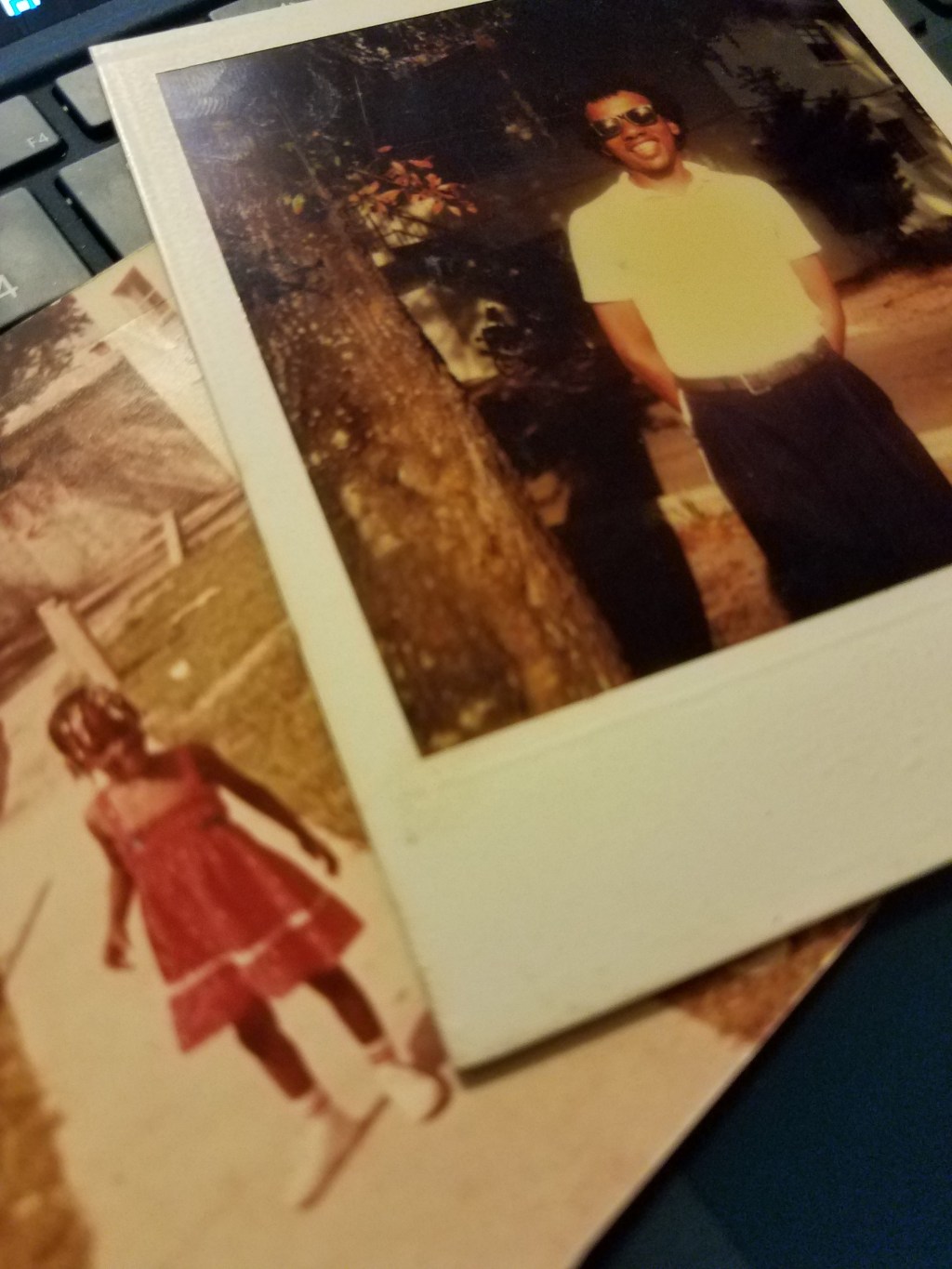
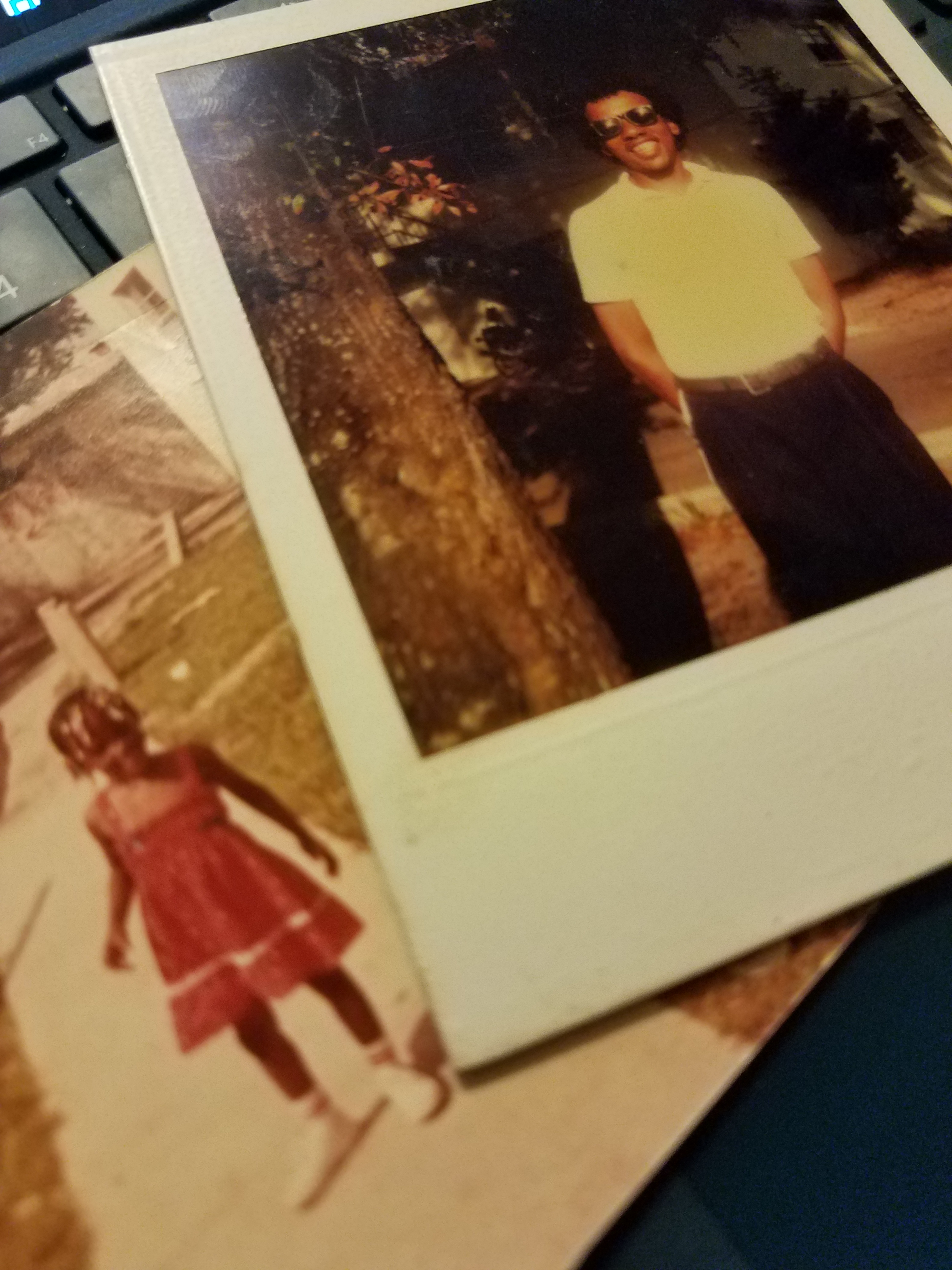
    Shout out to my father with the “BluBlockers” in the featured pic of this blog.  I love you mane.  I miss you.  Happy Father’s Day.  I’ve heard you were a proud father and I will have to believe the account of those that knew you.  – Your daughter

    “I sought the Lord, and he answered me and delivered me from all of my fears.”

    Psalms 34:4

  • The Suffering Saint

    The Suffering Saint

    Recently, I have spent a lot of time thinking about suffering and my desire to avoid it at all costs.  It sucks to suffer. End of story.  January was laden with suffering and loss for a few of my friends; 3 funerals in 3 weeks to remember the lives of 2 fathers and 1 son.  Grief and sorrow have a way of lingering.    Jesus agreed with this sentiment as reflected in Matthew 26:38, where he stated, “My soul is overwhelmed with sorrow to the point of death…”  Again, suffering sucks.  The unsettling truth is that as a follower of Jesus, I should not only come to expect the blessings of God, but with great certainty I should be mindful that suffering is also on the path of sanctification. Difficult truth.  And it sucks.

    suf·fer
    ˈsəfər/
    verb
         1. experience or be subjected to (something bad or unpleasant).
    This fixation on the avoidance of suffering came about after spending time visiting a friend in South Africa, where there is a chasm of classism left from the wreckage of apartheid.  During this visit more than any other, there was an acute awareness of the role that race has played in providing privilege to some and not to others.  As our conversations grew in depth, we both surmised that without even knowing it, we had developed an unhealthy expectation of “entitlement” to blessings as a believer and follower of Jesus Christ.
     en·ti·tled
    inˈtīdld,enˈtīdld/
    adjective
    1. believing oneself to be inherently deserving of privileges or special treatment
    It was almost as if we had said to God, suffering is for someone else, definitely not me. This unspoken paradigm of entitlement can wreak havoc on our faith when suffering arrives.  I then began to ask this friend how she maintained her faith during her most difficult moment when she suffered the loss of someone she loves.  She stated very simply and profoundly to “loosen my grip.”  Loosen my grip on the possessions I have.  Loosen my grip on the relationships that I hold dear.  Loosen my grip on my definition of what my life should be at this exact moment.  The “loosening of the grip” is an expression to hold those things and relationships dearly loved loosely in your hands, with gratitude and knowledge that all those things belong to God.  All of them.

    “Following Jesus wholeheartedly means facing the “most brutal facts of our current reality, whatever they might be” while holding on to our absolute certainty that we “prevail in the end” through his love and grace.” – Rick Lawrence, Jesus-Centered Life

    Perhaps a small part of what makes suffering bearable is our ability to savor what is good in that moment.  Another nugget of truth is that we can’t always see the things that are good in the moment of suffering.  What I learned during my time with my friend is that it is NOT in the overt acknowledgement of “all that is good” that gratitude arises.  It actually arises as we choose to be present with those who are suffering.  Present during the smiles. Present during the sorrow.  Present during the silence.

    I observed a lot of natural beauty during my time in South Africa, but there was nothing more beautiful than the comfort of a friendship that has lasted 13 years.  There was no pretense.  I liken it to the comfort of a good pair of old jeans.  They have holes, they aren’t perfect, but they fit in all the right places.

    I thought my time in South Africa would leave me only longing to ease the suffering of strangers.  That occurred.  I didn’t know that my time in South Africa would teach me in part, how to lament with the suffering saint and also teach me that suffering/sorrow/grief has no zip code.


    I want Jesus; fully and completely.  However, I still don’t want to suffer, but if I must, may I do so by leaning into Jesus and loosening my grip on all the things I’ve deemed too precious to lose.

  • Silence Doesn’t Feel Like Solidarity

    Silence Doesn’t Feel Like Solidarity

    sumo-wrestlers
    http://s.hswstatic.com


    Those that know me well know that I love truth more than I love comfort.  This past week, the ugly truths of police brutality, implicit racial bias, and systemic oppression of black and brown people made many uncomfortable.  In fact, many are still uncomfortable; particularly in the christian community.  This past week has pushed the christian community to take a serious look in the mirror and introspectively determine if diversity is something that is only espoused in word or actually lived.  And when I say actually lived, I ask… Are we brave enough to listen, empathize, and act courageously when it is counter cultural to do so?  When we might be afraid to do so?  When it is uncomfortable to do so.

    I have pondered why the #AltonSterling and #PhilandoCastile killings (by police officers) have caused me to grieve so deeply; more deeply than previous incidents of police abusing power.  More than #FreddieGray.  More than #SandraBland.  More than #MikeBrown.  More than #TamirRice.  More than #SamDubose.  More than…

    And then it hit me – this list does not seem to end.  Data from http://mappingpoliceviolence.org/ shows us that this brutality by police officers upon black lives is a systemic problem.  And…many of my non-minority christian friends have become mute.  I liken it to an ethnically mixed group of high school kids who are friends discovering that one of the black guys has chosen to go to the teacher after class and speak up for another black student who is repeatedly being poorly treated by someone in authority.  Most in this ethnically diverse group vow to show up  to help defend this black friend because they all believe this student is worthy of defense.  You may be able to finish this hypothetical story for me.  The friend arrives at the class room and sees that primarily his black friends kept their word to stand with him.

    Welcome to the #BlackLivesMatter movement. The silence of a segment of the christian community has been deafening because it feels like fear has rewritten the justice narrative and it has been more comfortable to remain silent, just give money or hide behind the cloak of one’s ethnic identity.  None of these positions equate to solidarity.  And none of them will bring reconciliation.

    Don’t be silent – your silence speaks loudly.  All week this “silence” has been ringing in my ears to the tune of “How can we say that we are the church when there doesn’t appear to be a willingness to bear one another’s burden?”  I’ve said it before and I will say it again; lament with us first. No solutions, just solidarity for justice.  A few days ago, a White, Christian friend of mine found courage to speak  even among fear. As I read her account, I could see how she beautifully wrestled with the fear of speaking publicly regarding Black Lives Matter and how the comfort of this fear was no longer greater than the cost of her silence.  Truthfully, her voice on this issue will speak more loudly than mine and this is why silence and/or apathy is not an option for the white christian.  Your silence may be communicating the wrong message. PLEASE READ HER PERSPECTIVE.

    Don’t JUST give your money – because settlements don’t settle it.   Now is the time to leave our paternalism at home.  This god-complex which causes us to want to “fix” the problems in the lives of those they are serving through money is crippling.  When we take a look at 11 recent high profile cases of men and women who had died at the hands of police, several of them received settlements between $5 million and $6.5 million dollars.  Settlement after settlement injustice remains. Giving money is a necessary part of the solution, but it is not the solution.  It takes courage to speak.  To attach YOUR NAME to cause in which you advocate for equitable treatment.  There is such anonymity in “only giving money,” but, when there’s person associated with a cause,  there is a different cost.

    Don’t forsake your eternal identity for your ethnic identity – I am a follower of Christ first and then I am a black woman.  #Realtalk – I am unapologetically black, but our eternal identity as Christians is what unites us. This means that as sisters and brothers in Christ, the higher call for all of us is to act justly, love mercy, and walk humbly (Micah 6:8).  When I rise each day, I have to remember not to lead with my #blackness and that it is not the primary narrative that shapes my life.  The banner over my life is one of redemption from sin.  We have seen what sin can produce individually and on a larger scale systemically.  To my White brothers and sisters, I encourage you as well to lead with your identity as a follower of Jesus.  To seek justice for the marginalized.  To see the #imagodei (image of God) in others.  The practical steps to make this occur may be scary, but this is what I want to do.  I want to talk with you.  To share in and learn of your fears.  To seek God together for our nation.  To serve God together in our nation.

    I have decided to follow Jesus.  No turning back.  No turning back.  Jesus didn’t simply advocate for the marginalized when it was easy and comfortable.  He lived in the difficult places; had difficult, yet honest conversation to reveal and then reconcile hearts.  I too will live in that place if that is the first step towards reconciliation.

    Here is a sermon preached a few days ago on #Justice by Pastor Léonce Crump Jr. of Renovation Church. This sermon will make many uncomfortable before it encourages.  He is speaking the truth in love, so I’m comfortable with that.

    Learn to do good; Seek justice, Reprove the ruthless, Defend the orphan, Plead for the widow. – Isaiah 1:17


  • Am I Black?

    Am I Black?

    20150611_123830“Am I Black?”  This question has echoed in my mind since it was so loudly projected from the mouth of a little boy (approximately 5 years old) to his parents as he sat with them and watched a portion of a video about the middle passage at The Griot Museum of Black Historyin St. Louis, MO.  The innocence and complexity of his question is what wrenches my heart.  In this beautiful world, it would be great if slavery never existed and if African American parents and those of other ethnicities never had to share with their kids the atrocity of their nation’s past.  In particular, their decision to treat certain people inhumanely.  This little boy could not understand why, in his own words, “only black people were treated this way…”  He actually asked his parents, “where are the white people?”  His mind could not process the reasoning behind the variation in treatment.  They spoke honestly and with lots of grace; not with malice or slander, but with love for their son and his tender, impressionable mind.  I am not a parent, but I commend these parents for walking gingerly with their son to help him understand his history and the importance of valuing all human life.  This indeed was one of the most precious moments I’ve experienced recently in our racially charged society that wants to dismiss the impact of years of oppression on people groups.

    For the past few days I have juxtaposed this little boy’s simple question with the recent events in Orlando, from the #PulseShooting to the shooting of #ChristinaGrimmie.  I love the city of #Orlando and I’ve been grieving with those in my hometown.  My community and people that I love and know are hurting deeply. We cannot understand the senseless act of these shootings.

     The beauty I beheld as this little boy asked this question was profound. You see, he didn’t “know” he was black because his experience as a little black boy was just as it should be.  He has not yet known what it is to be treated differently because of his skin color.  I am not sure that I want to wake him up from this dream.

    As a follower of Christ, I believe the church is called to make this child’s “ideal perspective” more of a reality, but we have to first deal with the sin in our own heart.  The reality that we just may be treating people differently because of their skin color.  Sunday is still a very segregated day in our nation.  The reality that we, the church, may be choosing not to get to know people because their lifestyle(s) don’t align with our beliefs.

    People are more than their ethnicity.  They are more than their sexual identity.  Oh that we would learn to live and love one another as people.  Not as pretentious, external, superficial, descriptors such as race, gender, and economic status.  This week in the wake of the Orlando tragedies I believe I was granted a gift from God to spend time in Colorado with a couple who co-founded a non-profit, which is making a difference in the lives of children who are aging out of foster care.  The gift for me was that although I “knew I was Black” in Colorado, I didn’t “feel” Black when spending time with their family.  I held tightly to this feeling because it was refreshing.  Typically, “feeling Black” when I am the minority means that I am treated as inferior and presumed weak.  To be in a community where I am clearly an ethnic minority (Colorado isn’t particularly racially diverse) and to be welcomed and loved as a person first, is a gift I treasure.  There might have been second glances from others as I sat around the table with this couple, their daughters, and a friend, at a local eatery, but at that table we laughed together and enjoyed each other’s company in earnest.  And although I am not their daughter, I felt protected by this couple in an incredibly beautiful way.  This was a dose of authentic love.

    If there was a gift that I could give to those who’ve experienced marginalization, it would be the gift of authentic love. To authentically love allows us to accept people as a part of God’s beautiful creation.  There is no doubt today that I am proud to be black.  But if I am honest, I have had to fight for this freedom of pride in my ethnicity, namely the darkness of my skin and kinkiness of my hair and all that I’ve been told that this represents in our western society.  What I have recognized recently is that fighting for freedom of an insecurity can be costly.  It can mean rejection from those that love you.  It can mean career assassination.   It can mean depression and sleepless nights.  I do not presume to understand the fight of those who are in the LGBTQ community.  What I do know is that I would like for #America and at times, those in the church, to stop making presumptions about their character and worth because of their sexual identity alone.  This is nonsensical.  Seriously.  We are people first.  Let’s treat each other as such.

    I grieve with all of the families whose loved ones lost their life during this tragedy.  I grieve with those in the LGBTQ community who feel the palatable weight of being targeted because of their sexuality.  I grieve with the family members of the shooter who may now be treated differently because of what he did.  I grieve for the christian church who has yet to learn that we all share a mutual brokenness as people; we are all in need of a Savior (Jesus Christ). Those who are black are in need. Those who are white.  Those who are heterosexual.  Those who are homosexual.  Those who are wealthy.  Those who are poor.  Those who are human are in need.  As we have a greater understanding of this need, we will lower our personal pedestals and stand together as people.

    “Be happy with those who are happy, and weep with those who weep.”  Romans 12:15

  • When the Healer Doesn’t Heal

    When the Healer Doesn’t Heal

    Heart_with_Bandage-512Sometimes I use music to silence the ache of my heart, but there is no song loud enough to remedy the ache I feel when death comes incredibly close.  Death always feels sudden and unexpected; sometimes it is and sometimes it isn’t.  In youth and old age, the heart ache is just the same.  What is not expected is the piercing pain that is with you when you rise and prevents you from sleeping.  Causing you to toss and turn with questions you’ve never fully considered until tragedy has made it’s home in your inner circle of friends or family.  No longer a tweetable article you sympathize with, YOU KNOW the victim(s).

    I write about this as my heart has wrestled with what is true and what I feel.  I feel pain, anger, and hurt because I know God can (and does) heal, but He has not in this instance.  How do I reconcile my aching heart with what my mind knows to be true?  A friend is no longer here; a family member will never again give me a warm embrace and tell me that I “need to eat more chicken to put some meat on my bones.”

    As I increase in age, I have intentionally sought to simplify my life (some might call me a minimalist), but somehow it has become more complex.  Somehow in my thirties, trite answers such as, “everything happens for a reason” are no longer sufficient.  This response leaves me with little ability to be receptive to a statement which lacks empathy and seeks to assuage my ache if only temporarily.   This response now seems artificial; like ingredients that shouldn’t be touched.   Artificial when family and friends are dying of cancer.   Artificial when sudden car accidents end the life of the first,  consistent,  positive male role model I ever had.  Artificial when drug and alcohol addiction destroys the life of a young man biologically deemed father,  yet emotionally and physically distant.

    Tragedy has made its home in my heart and it is bitterly painful.  Parts of me want to apologize because of the toll this grief has taken – that’s not going to happen.  This need for apology causes me to desire to tuck away my vulnerability so that my friends and family can behold an apparently “happier” version of myself.  That is not healthy and is no longer my method of coping.  In earnest, I am not sure how long grief will be present, but I have made space for it. I am allowing myself to feel the pain of loss and to cry about it over and over again because this brings some healing to my soul.  When the Healer (Jesus) doesn’t heal physically, I know of no greater remedies than:

    • Those who remain close enough to  listen,  pray,  and cry with me.
    • Constant reminders of the beauty of community and that I do not have to be alone.   I can choose the presence of those that love me especially in my weakest,  most vulnerable state.
    • Those who speak the truth in love.
    • Beautiful memories imbued with laughter.
    • Honestly sharing my disappointment with Jesus who can shoulder it.  No longer waiting for all of the answers to life’s complex situations,  but somehow gaining better perspective of the resurrection and the beautiful gift of eternal life that death gave me.  Learning the spiritual principle of God producing life out of death.

    At the crucifixion, death came when some of the people present wanted healing.   From Jesus’ selfless act a newness of life has been made possible for all.   All can be made new.  Brand new.   Maybe death is more complex than I thought.   More complex than my longing for extended life so that I might personally gain or benefit.   More complex for sure.  I’ve learned how to praise God when prayers are answered as I expected; I am now embracing the difficulty of learning how to do so when they are not.  In order to do the latter, I must remember who the God I serve is…He is just; He is love; and He is a good father.

    My thoughts are nothing like your thoughts,” says the LORD. “And my ways are far beyond anything you could imagine. – Isaiah 55:8 [NLT]